
Last updated November 2, 2026
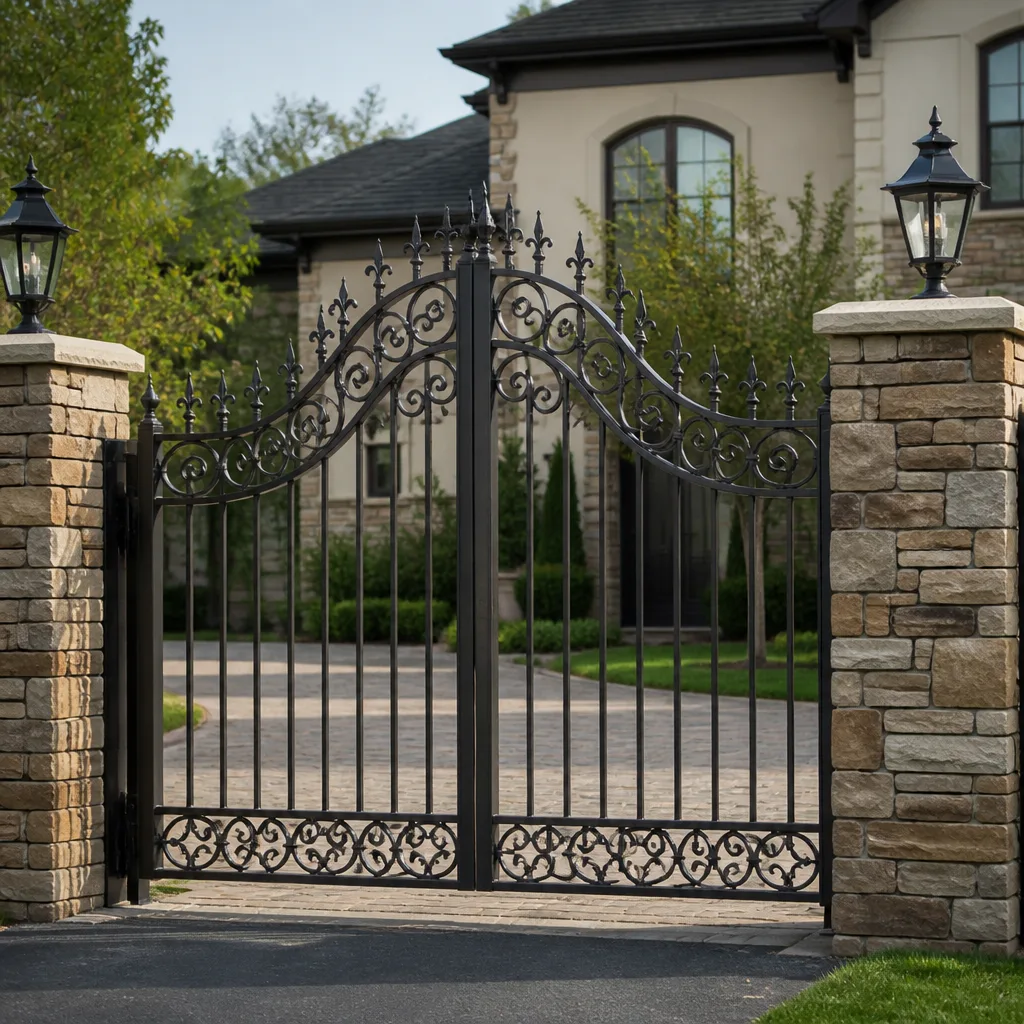 Wrought iron
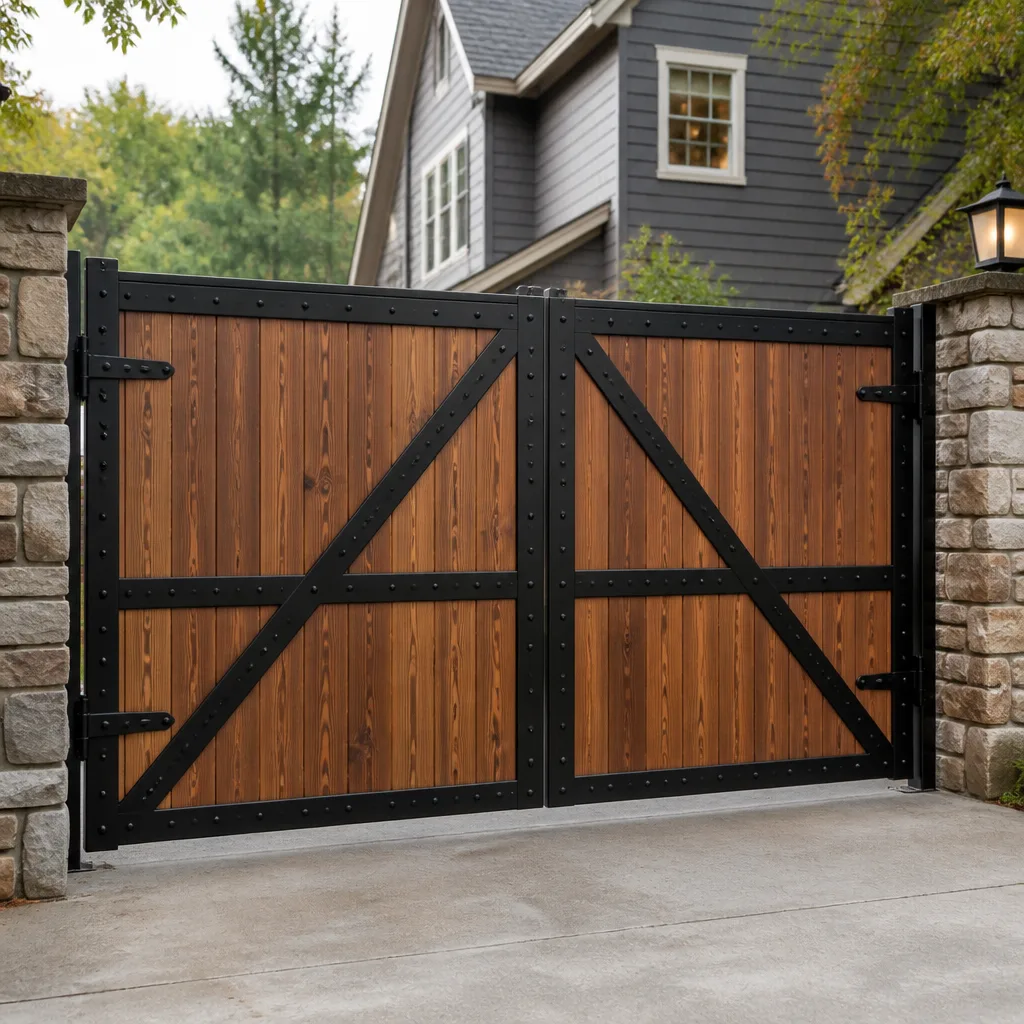 Wood & steel frame
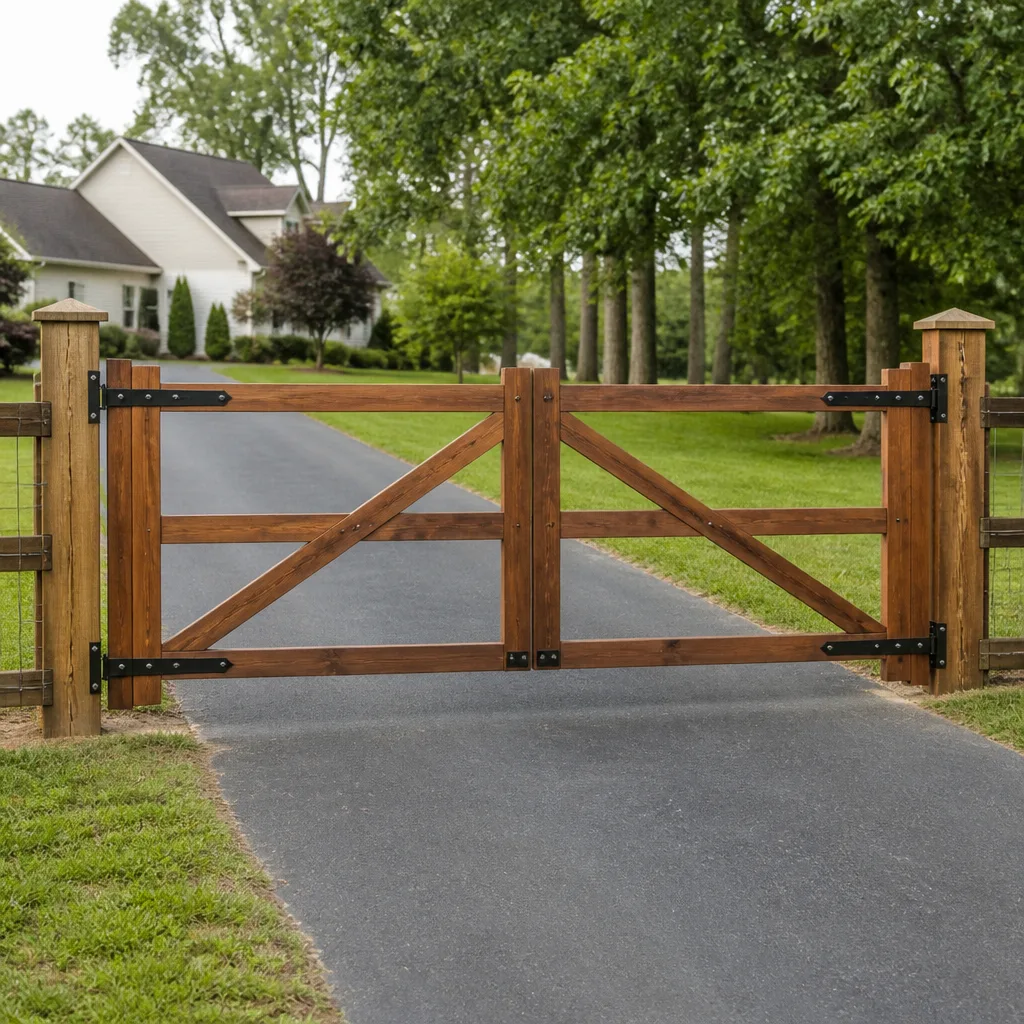 Farm & ranch
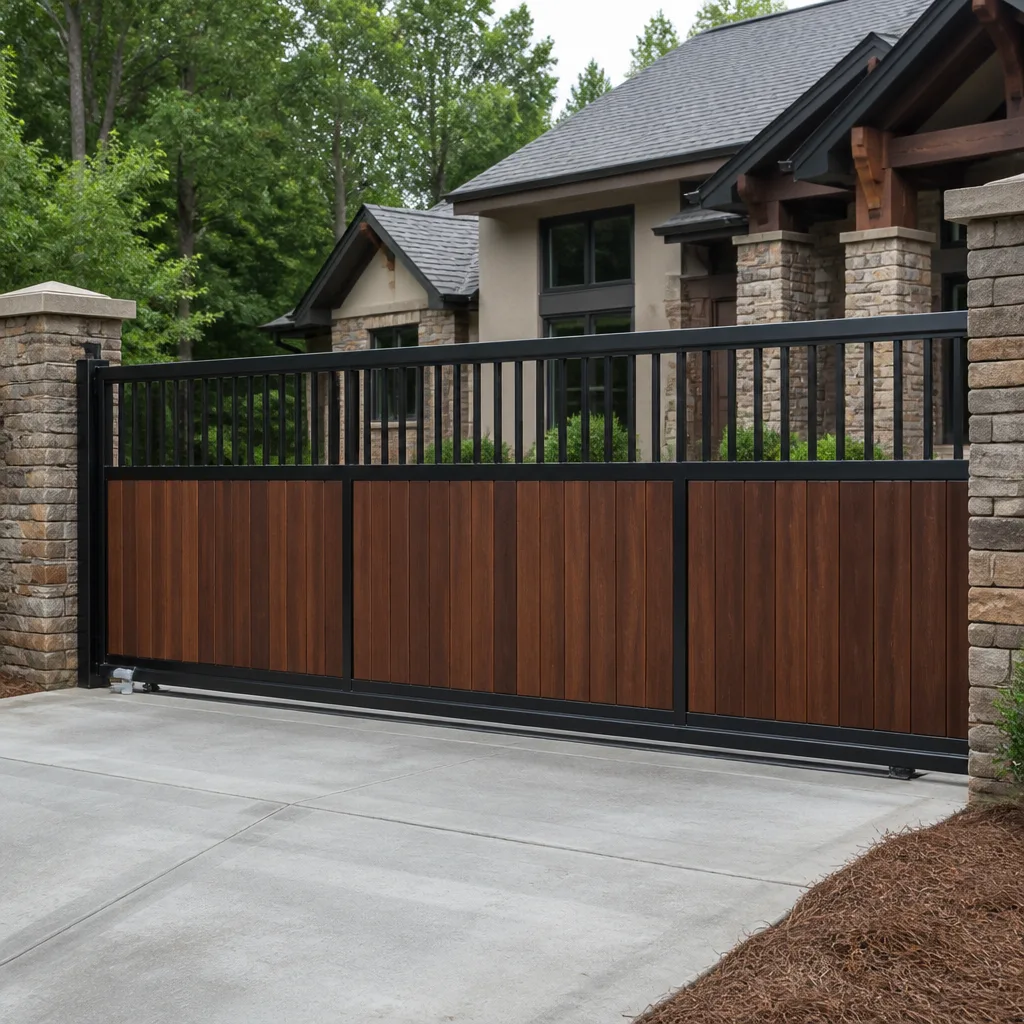 Sliding driveway gates
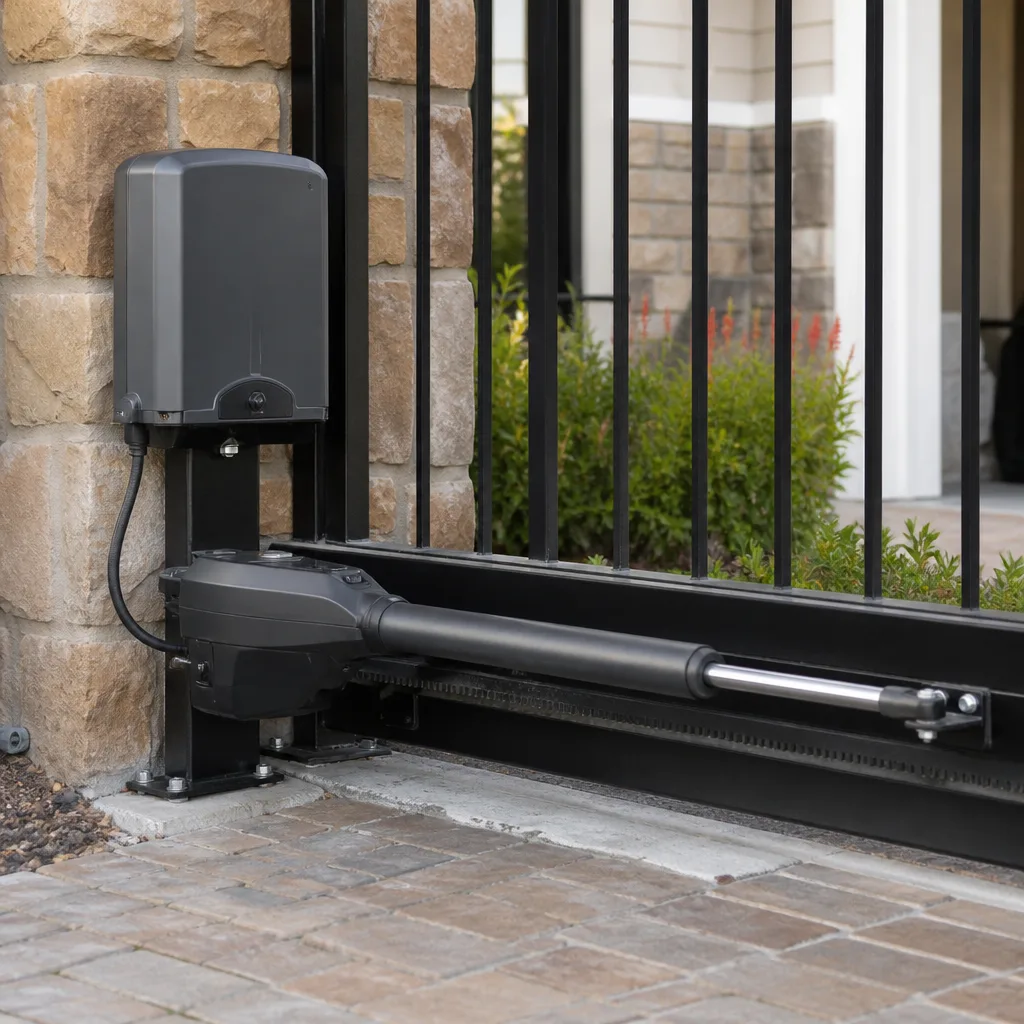 LiftMaster operators
Free on-site gate assessment - hinges, posts, and your LiftMaster or Nice gate operator checked before anything is quoted
The assessment is free and the quote is the invoice.
Get your free estimateHow to Hire a Gate Repair Contractor in Whittier: A Step-by-Step Guide
The most dangerous answer a gate contractor in Whittier can give you is “yeah, we do gates.” It sounds fine on the surface. But what it actually tells you is that gates are a side item, not a specialty. Your LiftMaster operator, your Ghost Controls board, your FAAC motor, your DoorKing loop detector: all of it will be diagnosed by a generalist with a Google search and a hope. Hiring the right contractor in Whittier isn’t about finding someone who says yes. It’s about finding someone who can tell you why your gate failed before they touch it. This guide will walk you through exactly how to separate a dedicated gate specialist from a fence guy who dabbles, step by step, with the questions that actually matter in this trade.
Quick Answer
To hire a gate repair contractor in Whittier, you first verify their California contractor license classification on the CSLB database, then ask five specific questions about your operator brand and control board that a generalist cannot answer, and finally compare written quotes line by line for parts, labor, and warranty terms. The contractor you choose should service your exact brand, quote you before starting work, and stand behind both parts and labor in writing. Capitol Gate Repair offers free estimates for Whittier homeowners; call (866) 321-3968.
Styles & brands we work with
- Wrought iron
- Wood & steel frame
- Farm & ranch
- Sliding driveway gates
- LiftMaster operators
Table of Contents
- Why Whittier Gates Fail: Climate and Demand
- Step 1: Verify the License Classification on the CSLB
- Step 2: Ask Five Interview Questions That Separate Specialists from Generalists
- Step 3: Read a Quote Like You’re Auditing It
- Step 4: Understand What a Legitimate Warranty Looks Like for Gates
- Step 5: Vet Online Reviews for Gate Work, Not General Reputation
- Step 6: Know the Whittier Gate Service Market
- What to Expect After You Hire
Why Whittier Gates Fail: Climate and Demand
Whittier sits in a microclimate that punishes gate hardware more than most homeowners realize. The hills, the marine layer that rolls in off the coast most mornings, and the dry heat afternoons create a cycle of moisture and expansion that works on hinges, tracks, and control boards. We see more corrosion on gate hinges and more capacitor failures in Whittier than we do in drier inland cities. Why? Because the morning condensation settles into the electronics, then the afternoon sun bakes it off. Repeat that a few hundred times and a control board that was never sealed properly starts shorting. If a contractor doesn’t understand that pattern, they’ll replace the board, not the cause. That’s why hiring a gate-specific contractor matters here. Not a general handyman who runs through Whittier between a ceiling fan repair in Uptown and a sprinkler job in Michigan Park. A gate specialist who knows that the Mighty Mule board on a hillside property in Friendly Hills is running in the worst possible conditions, and accounts for it.
There’s another local pressure: demand. Whittier has a high concentration of older homes with original gates from the 1990s and early 2000s. Those systems are now failing at the same time, which has created a shuffle of contractors moving through the city. Some are legitimate. Some are buying ads and winging it. Your job as a homeowner is to tell the difference before they’re standing in your driveway with a multimeter they don’t fully know how to use.
Step 1: Verify the License Classification on the CSLB
The California Contractors State License Board (CSLB) database is the single most underused tool in hiring a gate contractor. Most people don’t check it at all. And here’s the part that matters: there is no single “gate repair” license classification in California. Gate work typically falls under one of several classifications, depending on what the contractor actually does. The most relevant are D-28 (Doors, Gates, and Activating Devices), C-13 (Fencing), or C-10 (Electrical), depending on whether the contractor is doing mechanical gate work, fencing, or the electrical and control side of an automated system. A contractor who does both the structural gate and the operator may hold more than one classification. What you’re really checking is simple: that the classification they hold actually covers the work you’re hiring them to do. A C-13 fencing contractor might hang a gate beautifully. But if your problem is a failing BFT control board or a DoorKing loop detector that won’t trigger, do they have the electrical classification to perform that work in California? Ask.
Here’s your step-by-step:
- Go to the CSLB license lookup page.
- Enter the contractor’s name or license number.
- Check that the license is active, not expired or revoked.
- Look at the classification. Does it include gate-activating devices (D-28) or electrical (C-10)?
- Check for any active citations, complaints, or disciplinary actions.
- Confirm the name on the license matches the name on the quote.
This takes five minutes. Most Whittier homeowners never do it. A licensed specialist in gate automation will not hesitate to provide a license number. If a contractor gets evasive when you ask, that’s your first red flag. If they tell you they don’t need a license for your job because it’s “small,” that’s the second red flag. In California, gate automation work generally requires a license. Don’t let a smooth-talking estimator talk you out of verifying it.
At Capitol Gate Repair, we discuss our licensing openly during the estimate because it’s part of being a specialist. It’s not a secret to hide; it’s a baseline to prove.
Step 2: Ask Five Interview Questions That Separate Specialists from Generalists
Most hiring guides tell you to ask about experience, insurance, and references. Those are fine. They’re also the bare minimum that every contractor has rehearsed. A generalist in Whittier can tell you they’re experienced and insured with a straight face. What they can’t do is answer the five questions below with specificity. These are the questions that expose the difference between someone who works on gates and someone who occasionally touches one.
- “Which control board brand is in my gate, and what’s the most common failure mode you see?” A specialist will ask what operator you have before answering, then speak to that brand. If they say “control boards are all pretty much the same,” you’re talking to the wrong person. They’re not. An Elite board and a DoorKing board fail in different ways. A specialist knows the distinction.
- “Do you service my operator brand directly, or do you sub that out?” This one cuts through the generalist problem quickly. A fencing contractor who doesn’t do automation will say they can “bring in their guy” for the motor. A specialist answers, “That’s ours.”
- “When you diagnose a gate that doesn’t open, what’s your first test?” This is a technical filter. The correct answer involves checking power to the board before anything else. A generalist will say “we look at the hinges” or “we check the track.” Both matter, but they’re second-order. Power always comes first.
- “Can you install, repair, and eventually replace my gate system?” If they can repair a gate but can’t install a new one, or vice versa, you’re hiring half of a contractor. A true specialist can handle the full lifecycle of a gate: gate repair in Whittier, electric gate repair in Whittier, and full gate installation in Whittier.
- “What’s your warranty on a replacement control board?” This is a trick question disguised as a simple one. We’ll cover warranty reality in full below, but for now: a generalist will name a number of days. A specialist will name a number of years and walk you through what’s covered. If the answer is “30 days,” you’re hiring someone who expects their work to fail.
We’ve sat across from Whittier homeowners who told us they’d already had three companies out for the same gate. Not once, in those three visits, had anyone asked what brand operator they had. The gate kept failing because the diagnosis was never made; parts were swapped, briefly, then the root cause came back. That is the most expensive pattern in this whole trade. It’s not the initial repair that’s expensive. It’s hiring someone who doesn’t know what they’re looking at, paying them anyway, and then paying a specialist later to undo the guesswork.
One more note on this step: ask if the company works on Ghost Controls systems, Elite operators, or Mighty Mule units specifically. These are common residential brands in Whittier. If the estimator has never heard of Ghost Controls, you’re not interviewing a gate specialist. You’re interviewing someone who installs chain-link and hopes the motor isn’t mentioned.
Step 3: Read a Quote Like You’re Auditing It
The lowest quote in gate repair is statistically the most expensive option. That sounds contradictory, but it’s not. A low quote usually means one of three things: the contractor hasn’t actually diagnosed the problem, they’re quoting the cheapest possible part without regard for brand compatibility, or they’ve omitted line items that will reappear later as a change order. In gate work, the list of possible line items is long and specific. If your quote is a single line that says “repair gate,” you’re about to have a bad time.
A legitimate quote for gate repair in Whittier should include:
- The exact part being replaced or repaired, including the brand name. Not “control board.” It should say “Mighty Mule MM371W control board” or the equivalent.
- Labor broken out separately from parts. If it’s one lump sum, ask for a split. You have a right to know what you’re paying for.
- Any diagnostic fee, and whether it’s credited toward the repair.
- The trip charge, if any. In Whittier, with gas prices and LA traffic, some contractors charge a small trip fee. It should be disclosed in writing.
- Warranty terms, specifically stated for both parts and labor and the duration of each.
- Any expected follow-up or adjustment visit, whether it’s included or billed separately.
The reason this matters is less about nickel-and-diming and more about what’s missing. A contractor who omits the brand name is probably planning to use whatever part is cheapest at the supply house that day. A contractor who won’t separate labor from parts is usually hiding a margin. A contractor who writes “adjust gate” with no specifics is guessing. You want a written price that’s agreed before any work starts. In Whittier, we believe the quote you approve is the quote you pay. No surprises on the invoice. It’s not just a courtesy; it’s the whole point of hiring someone who knows what they’re doing.
Step 4: Understand What a Legitimate Warranty Looks Like for Gates
Warranty language in gate repair is a swamp. Every contractor uses different words to mean different things, and homeowners rarely read the fine print until a part fails. So let’s clear the swamp. In this trade, a legitimate warranty distinguishes between parts and labor, because the two have completely different failure profiles.
Parts warranty: this is the manufacturer’s coverage on the component itself, and it varies by brand. A quality replacement board from a brand like DoorKing or LiftMaster generally carries a parts warranty measured in years, not weeks. The installer doesn’t set this; the manufacturer does. A specialist will pass it along to you directly, in writing.
Labor warranty: this is what the contractor stands behind for their own work. A fair labor warranty on a gate repair in Whittier runs at least 90 days. Many reputable specialists offer longer, often a full year on labor for major component replacements. If a contractor offers 30 days of labor warranty on a new motor installation, they’re signaling that they don’t trust their own work. Think about that. Thirty days is not a warranty; it’s a return window.
The real question to ask is simple: “If the same part fails in six months, do I pay for the part, the labor, or both?” A specialist will answer without hesitation. A generalist will start talking about “industry standards” and then go vague. That’s your signal to end the conversation.
One more wrinkle specific to Whittier: moisture-related failures. If a gate control board fails because water got into the housing, a manufacturer may not honor the part warranty, because moisture ingress is generally classified as an installation issue, not a defect. This is exactly why you want an installer who seals enclosures properly in the first place, especially in a climate like Whittier’s, where morning marine moisture is a constant. A warranty is only as good as the installation that precedes it. A specialist installs a board with the enclosure sealed, the wiring strain-relieved, and the grounding checked. That’s the difference between a board that lasts ten years and one that fails in the next rainy season.
Step 5: Vet Online Reviews for Gate Work, Not General Reputation
Online reviews are a mixed bag. Some are useful. Most are not. The problem with general review sites is that they aggregate every kind of job a contractor does, and if a company does fences, gates, and welding, you can’t tell from a 4.8-star rating whether they’re actually good at gates or just good at fences and mediocre at everything else. A contractor in Whittier might have two hundred five-star reviews, and every single one could be for a wood fence. That tells you nothing about their gate work.
Here’s how to vet reviews specifically for gate work:
- Use the search bar in the review section. Type “gate” and “operator” and “motor.” If nothing comes up, the reviews are not for gate work.
- Look for brand mentions. Reviews that say “they fixed my LiftMaster” or “they diagnosed my Ghost Controls board” are worth ten generic reviews that say “great job.”
- Filter out one-line reviews. “Responsive and professional” tells you the dispatcher was nice. It says nothing about whether the gate still works a month later.
- Look for the boring details. Reviews that mention line items, warranties, or the technician explaining the diagnosis are gold. That’s a contractor who actually did the work.
- Check for recurring complaints. If two or three reviews mention the same issue, like a part failing shortly after install or a bill that came in higher than the quote, that’s a pattern, not a coincidence.
You should also ask for references, but with a caveat: a contractor chooses which references to give you. They’ll pick their happiest customers, which is fine, but it’s a curated sample. Reviews, on the other hand, are uncurated. Sort through them with the word “gate” and they become a lot more useful.
In our experience at Capitol Gate Repair, the most useful feedback we get from Whittier customers is specific: they mention what brand their operator is, what the symptom was, and what fixed it. That kind of detail is what you should be looking for. It’s the difference between hiring someone who showed up and someone who actually solved the problem.
Step 6: Know the Whittier Gate Service Market
Whittier is a unique market for gate repair because it’s not a high-density condo market like downtown LA, and it’s not a sprawling new-build market like the Inland Empire. It’s a mature, hillside-heavy, established city. Most of the gates we see in Whittier are on single-family homes built between 1940 and 1995, with the oldest ones often still on their original manual hardware and the newer ones running early-generation automation. The neighborhoods that keep us busiest are the hillside areas, Friendly Hills and Michigan Park especially, where slopes put extra strain on gate hinges and where drainage and water flow make enclosure positioning critical.
This matters when you’re hiring because a contractor who mostly works in flat, dry markets won’t understand the slope and moisture factors that are second nature to a Whittier gate specialist. When you’re interviewing contractors, ask if they work in the Whittier hills. If they pause, or if they talk around the question, that’s a signal. A specialist who works this area regularly will say something like, “Yes, the hillside properties in Friendly Hills need different hinge specs because of the pitch.” That one sentence tells you more than an hour of sales pitch.
There’s also the question of brands. Whittier has a mix of old and new systems, often on the same street. You’ll see an original DoorKing on a 1980s house next to a Mighty Mule on a 2005 house next to a new Ghost Controls install on a flip. A contractor who only knows one brand is going to struggle with two out of three houses on the block. That’s why brand-range matters so much when you’re vetting. Ask the contractor which brands they work on. If they name one or two, they’re a niche installer. If they name six or eight and can discuss the failure modes of each, they’re a real operator. Capitol Gate Repair works across nine major brands: LiftMaster, FAAC, BFT, Linear, Viking, Ghost Controls, DoorKing, Elite, and Mighty Mule. That range matters specifically because Whittier homes are so mixed. You don’t need nine brands. But you need the one that’s in your driveway.
What to Expect After You Hire
A good gate repair contractor in Whittier will leave you with more than a working gate. You should leave the appointment knowing three things: what failed, why it failed, and what was done to prevent it from failing the same way again. If you don’t know all three, the contractor didn’t do their job, even if the gate opens and closes when they drive away.
Here’s the standard flow of a professional gate repair visit:
- Arrival and inspection: the technician walks the gate, manually cycles it, and listens. A lot of diagnosis happens in the first two minutes, just watching and hearing.
- Electrical check: power to the board first, then to each component. This is the step a generalist skips.
- Diagnosis and explanation: before anything is replaced, the technician should tell you what they found and what they recommend. You should never be surprised by a repair.
- Approval: you agree to the quoted price, in writing, before the work begins.
- Repair or replacement: the work is done, with brand-matched parts.
- Testing and adjustment: the technician cycles the gate multiple times, including under different conditions if possible. On a hillside property in Whittier, this might mean checking operation when the gate is wet from morning condensation.
- Walkthrough: the technician shows you what was done, points out any remaining wear items to watch, and leaves you with any warranty documentation.
The goal is not just a gate that opens. It’s a gate that keeps opening, in Whittier’s specific climate, without you thinking about it again for a long time. That’s what you’re paying a specialist for. The repair itself is sometimes the smallest part of the value.
Common Mistakes to Avoid
- Hiring the first contractor who answers the phone. Whittier is a busy market, and the contractor with the fastest callback is not always the best. Availibility is a marketing strategy, not a credential.
- Choosing the lowest quote without auditing it. A quote with no brand names and no labor breakdown is a guess with a number attached. The “cheapest” repair is often the most expensive over twelve months.
- Not checking the CSLB license before hiring. Five minutes on the CSLB database saves you from hiring a contractor whose license lapsed or whose classification doesn’t cover automation work.
- Trusting general reviews without searching for gate-specific work. A five-star fencing contractor is not automatically a five-star gate specialist. Search the reviews for the word “gate.”
- Accepting a verbal quote. In gate repair, a verbal quote is a future negotiation. Get it in writing or don’t start the job.
- Replacing a part without asking why the old one failed. If a control board fails and the contractor swaps it without checking for moisture ingress or a bad ground, you’ll be replacing it again. A new part on an unresolved cause is a bandage, not a repair.
- Hiring a generalist for an automated gate. “Yeah, we do gates” is an answer, but it’s not the answer you want. Your operator has a control board, sensors, and a motor. It deserves a specialist who knows the brand.
See the difference
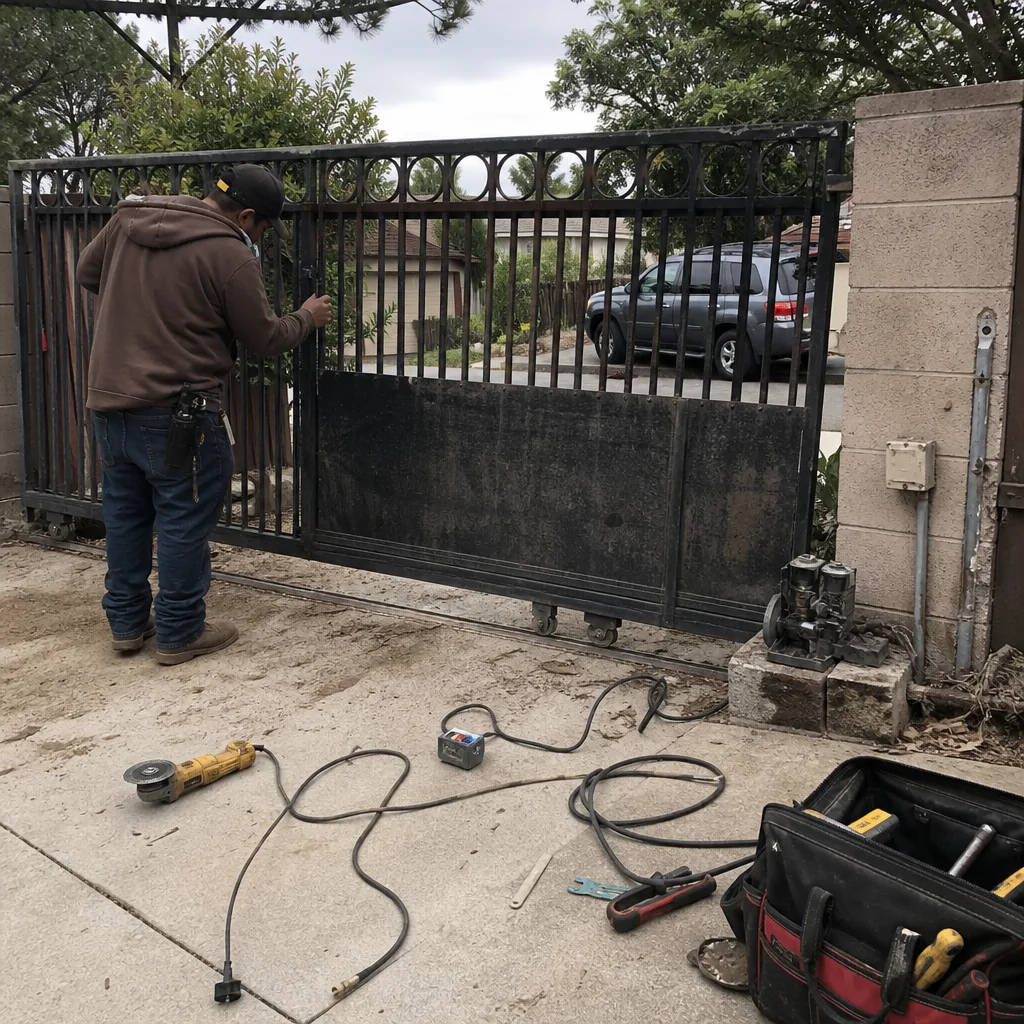 Before
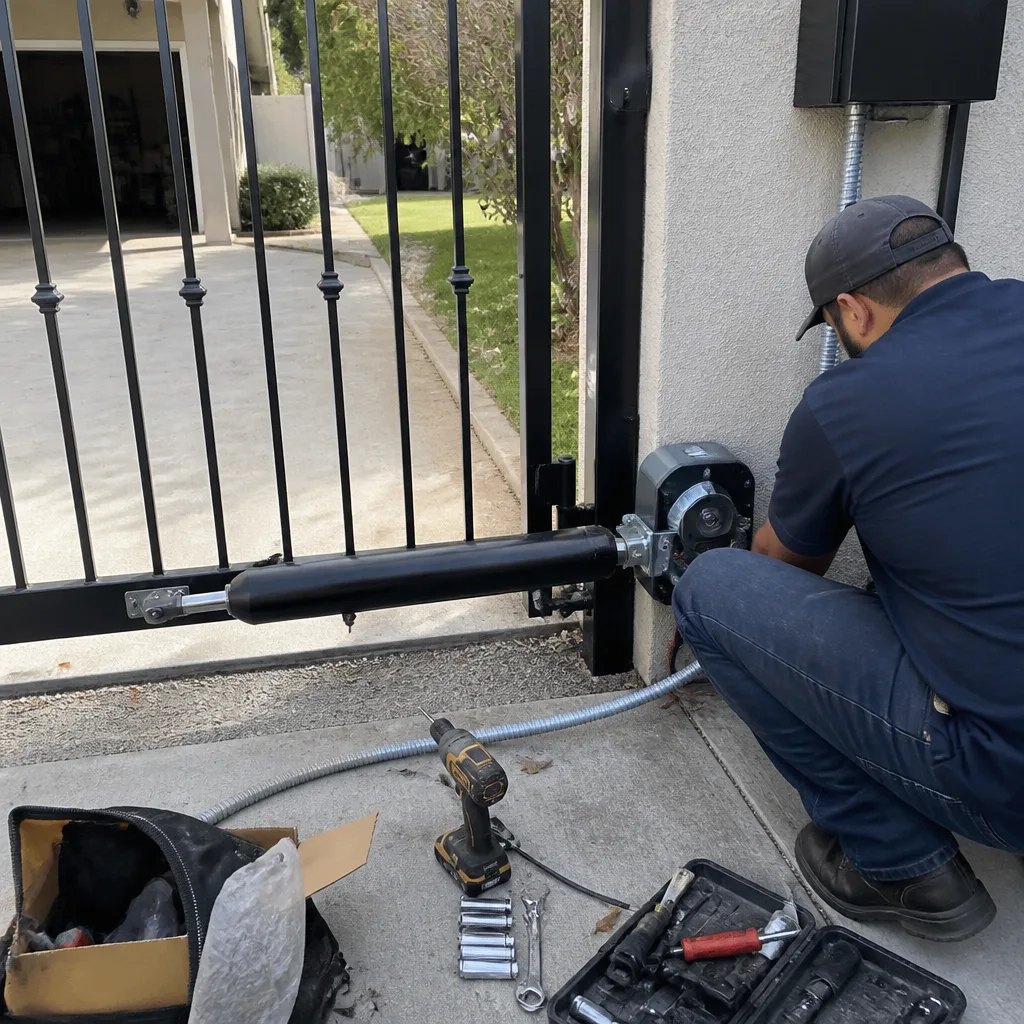 After
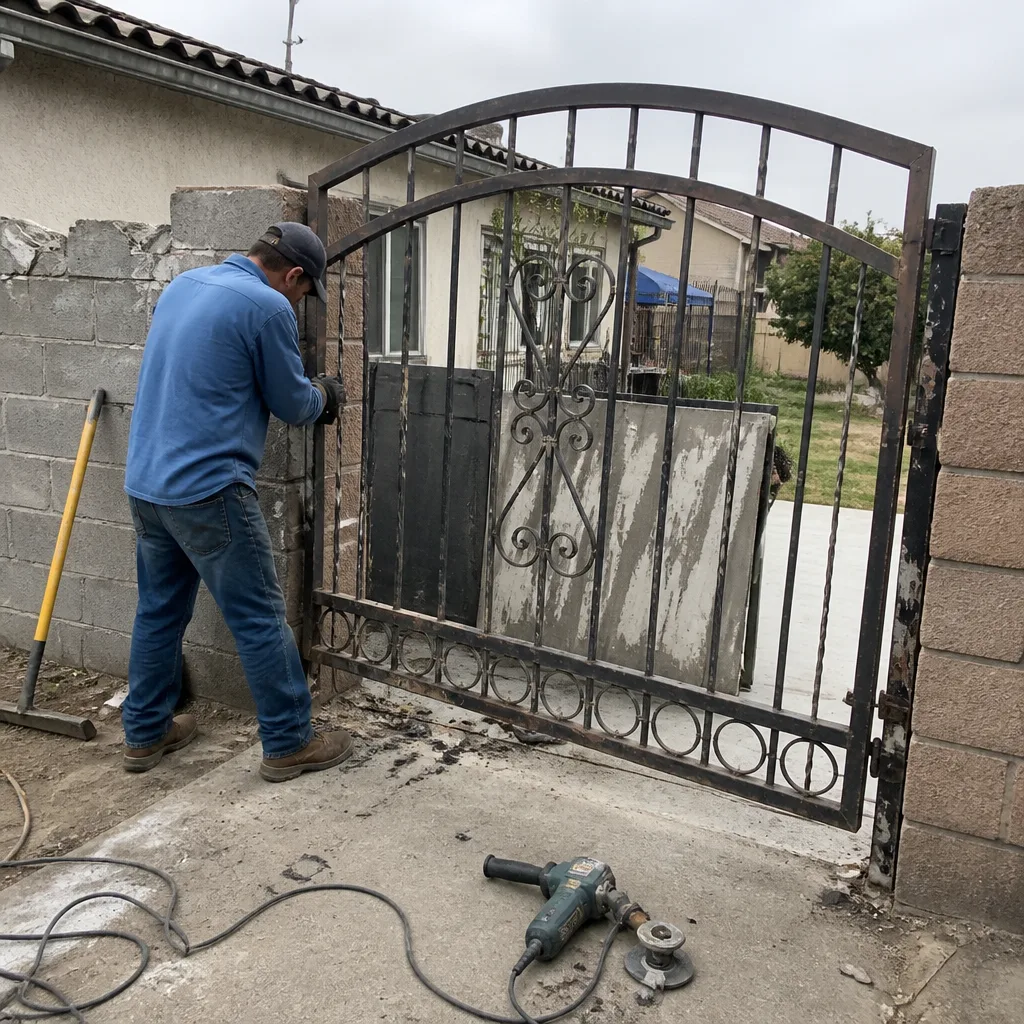 Before
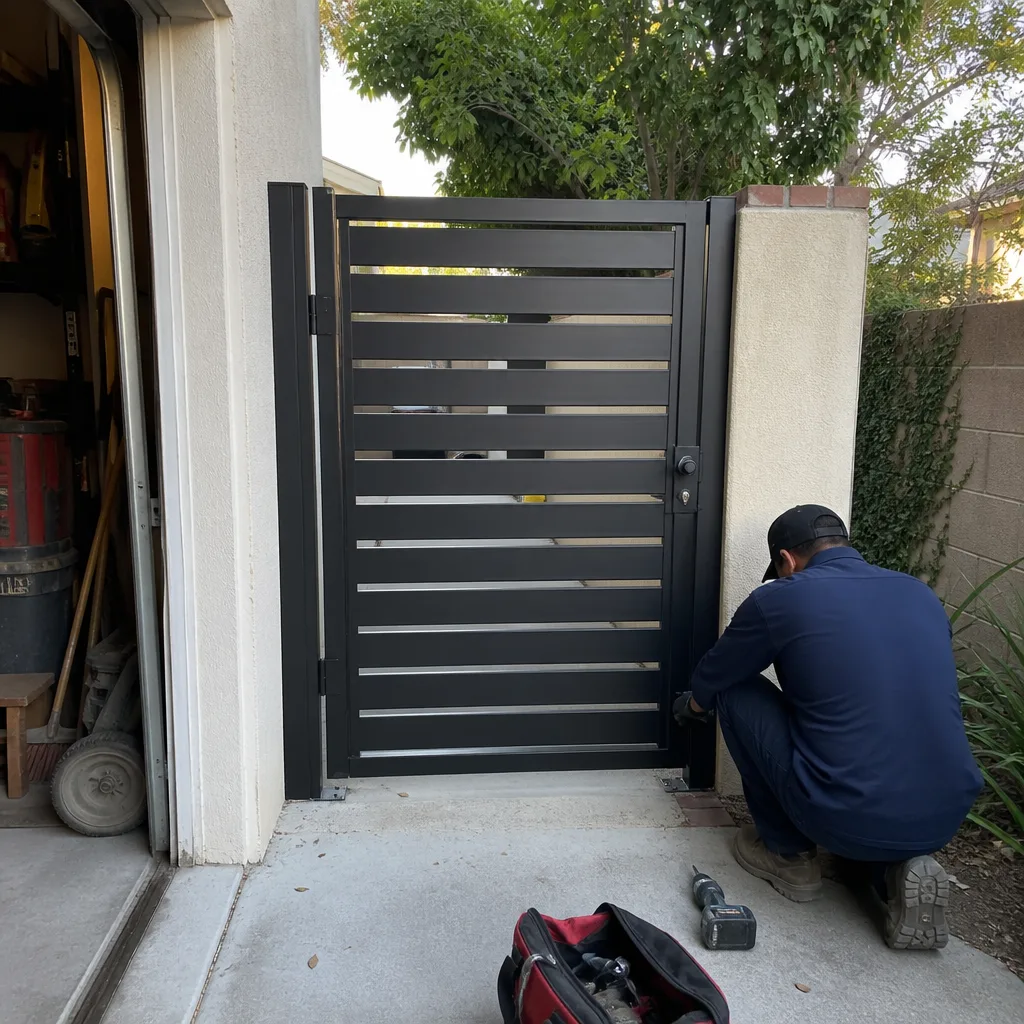 After
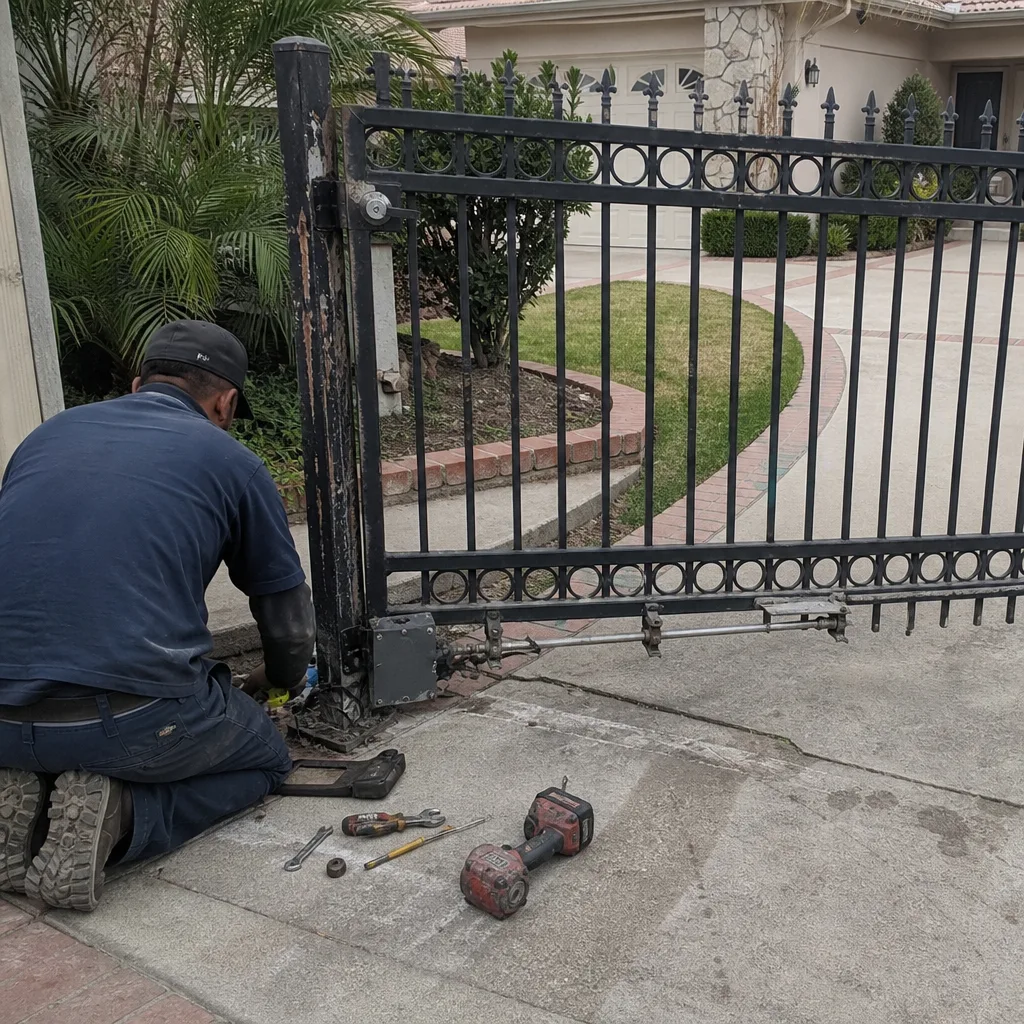 Before
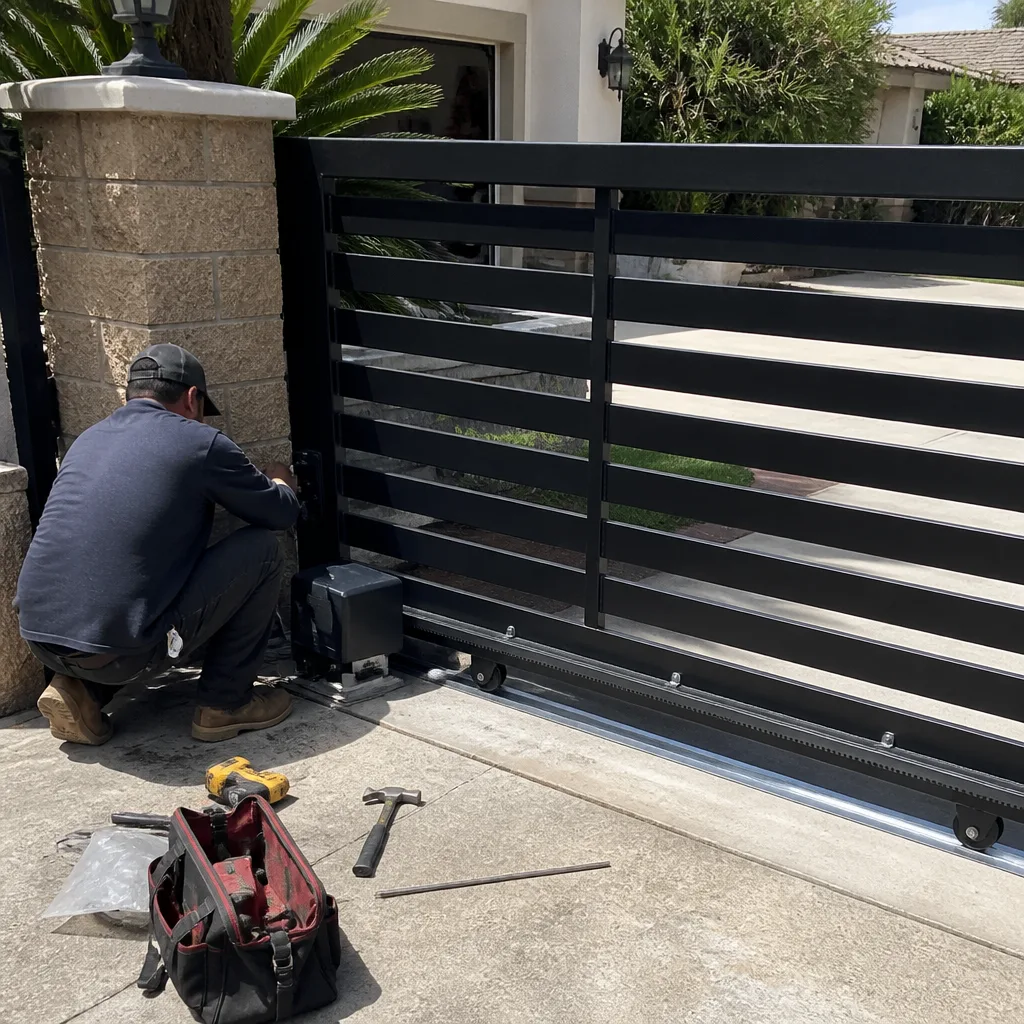 After
When to Call a Professional
Some gate issues are DIY-fixable, like tightening a loose hinge or clearing debris from a track. But any problem involving the motor, control board, safety sensors, or access-control wiring is a different category. These are electrical systems with high-voltage components and safety circuits, and in California, automation work generally falls under a license requirement. If your gate opens halfway and stops, if it reverses without warning, if the motor hums but doesn’t move, or if you see scorching or smell burning plastic near the operator, stop using the gate and call a professional. These are safety failures as much as mechanical ones, and a gate that’s behaving unpredictably can damage a vehicle or hurt someone in its path. Electric gate repair is a specialized field, not a weekend project, and chasing wires without proper training on a live system is how people get hurt. Capitol Gate Repair offers free estimates in Whittier; call (866) 321-3968 and we’ll tell you what’s wrong before you commit to anything.
Frequently Asked Questions
Gate repair in Whittier typically ranges from $180 to $340 for a standard mechanical or electrical issue, while a full control board replacement can run $450 to $800 depending on the brand and model. These are the realistic ranges for this market, and they’ll fluctuate based on your operator brand and the scale of the failure. The exact price should be quoted in writing before any work starts. Call (866) 321-3968 for a free estimate on your specific system.
Yes, Mighty Mule is one of the brands we service regularly in Whittier. We work on the full residential range, including older MM-series and the newer GTO/Mighty Mule hybrid boards. Mighty Mule is a common brand in the Whittier hills, and we know its failure patterns: burned DC motors on overworked units, corroded battery terminals, and a control board that struggles with moisture ingress in the Whittier microclimate. A specialist knows what to look for before they even open the cover.
Yes, Ghost Controls is within our nine-brand service coverage, and we diagnose those systems the same way we do every other operator: power to the board first, then each component. Ghost Controls systems are solid, but they’re sensitive to water intrusion at the control box, especially in a Whittier property that gets morning condensation. The diagnosis matters because a failing Ghost Controls board can mimic a motor failure, and a generalist will sometimes replace the more expensive motor when the $150 board was the actual fault. That’s a fix we run often: diagnosed precisely, and fixed, not replaced unless necessary.
That depends entirely on the condition of the structure and the age of the automation. If the metal structure is sound and the issue is a failing operator or board, a gate repair is almost always the more economical decision. If the gate is rusting through at the hinges, sagging badly, or the track is distorted, a full gate installation may be the better investment. A specialist will give you both options with honest pricing, not push you toward a replacement because it’s a bigger invoice. The right answer in Whittier’s climate, where hinges and tracks take a beating on hillside properties, often comes down to how much structural life is left in the steel.
First, stop using the gate and check for visible water near the operator housing, control box, and any low-lying wiring. A gate that fails after rain is typically dealing with moisture ingress, and running it repeatedly can damage the board or motor further. Then call a professional with specific experience in Whittier’s climate, because this is a common failure in the hills where runoff channels through gate posts. The fix usually involves drying and sealing the enclosure, re-terminating any corroded connections, and testing the board under load. Skip the DIY drying tricks you’ll find online, as they often force moisture deeper into the board. Call (866) 321-3968 and we’ll diagnose the moisture path before it kills the components.
We work from residential to commercial, including light commercial properties managing gated access for tenants or customers. That covers operators like DoorKing and Elite, which are the workhorses of Whittier’s apartment complexes and small business lots. Commercial work follows the same principle as residential: the right diagnosis first, the right brand-matched part second, never a guess. The difference is access control, and we’re fluent in loop detectors, keypads, and phone-entry integration on commercial systems. If you’re managing a gated property in Whittier, call (866) 321-3968 and give us the gate’s symptoms. We’ll tell you what to expect before we ever send a truck.
The Bottom Line
Hiring a gate repair contractor in Whittier comes down to five decisions: verify the license classification on the CSLB, ask the five interview questions that expose a generalist, audit the written quote for brand names and labor splits, understand the warranty in terms of parts versus labor, and vet reviews for gate-specific work. Do all five and you’ll hire someone who knows your operator brand and your neighborhood. Hire the first name on the search results and you might pay twice. Whittier’s hills, microclimate, and mixed housing stock make gate work genuinely specific. Your contractor should be too. Capitol Gate Repair is a gate-only specialist serving Whittier, with free estimates and nine-brand coverage that includes Ghost Controls, DoorKing, Elite, and Mighty Mule. Call (866) 321-3968 for a diagnosis that’s accurate before the work begins.
Written by the team at Capitol Gate Repair, serving Whittier since 2013.