
Last updated November 2, 2026
 Wrought iron
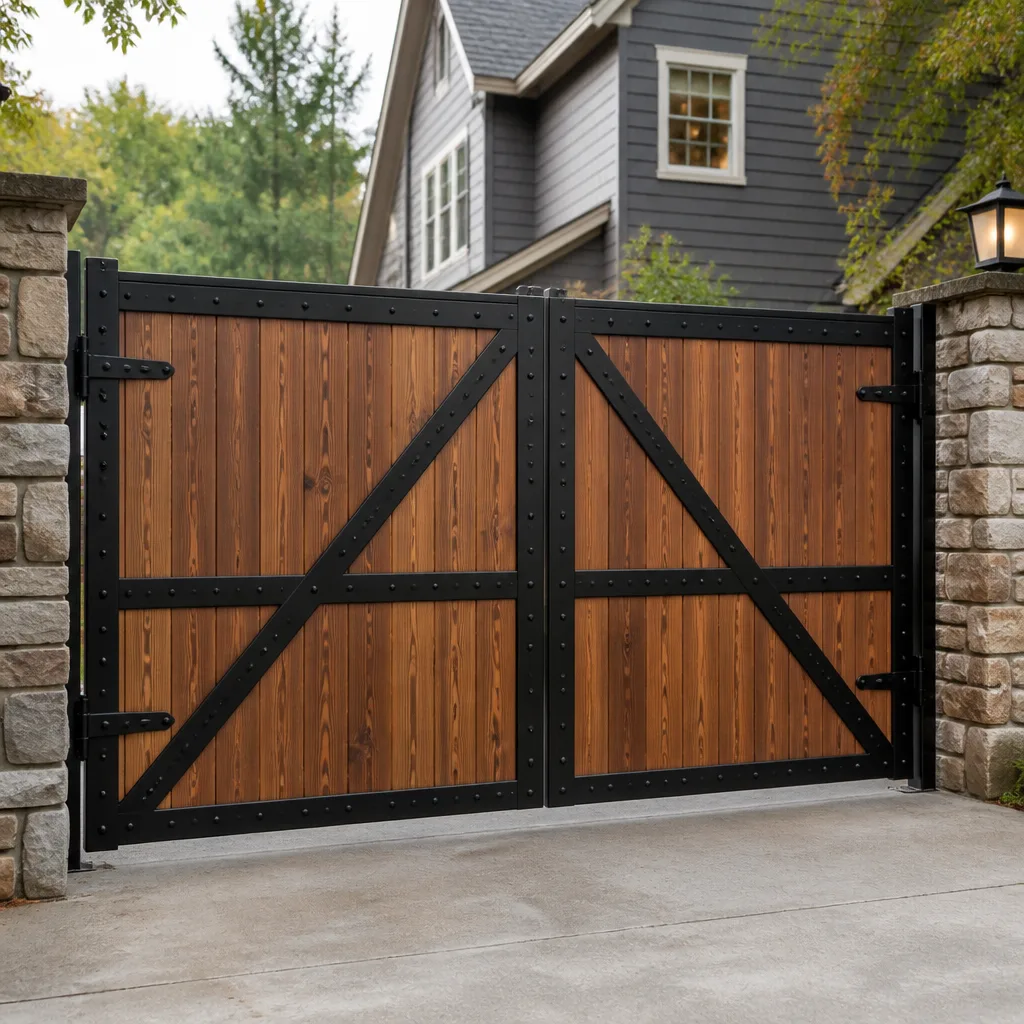 Wood & steel frame
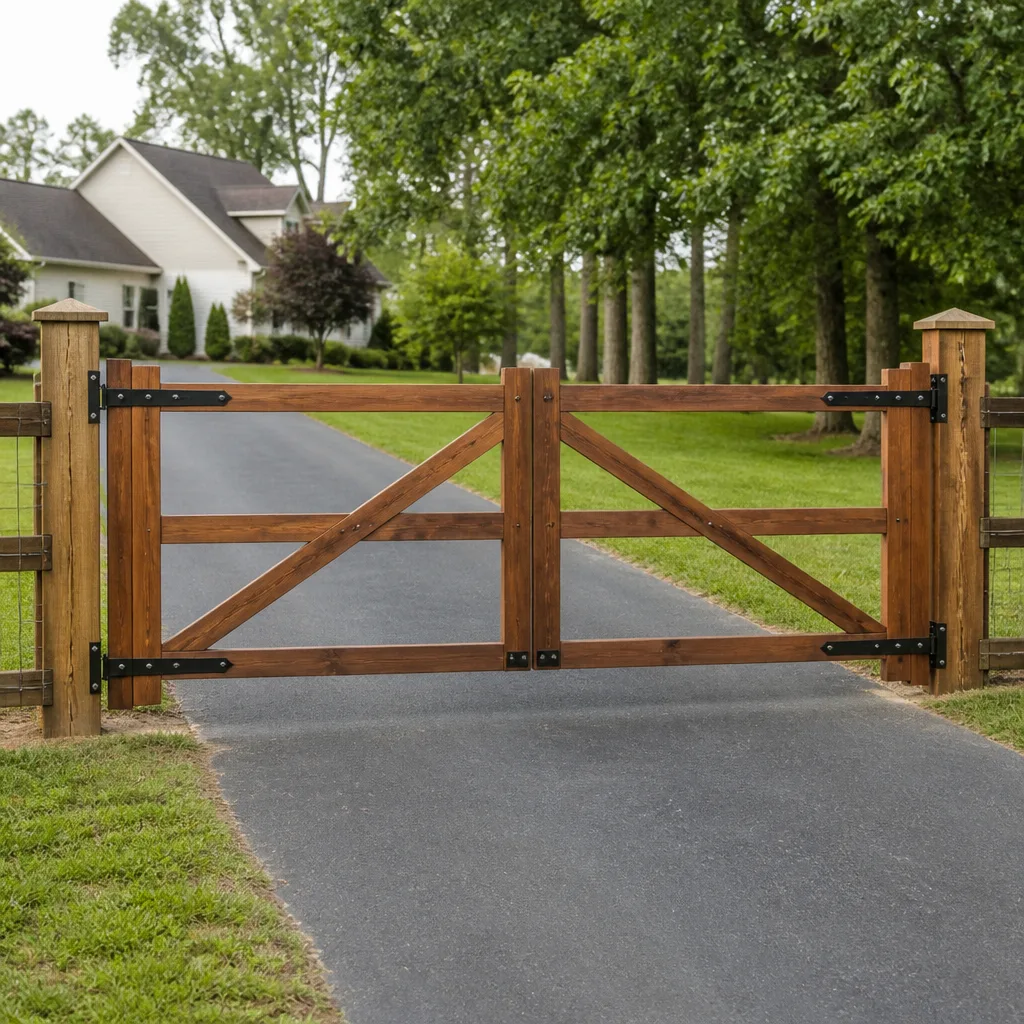 Farm & ranch
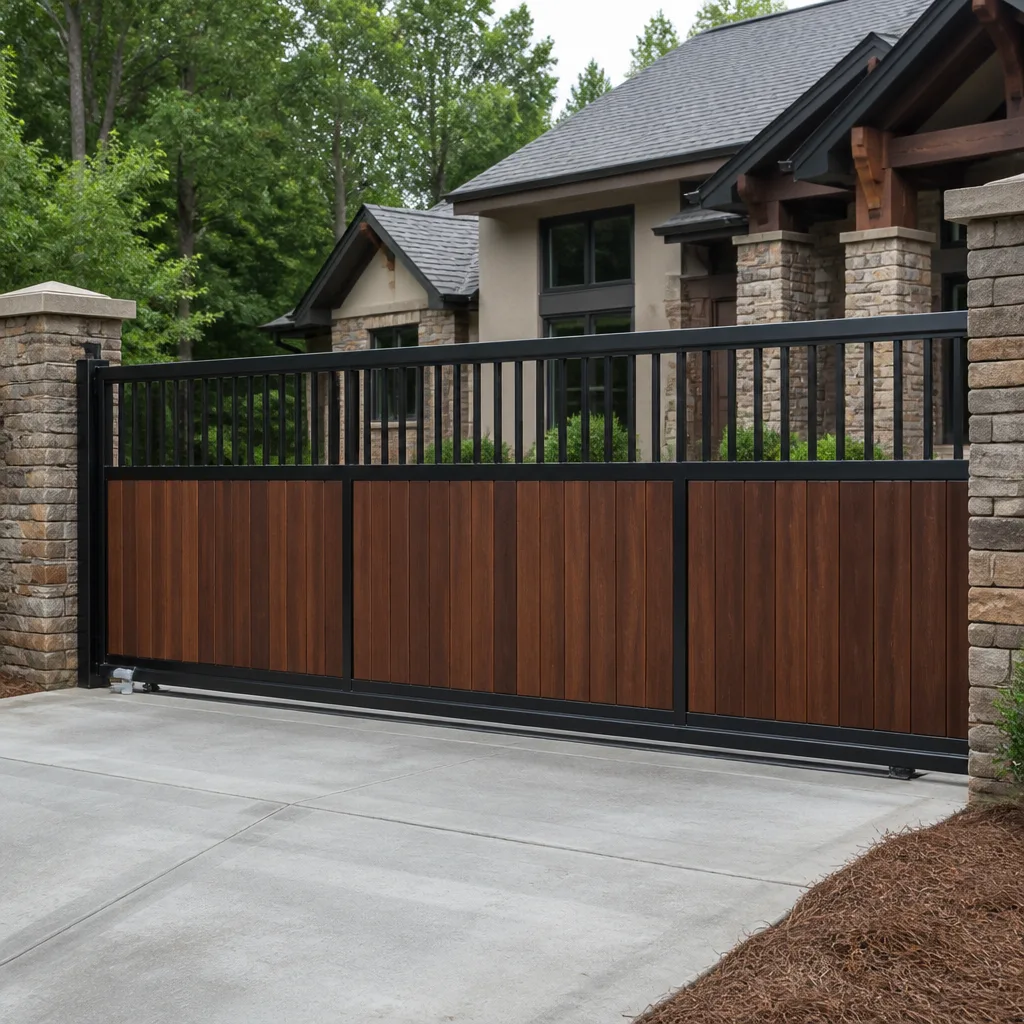 Sliding driveway gates
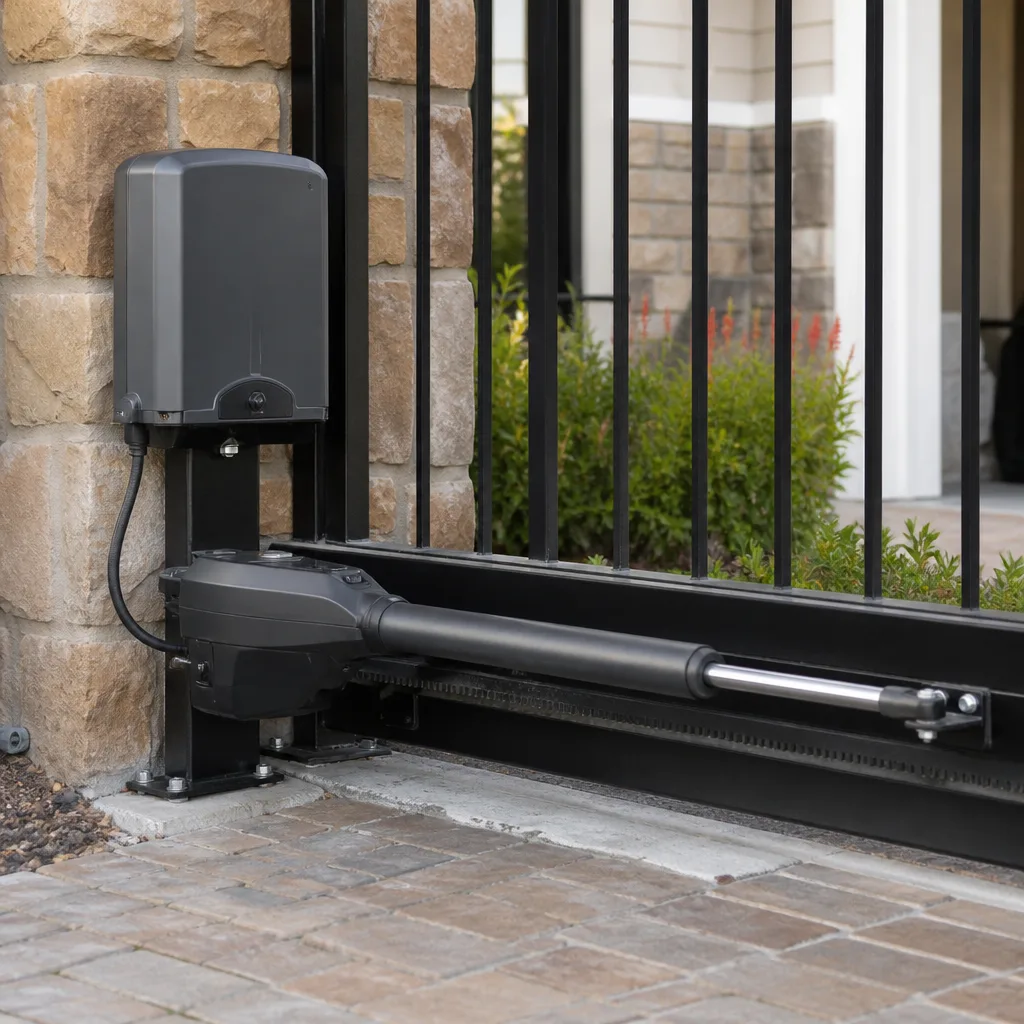 LiftMaster operators
Free on-site gate assessment - hinges, posts, and your LiftMaster or Nice gate operator checked before anything is quoted
The assessment is free and the quote is the invoice.
Get your free estimateThe Complete Gate Repair Guide for Whittier Homeowners
Most gate repair calls we take in Whittier are for problems that were already “fixed once” by the wrong diagnosis. A homeowner replaced a circuit board when the real issue was a hinge binding from post lean. Another greased every moving part on a slide gate when the operator capacitor had simply degraded from heat exposure. The result is always the same: the gate works for three weeks, fails again, and now costs more because the underlying problem compounded. This guide gives Whittier homeowners a systematic framework to diagnose gate problems correctly before spending a dollar on parts or labor. You’ll learn how Whittier’s specific soil, climate, and gate types create predictable failure patterns, which repairs are genuinely safe to attempt yourself, and when a specialist saves you money by getting the diagnosis right the first time.
Styles & brands we work with
- Wrought iron
- Wood & steel frame
- Farm & ranch
- Sliding driveway gates
- LiftMaster operators
Quick Answer
Most gate problems in Whittier trace back to three root causes: foundation settling from clay-heavy soil, UV and heat degradation of plastic components and operator internals, and DIY fixes that masked symptoms instead of solving the actual fault. Before buying any part or calling any contractor, identify whether the problem is structural (hinges, post lean, track alignment) or mechanical/electrical (operator, control board, sensors). For structural issues on gates over 400 pounds, or any repair involving live 110V wiring, call a gate specialist. For light lubrication, sensor alignment, and battery replacement on low-voltage systems, many homeowners in Whittier handle the job themselves with the right guidance.
Table of Contents
- Whittier’s Clay Soil and the Structural Failures You Can’t See
- Gate Type Matrix: Swing, Slide, and Bi-Fold Failure Modes in Whittier
- Operator Failure vs. Gate Failure: Why Misidentifying This Doubles Your Cost
- DIY-Safe Repairs vs. Specialist-Only Jobs: The Whittier Reality Check
- Whittier Seasonal Maintenance Calendar for Gates
- What Actually Drives Gate Repair Costs in Whittier
- Why Brand-Specific Expertise Matters When Your Gate Fails
- Common Mistakes to Avoid
- When to Call a Professional
- Frequently Asked Questions
- The Bottom Line
Whittier’s Clay Soil and the Structural Failures You Can’t See
Whittier sits on a mix of clay-loam soils that expand and contract dramatically with moisture. During winter rains, the clay absorbs water and swells. Through Whittier’s long dry summers, that same clay shrinks and cracks. This cycle moves gate posts, sometimes by fractions of an inch per year, sometimes more after a heavy rain season. The result is a gate that was perfectly level at installation slowly developing post lean, hinge binding, or a latch that no longer lines up.
The telltale sign of a structural problem masquerading as an electrical one is this: your operator runs, but the gate strains, hesitates, reverses, or trips its safety sensor. Homeowners often assume the motor is weak or the board is failing. In reality, the operator’s torque sensor detects the added resistance from a binding hinge and initiates a reversal. The operator is doing exactly what it was designed to do. Replacing it won’t fix a leaning post.
In neighborhoods like Friendly Hills, Michigan Park, and the hillside areas east of Whittier College, we see this pattern consistently. Properties on slopes experience more pronounced post movement because gravity adds constant downhill pressure. Even flat lots in the Uptown Whittier area deal with soil contraction around post footings during drought years, which loosens the concrete-to-soil bond and allows micro-movement that eventually becomes visible lean.
- Check the reveal gap: Measure the gap between gate and post at the top and bottom when the gate is closed. A difference of more than 1/4 inch indicates post lean.
- Observe the gate at rest: A properly balanced swing gate stays where you leave it. If it drifts open or closed on its own, the hinges are no longer plumb.
- Listen during operation: A creaking, groaning, or grinding sound that changes pitch as the gate moves is often metal-on-metal contact from misaligned hinges, not an operator problem.
- Inspect the concrete base: Hairline cracks radiating outward from the post footing indicate soil movement, especially after a wet winter followed by dry heat.
If you confirm post lean, the fix is not a new operator. It’s re-setting the post in adequate concrete depth or, in less severe cases, shimming and re-aligning the hinges. A competent gate repair in Whittier specialist should assess this first, before touching any electrical component.
Gate Type Matrix: Swing, Slide, and Bi-Fold Failure Modes in Whittier
Not all gates fail the same way. The failure profile is determined by gate type, and Whittier’s climate accelerates certain modes more than others.
Swing Gates (Most Common Residential)
Swing gates are prevalent across Whittier’s residential streets, from the 1950s homes near Laurel Elementary to newer properties in the hills. These gates pivot on hinges fixed to a post or wall, and their primary vulnerabilities are hinge wear, post movement, and operator arm fatigue. When a swing gate drags or sags, the hinge bearings are usually worn, especially on single-hinge designs where the entire gate weight loads onto one point. Years of Whittier sun causes lubrication to break down faster than manufacturers expect, leading to dry metal-on-metal contact.
- Primary failure mode: Hinge bearing wear and post lean from soil movement.
- Seasonal trigger: Winter rain saturates soil, causing posts to shift; summer heat worsens the resulting misalignment because the gate expands slightly.
- Early warning: Gate becomes noticeably harder to open manually, or the operator emits a brief grinding sound at the start of each cycle.
Slide Gates (Commercial and Larger Residential Lots)
Slide gates appear on many small commercial properties along Whittier Boulevard and on larger residential lots with limited driveway swing space. These gates roll along a track or cantilever system. Their weak points are track debris, wheel bearing failure, and chain or belt tension drift. In Whittier, especially during Santa Ana wind events, leaves, dust, and fine debris accumulate in the track channel. Over time, this debris compacts and prevents smooth roller movement, forcing the operator to work harder and eventually tripping its obstruction sensor.
- Primary failure mode: Roller bearing seizure and track contamination causing false obstruction faults.
- Seasonal trigger: High winds from the northeast blow debris directly into tracks; dry dust accumulation increases friction.
- Early warning: The gate shudders or vibrates horizontally as it opens, rather than gliding smoothly.
Bi-Fold Gates (Narrow Driveways and High-Traffic Entries)
Bi-fold gates, which fold in half as they open, are common on Whittier properties where driveway space is tight. They combine swing and slide dynamics, making their failure modes more complex. The folding hinge in the center of the gate bears enormous stress, and the operator must manage two separate panel movements. When a bi-fold gate binds mid-travel, the root cause is often a center hinge that has worn unevenly, causing the panels to fall out of plane.
- Primary failure mode: Center hinge misalignment causing panel racking and operator overload.
- Seasonal trigger: Temperature swings between cold winter nights and hot summer days expand and contract the metal panels, accelerating wear at connection points.
- Early warning: The gate visibly flexes or twists when starting to open, or one panel lags behind the other.
Understanding which type of gate you have is the first step in diagnosing any problem, and it determines which electric gate repair in Whittier approach applies.
Operator Failure vs. Gate Failure: Why Misidentifying This Doubles Your Cost
The single most expensive mistake a Whittier homeowner can make is replacing an operator when the gate itself is the problem, or vice versa. These are two separate systems that interact, and a failure in one often creates symptoms that look like a failure in the other.
Here’s the framework we use on every service call: the gate is the physical structure. That means hinges, posts, track, rollers, welds, and the gate panel itself. The operator is everything electrical: motor, control board, sensors, remote receivers, keypad, and power supply. When a problem arises, the fix depends on correctly isolating which system failed.
If your gate opens slowly but the motor sounds strong, the issue is mechanical resistance. That’s a gate failure, even though the operator shows the symptom. If the gate moves freely by hand but the operator stalls or behaves erratically, the issue is electrical. That’s an operator failure.
The costly misdiagnosis happens when an operator is replaced, only for the new motor to strain against the same worn hinge or misaligned track. In some cases, the new operator’s safety features detect the excess load and refuse to run at all, leading the frustrated homeowner to think the new part is defective. The original hinge problem is still there, and now the labor and parts costs have doubled.
In our experience across Whittier, approximately 40% of “operator failures” are actually gate failures in disguise. The most reliable way to avoid this trap is a simple isolation test:
- Disengage the operator: Most operators have a manual release lever or key. Pull it so the gate can move freely.
- Move the gate manually: Push the gate through its full travel. It should move smoothly with consistent, moderate effort. Any sticking, binding, grinding, or uneven resistance indicates a gate-side mechanical issue.
- If manual movement is smooth: Re-engage the operator and run it through a cycle. If it now struggles, the problem is in the operator, its power supply, or its sensors.
- If manual movement is difficult: The gates hinges, rollers, track, or post alignment are the root cause. Addressing the operator first would be wasted money.
This test alone can save Whittier homeowners hundreds in unnecessary parts and labor. A specialist at Capitol Gate Repair home performs this isolation diagnosis on every call before quoting any repair, because we know from experience that the first symptom is rarely the whole story.
DIY-Safe Repairs vs. Specialist-Only Jobs: The Whittier Reality Check
We believe homeowners should absolutely handle simple maintenance tasks. It extends the life of the equipment and prevents small issues from becoming expensive failures. But there’s a line where DIY crosses from smart savings into genuine risk, and that line is drawn by two factors: weight and voltage.
What’s Reasonably DIY-Safe
- Sensor realignment: Photo-eye sensors near the bottom of the gate track or posts sometimes get bumped out of alignment. Carefully cleaning the lens and confirming each sensor faces its counterpart is a five-minute task.
- Visual inspections: Checking hinges, track channels, and operator enclosures for visible wear, rust, or debris accumulation needs no special tools.
- Light lubrication: Applying the correct grease (as specified by your operator manual) to hinges and chain drives is a simple maintenance task that greatly extends component life. Use the manufacturer’s recommended product, not generic WD-40, which actually dissolves protective lubricants.
- Keypad battery replacement: Most wireless keypads use standard 9-volt or AA batteries. Swapping them is safe and straightforward.
- Track cleaning for slide gates: Removing leaves and debris from an exposed track channel is safe, provided the gate is fully disengaged and secured against movement first.
What Requires a Specialist
- Any repair involving 110V or 240V wiring: Gate operators connect to your home or commercial electrical service. Opening the operator enclosure and touching internal components with the power connected carries real risk of electrocution. A teardown of the board, capacitor, or transformer is not a homeowner task.
- Gates weighing over 400 pounds: Most steel driveway gates in Whittier, including many swing gates and nearly all slide gates, exceed this threshold. If the gate needs to be lifted, re-hung, or re-aligned, gravity is not your friend. A falling gate can cause catastrophic injury.
- Spring or tension systems: Some swing gates incorporate heavy torsion springs to counterbalance gate weight. These springs are under high tension, and removing or adjusting them improperly can release that energy suddenly.
- Operator electrical diagnostics: When the symptom is intermittent failure, stuck relays, or a control board that resets randomly, the tools and knowledge required to diagnose accurately fall outside most homeowners’ expertise. Improper probing of a live board can damage the controller permanently.
- Safety sensor system faults: Gates in Whittier must comply with UL 325 safety standards, which mandate that a gate reverse upon encountering resistance or an obstruction. A sensor system that is missing, bypassed, or misaligned creates a genuine safety hazard. Repairing this properly requires a professional who can verify all safety functions after work is done.
The rule of thumb: if the repair involves lifting anything heavy or touching anything electrical beyond a keypad battery, call someone who does this every day. The cost of a service call is always less than the cost of an injury or a destroyed operator.
Whittier Seasonal Maintenance Calendar for Gates
Whittier’s climate is mild most of the year, but it throws specific weather events at gates that predictable maintenance can address. This calendar is built around the actual conditions we see in Whittier, not generic seasonal advice.
September – October (Pre-Santa Ana Preparation)
Before the first Santa Ana wind event arrives, typically in late September through November, perform a full debris check. Clear slide gate tracks of accumulated dust and leaves. Check that gate posting hardware is tight. Remove any loose branches or vegetation near the gate path. Santa Ana winds gust in Whittier from the northeast, pushing debris directly into gate tracks and againstgate panels. An hour of pre-season cleaning prevents a wind-blown branch from jamming a track and forcing the operator into overload fault.
November – January (Rain Season Checks)
Whittier’s rain falls almost entirely between November and March. This is when clay soil absorbs moisture and expands. During this window, watch for any change in gate alignment. A gate that was perfectly aligned in October but binds in December is telling you the post has moved. Check weather seals around operator enclosures, especially for gates exposed to direct runoff. Verify that the operator’s bottom plate and any low wiring penetrations are sealed against moisture intrusion.
February – March (Post-Rain Structural Review)
After the heaviest rain has passed, re-check post plumb and gate alignment. Soil movement often peaks at the end of the wet season. If you notice any new lean, catching it now means a simpler hinge adjustment rather than a full post reset later. Clean any accumulated mud or silt from the bottom track of slide gates.
April – June (Pre-Heat Maintenance)
As Whittier transitions into its hot, dry summer, lubricate all hinge points and chain drives. Use the correct grease. Heat accelerates lubricant breakdown, and introducing fresh lubrication before the hot season prevents dry operation through the summer months. Inspect all plastic components, including sensor housings and wire insulation, for UV brittleness.
July – August (Peak Heat Monitoring)
Whittier routinely hits the high 90s in late summer, and heat waves push temperatures above 100°F. During these months, operator capacitors and circuit boards are most prone to thermal failure. If your operator is mounted in direct afternoon sun, especially on west-facing installations, consider adding a shade structure or heat shield during the next off-season. Monitor for unusual behavior: slow start, hesitation, or intermittent non-response, which often precede heat-related board failure.
This calendar is intentionally simple. A few minutes of seasonal attention dramatically reduces the chance of an emergency gate repair call in Whittier when you least want to deal with it.
What Actually Drives Gate Repair Costs in Whittier
Gate repair costs vary widely, and the variables are rarely what homeowners expect. A simple sensor alignment might take 30 minutes. A post reset requiring concrete demolition and re-pouring takes most of a day. The parts cost for a failed capacitor might be under $100, while a new swing arm operator for a heavy cast-iron gate can run significantly more. Here’s what actually determines the price in Whittier:
- Gate weight and construction: A lightweight aluminum tube gate is easier to work on than a solid steel or wrought iron gate. Labor time increases with weight.
- Operator brand and model: Commercial-grade operators from brands like FAAC and BFT have more expensive components than entry-level residential units from Mighty Mule. The good news is that commercial operators are often more repairable at the component level, which can save money over full replacement.
- Access to the operator: If your operator is buried in a planter, mounted behind a fence, or in a cramped utility area, labor time goes up.
- Age of the system: Older gates, especially those installed before 2000, may lack compliant safety sensors. Upgrading to meet current UL 325 standards adds cost but is legally required for many installations.
- Structural vs. electrical repair type: Structural work (post reset, hinge replacement, track realignment) typically costs more than electrical repairs (sensor replacement, remote programming, keypad wiring) because it involves heavier labor and materials like concrete.
Every repair we quote in Whittier includes a clear breakdown before any work begins. The price you approve is the price you pay. If a repair reveals hidden damage once we open an operator enclosure or remove hinge covers, we stop and re-quote before proceeding. No surprises on the final invoice.
Why Brand-Specific Expertise Matters When Your Gate Fails
Most general contractors can grease a hinge or replace a gate wheel. When the problem involves a specific operator brand’s electronics, their ability to diagnose accurately drops off a cliff. Gate operators are not interchangeable in their programming logic, sensor protocols, or wiring configurations. A Linear operator behaves differently from a Viking. A FAAC control board has diagnostic codes that a BFT board does not. A technician who “figures it out on the job” is learning on your dime.
Capitol Gate Repair is certified to service nine major gate brands: LiftMaster, FAAC, BFT, Linear, Viking, Ghost Controls, DoorKing, Elite, and Mighty Mule. This matters because when a Whittier homeowner with a Viking slide gate calls with an intermittent stop fault, our technician arrives knowing where Viking operators typically develop that fault, what diagnostic code to look for, and whether the fix is a limit switch adjustment or a board-level issue. That level of familiarity means the repair takes one visit instead of two or three.
Your electric gate repair in Whittier should start with the assumption that the technician knows your brand. If the quote sounds like guesswork, it probably is. A specialist’s advantage is not lower hourly rates. It’s fewer hours needed, correct parts ordered the first time, and a repair that stays fixed because the root cause was found.
Common Mistakes to Avoid
- Replacing the operator before checking the gate structure. As covered earlier, a binding hinge or leaning post often causes the exact symptoms of operator failure. Replacing the operator first almost guarantees you’ll spend double.
- Using WD-40 on gate hinges or chains. This is the most common DIY mistake we see in Whittier. WD-40 is a solvent, not a lubricant. It strips away existing grease and accelerates wear. Use the lubricant specified in your operator manual.
- Ignoring a gate that’s “getting slower.” Gates don’t gradually slow down for no reason. Slow operation means something is wearing out or binding. The earlier you diagnose it, the smaller the repair. Waiting until the gate stops completely converts a $150 hinge repair into a $1,500 operator replacement.
- Disabling safety sensors to “fix” a reversing gate. When a gate reverses on its own, it’s usually the safety system detecting resistance or an obstruction. Bypassing the sensors is both dangerous and illegal. A child or pet can be trapped or injured. This is not a repair; it’s creating a hazard.
- Pouring concrete around a leaning post without addressing the cause. Adding concrete around a post that moved due to soil expansion does not fix the problem, and often makes it worse by creating a larger footing that moves even more. The post needs to be properly re-set or replaced with adequate depth, not entombed in a larger block.
- Assuming a commercial gate repair is the same as a residential one. Commercial systems in Whittier, especially along Whittier Boulevard and in industrial areas, operate under stricter safety codes and higher duty cycles. A technician experienced only with residential gates will miss critical compliance requirements.
When to Call a Professional
If your gate shows any of these signs, call a specialist before attempting further repairs: the gate reverses or stops mid-cycle despite no visible obstruction; the operator makes a humming sound but nothing moves; the gate post is visibly leaning or the gate sags noticeably at the open end; you smell burning or see scorch marks on the operator enclosure; or the gate has collided with a vehicle, person, or object. These scenarios indicate damage that worsens with continued use and often involves weight or voltage hazards. Capitol Gate Repair offers free estimates in Whittier. Call (866) 321-3968, describe what’s happening, and we’ll tell you honestly whether it needs a service visit. If we can save you the trip with a simple adjustment over the phone, we will.
Frequently Asked Questions
Gate repair in Whittier typically ranges from $150 for minor sensor or lubrication work to $1,500 or more for full operator replacement or structural post resetting. The average service call falls between $250 and $600. The exact price depends on your gate type, the operator brand, and whether the problem is structural or electrical. Call (866) 321-3968 for a free estimate specific to your gate.
For emergencies involving a gate stuck open or failing to close securely, same-day service is often available across Whittier. Call early in the day at (866) 321-3968 and describe the problem. We prioritize security failures, since a gate that won’t close leaves your property exposed.
Yes. We service FAAC and BFT operators regularly across Whittier, along with Linear, Viking, LiftMaster, DoorKing, Elite, Ghost Controls, and Mighty Mule. These brands span residential and commercial systems, and our technicians are certified on all nine.
A gate that reverses mid-cycle is usually sensing resistance or an obstruction. Check the track or gate path for debris first. If the path is clear, the cause is likely a misaligned hinge, failing bearing, or operator torque sensor issue. Do not bypass any safety sensors. Call (866) 321-3968 for diagnosis.
A full installation can include the gate itself, the operator, safety sensors, keypad or card reader, and all necessary power wiring. Whether you need everything or just a new operator on an existing gate depends on your property. We quote gate installation in Whittier as a complete package, with the price agreed before any work starts.
Yes. Running power from your electrical panel to the operator location and installing compliant safety edges and photo-eye sensors are part of what we do on new installations and major repairs. These components must meet UL 325 safety standards, and we verify every safety function before the job is complete. Call (866) 321-3968 for details on your specific setup.
The Bottom Line
Whittier homeowners face a predictable set of gate problems driven by clay soil movement, intense summer heat, and the complexity of matching diagnosis to the right repair. The homeowners who save the most money are the ones who identify whether the problem is structural or electrical before calling anyone, who avoid destructive DIY shortcuts like WD-40 and sensor bypassing, and who call a brand-specific specialist when the issue involves serious weight or live wiring. Your gate is a security barrier, a convenience, and a significant property investment. Treat it with a seasonal maintenance routine, isolate problems correctly, and when the repair exceeds the DIY-safe line, reach a specialist who fixes it right the first time. Capitol Gate Repair offers free estimates across Whittier at (866) 321-3968.
Written by the team at Capitol Gate Repair, serving Whittier since 2013.
See the difference
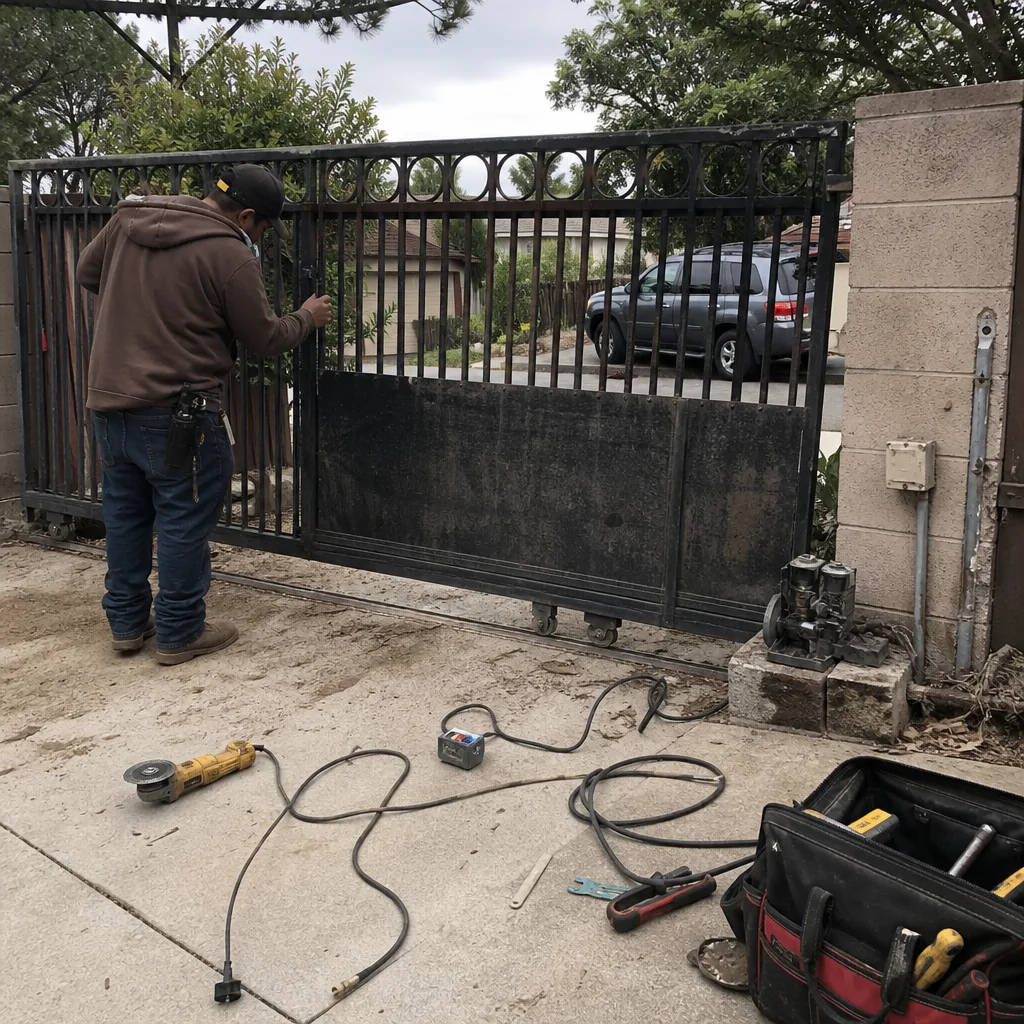 Before
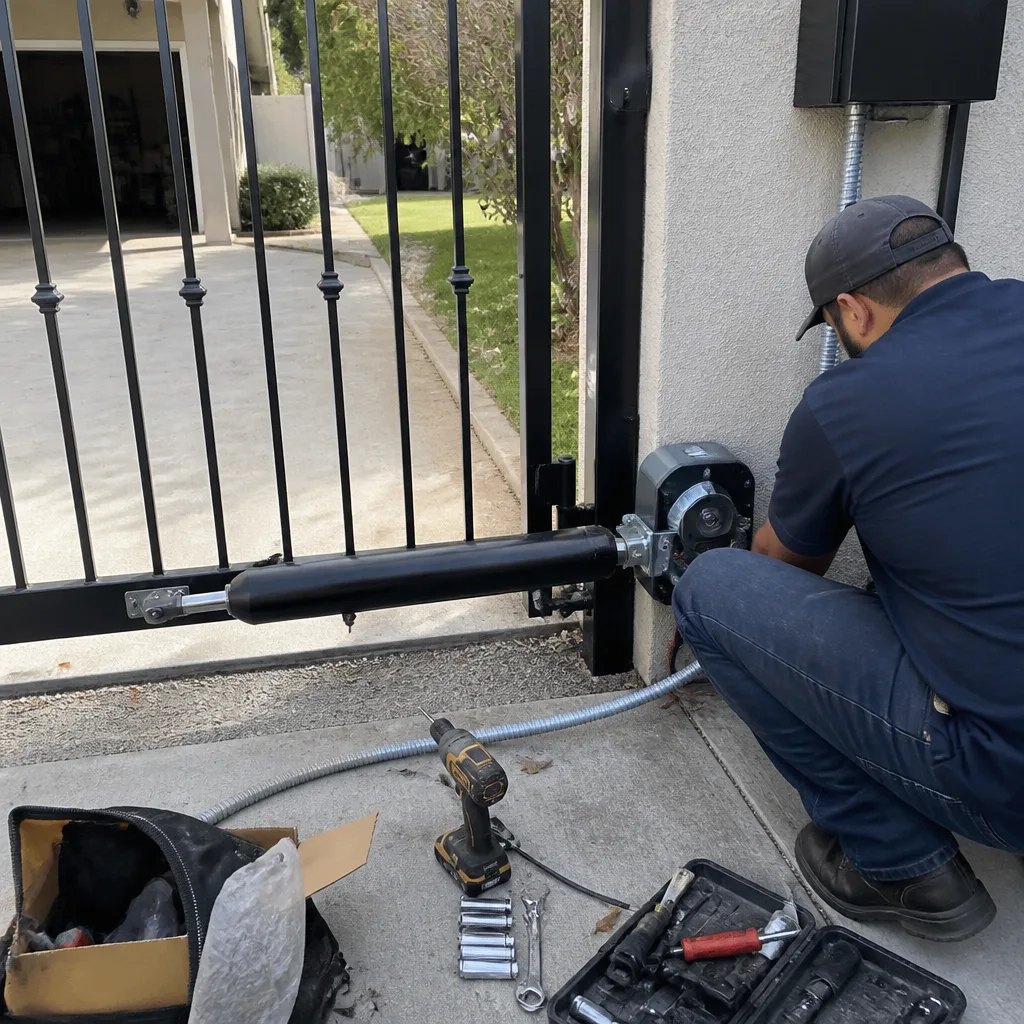 After
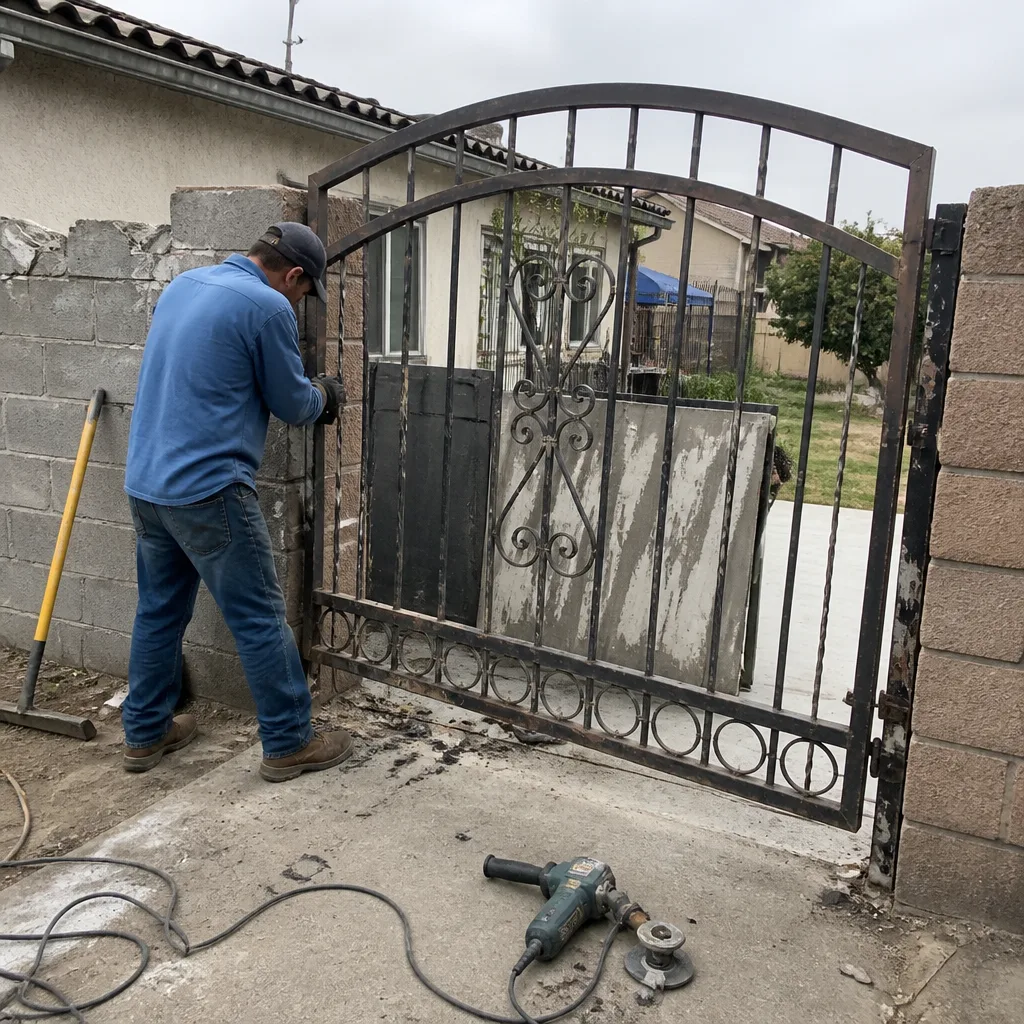 Before
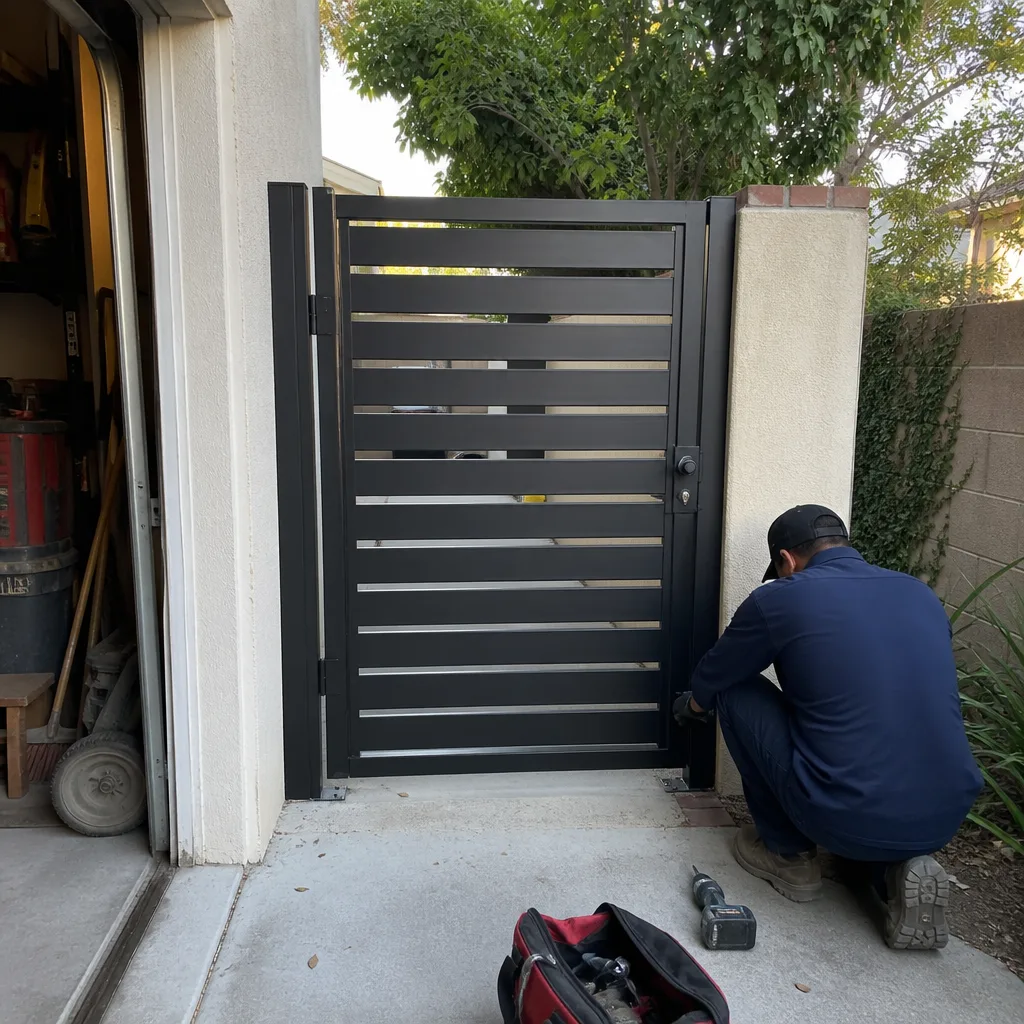 After
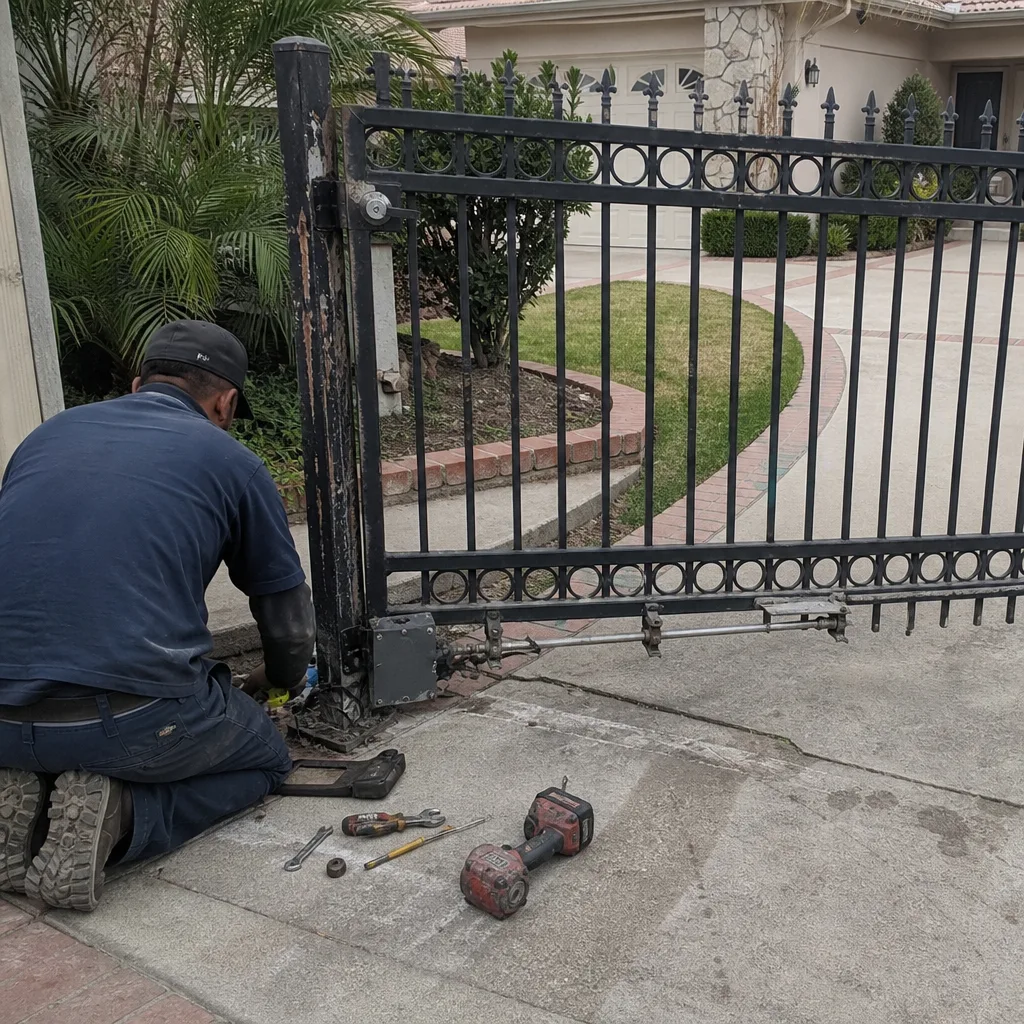 Before
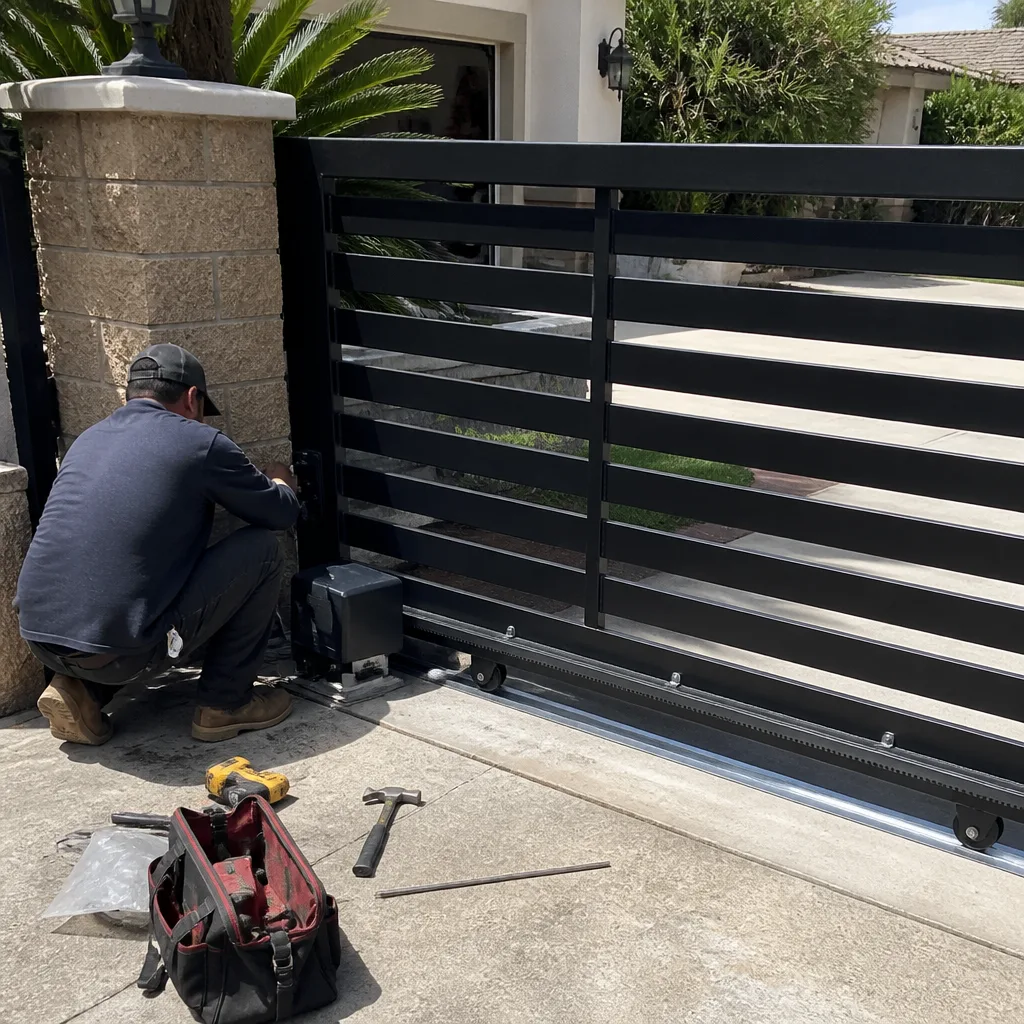 After