
Last updated November 2, 2026
 Wrought iron
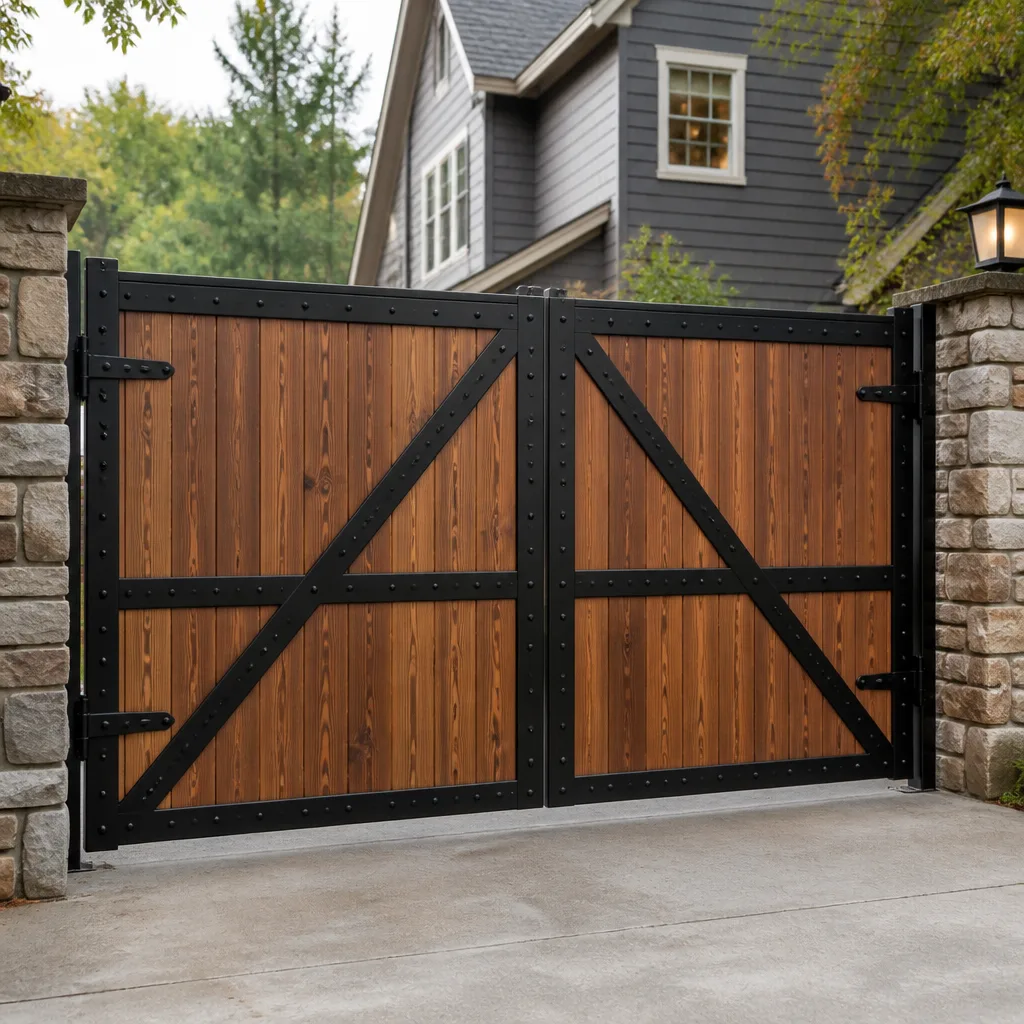 Wood & steel frame
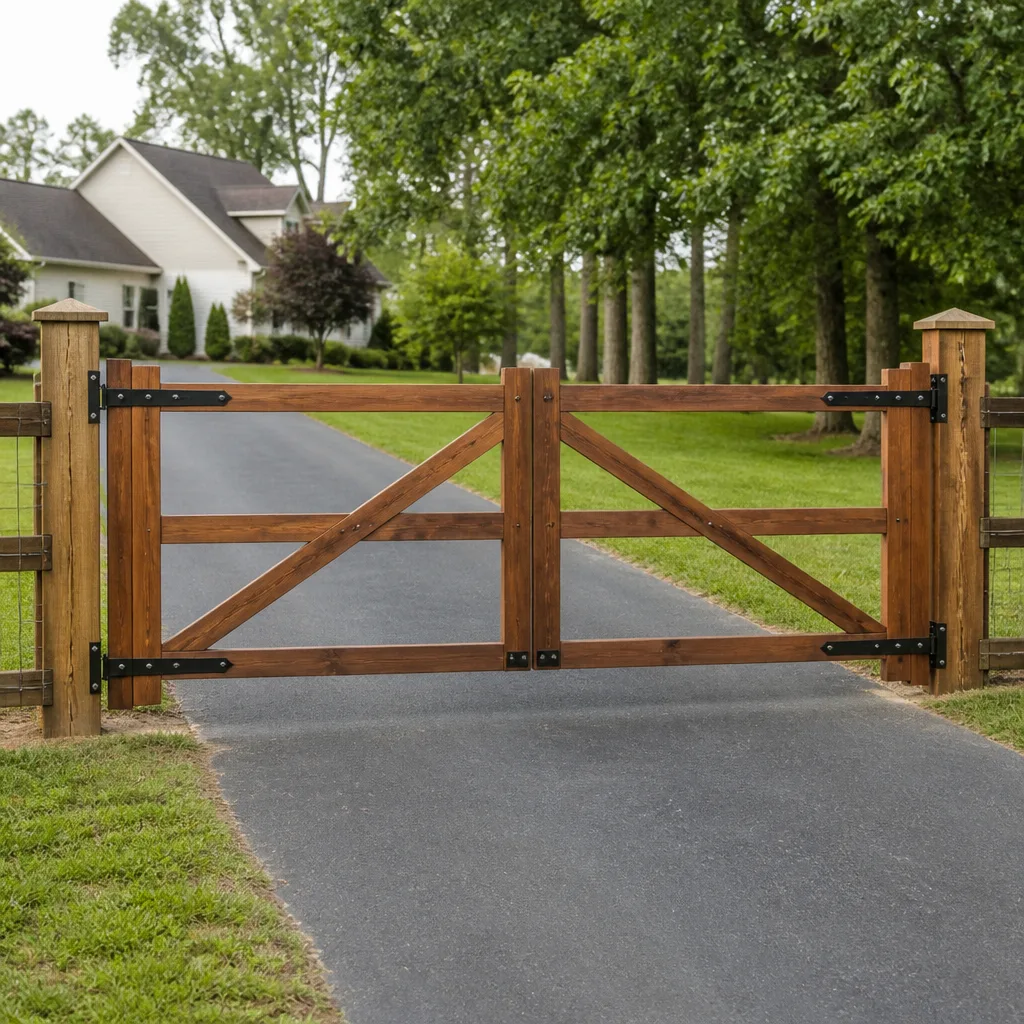 Farm & ranch
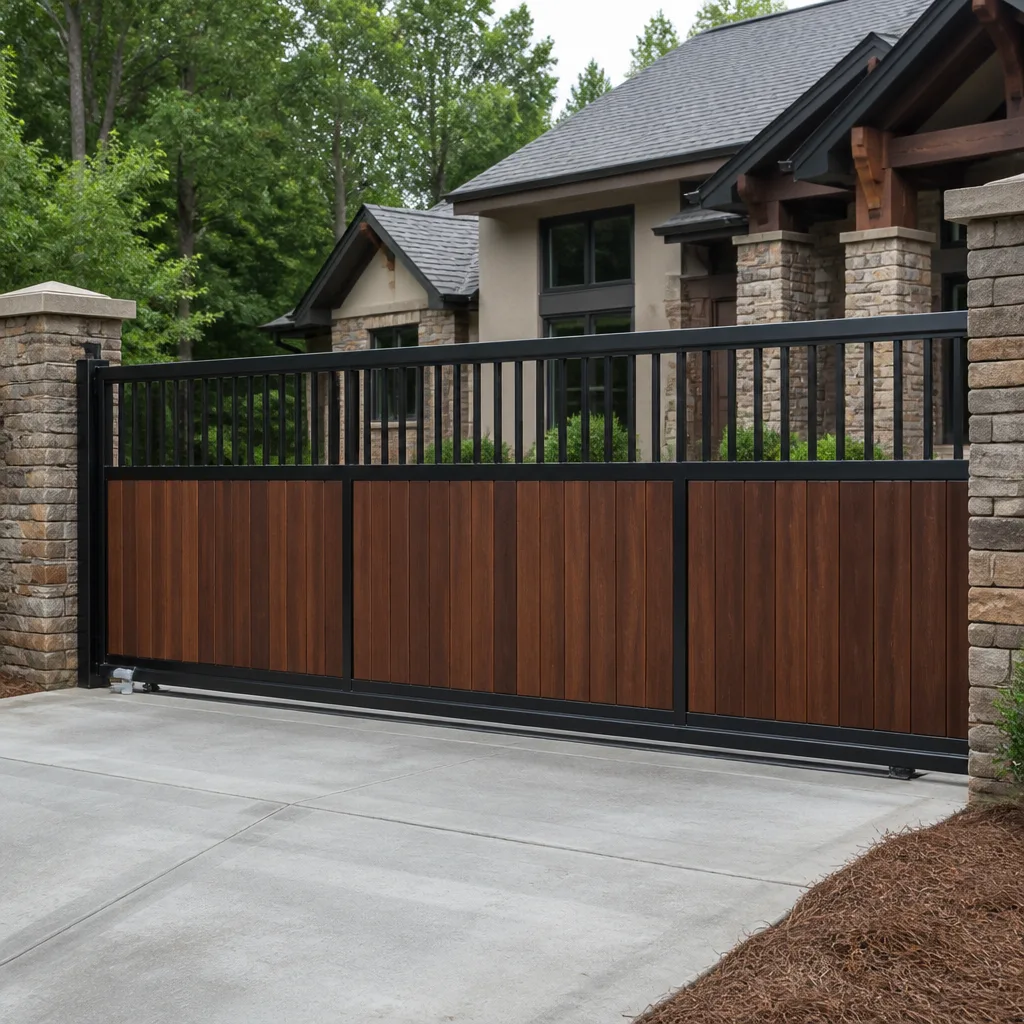 Sliding driveway gates
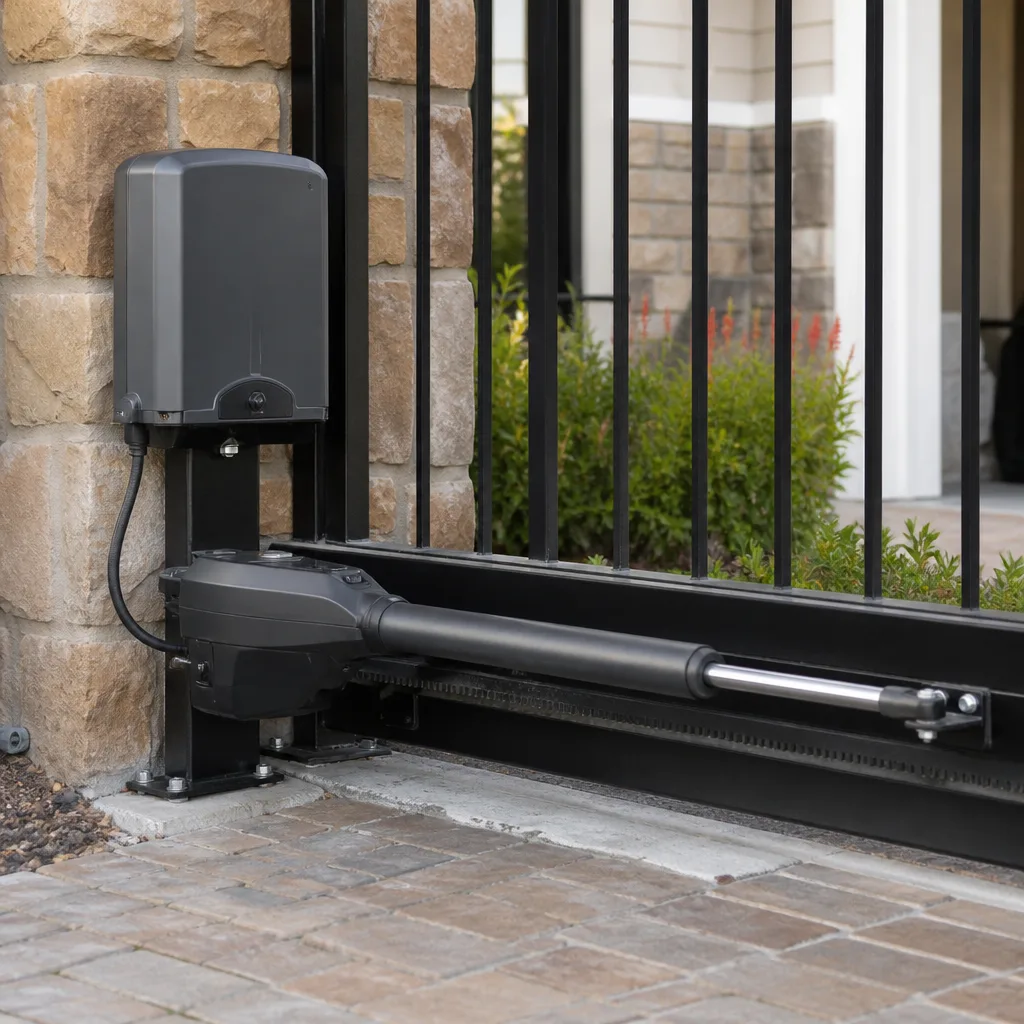 LiftMaster operators
Free on-site gate assessment - hinges, posts, and your LiftMaster or Nice gate operator checked before anything is quoted
The assessment is free and the quote is the invoice.
Get your free estimateGate Repair Permits, Codes & Inspections in CA: What You Need to Know
Installing a new gate opener without a permit in California isn’t just a code violation. It’s a documented liability that can cause your insurance company to deny a claim if someone is injured by the gate. Most homeowners in Whittier assume our Gate Repair services fall under minor repairs, but the California Building Code draws a sharp line between fixing an existing gate and altering its automation or structure. This guide covers exactly where that line sits, how Los Angeles County amendments change the rules, what UL 325 compliance means for your system, and what unpermitted gate work does to a property sale. We’ll also explain when a repair genuinely needs no permit at all.
Quick Answer
In California, repairing an existing gate (welding, hinge replacement, motor swap on an already-permitted system) typically requires no permit. Installing a new automatic gate opener, replacing structural posts, or adding a new gate where none existed generally does require one. For Gate Repair Troubleshooting: Common Problems and How to Fix Them, see our dedicated guide. In Whittier and greater Los Angeles County, local amendments add specific requirements for electrical disconnects and safety edges that inspectors check closely. The safest approach: call your city’s building department before any project that touches the opener or the post footings, and know that unpermitted automatic gate work can surface during a home sale and trigger a retrofit demand.
Styles & brands we work with
- Wrought iron
- Wood & steel frame
- Farm & ranch
- Sliding driveway gates
- LiftMaster operators
Table of Contents
- What Gate Projects Trigger a Permit in California
- Repairs That Don’t Require a Permit
- Whittier & LA County Local Amendments
- UL 325 Compliance: What Inspectors Look For
- Unpermitted Gate Work and Property Sales
- Contractor-Pulled vs. Homeowner-Pulled Permits
- How to Retroactively Resolve Unpermitted Gate Work
- Common Mistakes to Avoid
- When to Call a Professional
- Frequently Asked Questions
What Gate Projects Trigger a Permit in California
A gate permit in California hinges on two things: whether you’re touching the automation system and whether you’re altering the structure. The California Building Code (CBC), which adopts and amends the International Building Code, treats automatic gates as a combination of electrical work, structural work, and life-safety equipment. That means a gate project can trigger a permit under any of those three chapters.
Here’s what typically requires a permit in Whittier and across Los Angeles County:
- New automatic gate opener installation. Adding a motor, control board, or actuator to a gate that was previously manual is an electrical installation. It requires an electrical permit and inspection.
- Replacing structural gate posts. Cutting out old posts and setting new ones in concrete is structural work. The depth, diameter, and footing design must meet current code, especially in Whittier’s expansive clay soils, where shallow footings shift with seasonal moisture changes.
- Installing a new gate where none existed. A brand-new driveway or pedestrian gate means new footings, new electrical runs, and possibly a new access point. This is a full permit project.
- Adding or modifying gate access control. Keypads, card readers, telephone entry systems, and vehicle loop detectors all involve low-voltage wiring, but many municipalities still require an electrical permit for the circuit.
- Upgrading a manual gate to automatic. This is the most common unpermitted project we see. Homeowners buy a Mighty Mule or Ghost Controls kit and install it over a weekend. The gate works, but there’s no record of the electrical circuit, no inspected safety edges, and no approved disconnect.
The key distinction: repair is exempt. Installation and alteration are not. Replacing a failed capacitor on a FAAC board does not need a permit. Removing a manual gate and installing a new automated FAAC system absolutely does.
In our experience, the projects that surprise people most are post replacements. A homeowner sees a leaning gate, a contractor digs out the old post, pours a new footing, and the gate works again. What that homeowner doesn’t realize is that the new footing is now supposed to be permitted and inspected. If the post later fails and damages a vehicle or injures someone, the absence of that permit record becomes a problem.
Repairs That Don’t Require a Permit
The California Building Code exempts maintenance and minor repair work from the permit requirement. For gates, that covers a lot of what we do on a typical service call. Here’s a clear list of no-permit repairs:
- Replacing a gate opener motor. If the system already has an approved, permitted installation, swapping the motor on a LiftMaster, FAAC, BFT, or Linear unit is a repair on an existing circuit. No new wiring means no electrical permit.
- Replacing control boards, capacitors, or relays. These are component-level repairs on existing equipment. The circuit already exists and has been inspected.
- Welding or reinforcing an existing gate frame. Structural repairs to the gate leaf itself, as long as you aren’t modifying the post footings or changing the gate’s weight class, fall under maintenance.
- Replacing hinges, rollers, and track hardware. This is the mechanical equivalent of changing brake pads. No permit required.
- Adjusting or replacing safety sensors and photo eyes. This is a component swap on an existing safety system. In fact, California inspectors want you to do this without delay since a non-functional safety sensor is a UL 325 violation and an active liability.
- Adding or replacing a gate lock. Unless you’re running new power for a mag lock, this is hardware replacement.
The border gets fuzzy when a repair changes the system’s operating characteristics. For instance, replacing a residential BFT operator with a heavier-duty BFT model designed for a heavier gate changes the electrical load. If the new unit draws more amperage, an inspector could argue the circuit needs reevaluation. Similarly, adding a second photo eye where only one existed is a safety upgrade, but it involves wiring modifications that some jurisdictions want inspected.
The Whittier building department’s rule of thumb, like most LA County cities, is: if the work is restoring the gate to its previously approved condition, no permit is needed. If the work is changing the gate’s original design or operation, pull a permit.
Whittier & LA County Local Amendments
Whittier adopts the California Building Code with local amendments through Title 15 of the Whittier Municipal Code. Los Angeles County has its own set of amendments that apply to unincorporated areas, but Whittier, as an incorporated city, enforces its own versions. If your gate is in Whittier proper, you deal with the city’s Building & Safety Division. If you’re in an unincorporated pocket served by LA County, the County’s Building Code applies. Either way, the local amendments matter.
Here’s what Whittier and LA County add on top of the state code for automatic gates:
- Dedicated electrical disconnect within sight of the gate operator. County inspectors are strict about a visible, accessible disconnect switch. This lets first responders kill power to the gate from outside the vehicle path.
- Safety edge requirements for sliding gates. California’s UL 325 adoption requires contact sensors along all potential pinch points. Local inspectors in Whittier specifically check the full travel length of a sliding gate, including the trailing edge.
- Setback and sight-distance rules for driveway gates. If you’re installing a new gate in Whittier, the city wants the gate set back far enough from the street that a car waiting for the gate to open isn’t blocking the sidewalk or the public right-of-way.
- Fire access requirements. Whittier’s hillside neighborhoods, including parts of Friendly Hills and Michigan Park, have additional fire-code scrutiny. A gate that blocks a fire truck’s access to a home can create a life-safety violation, especially during Santa Ana wind season when the city’s fire risk peaks.
- Expansive soil requirements for post footings. Whittier sits on clay-heavy soil that expands and contracts with rain. The city enforces minimum footing depths and, in some zones, requires a soils report for posts above a certain height or gate weight.
One thing we tell every Whittier homeowner: call the building department before you finalize your gate design. It’s a fifteen-minute phone call, and the counter staff will tell you exactly what the city wants for your specific parcel. Guessing wrong costs more in rework than the call ever will.
UL 325 Compliance: What Inspectors Look For
UL 325 is the national safety standard for automatic gate operators. California adopts it by reference in the CBC, which means every automatic gate in the state must comply. When an inspector comes out for a final inspection on a new automated gate, UL 325 compliance is the heart of what they’re checking.
The standard exists because automatic gates can and do kill people. Crushing injuries, entrapment, and blunt-force impacts are real failure modes. Inspectors in Whittier look for these specific UL 325 items:
- Entrapment protection devices. Every automatic gate must have either a contact sensor (safety edge that reverses the gate on physical contact) or a non-contact sensor (photo eye that detects a person or object in the gate’s path). Most California installations require both, depending on the gate type and entrapment zones.
- Force settings. The operator’s internal force limiter must be set so the gate reverses when it meets resistance. An inspector may test this by applying pressure to the gate’s leading edge during operation.
- Warning signage. Two warning signs per gate, visible from both sides of the gate’s travel zone. The signs must be permanent, weather-resistant, and mounted between three and five feet above grade.
- Manual disconnect. A clearly accessible manual release that allows the gate to be operated by hand in a power failure. For a Viking or Linear operator, this is usually a keyed disconnect on the housing.
- Gate weight and duty cycle rating. The operator must be rated for the gate’s weight, length, and expected daily cycle count. Undersizing an operator is a code failure, and inspectors in LA County are familiar enough with LiftMaster, FAAC, and BFT ratings to check the data plate.
If a gate is installed by a homeowner without an inspection, none of these items get verified. The gate may work fine for a year. Then a child runs into the gate’s path and the photo eye doesn’t reverse it because the eye was never aligned correctly in the first place. That’s the scenario no one wants, and it’s exactly why the inspection exists.
We regularly service Viking and Linear swing gate systems in Whittier where the original installation was never inspected. The operator runs, but the safety edge is missing, the photo eye is misaligned, and the force settings are cranked up to move a stiff gate. All of that is a UL 325 violation, and the homeowner has no idea until we walk them through it.
Unpermitted Gate Work and Property Sales
When you sell a home in California, the buyer’s disclosure forms ask a clear question: has any work been done on the property without a permit? If you installed an automatic gate opener yourself and never pulled a permit, you have to disclose it. If you don’t, and the buyer later discovers the unpermitted gate, you have a misrepresentation claim on your hands.
Here’s what unpermitted gate work actually means in a Whittier or LA County real estate transaction:
- Disclosure obligation. The California Real Estate Transfer Disclosure Statement (TDS) requires you to list improvements made without permits. An automatic gate counts.
- Lender scrutiny. FHA and VA loans have specific requirements about unpermitted structures and electrical work. A lender can require the gate to be brought into compliance or removed before funding.
- Appraisal impact. An automated gate can add value, but only if it’s permitted. An appraiser may not count an unpermitted gate in the valuation at all.
- Insurance implications. If a gate-related injury occurs on a property with unpermitted automatic gate work, the homeowner’s insurer may deny the liability claim. The policy language typically excludes damages arising from unpermitted improvements.
- City retrofit demand. If the city becomes aware of unpermitted work (through a complaint, an inspection triggered by another project, or a property sale inspection), it can issue a notice requiring retroactive permits, inspections, and upgrades to current code.
The retroactive path in Whittier is not as painful as people fear. Filing a permit after the fact, having the work inspected, and correcting any deficiencies is a standard process. The building department wants compliance, not punishment. But it does cost money and time, and the corrections can be substantial if the original installation doesn’t meet current UL 325 requirements.
We’ve helped homeowners in Whittier through after-the-fact permits for automatic gates installed by previous owners. In many cases, the fix is manageable: adding a photo eye, adjusting force settings, installing a proper disconnect. In a smaller number, the operator has to be replaced because it predates current safety standards and can’t be upgraded.
Contractor-Pulled vs. Homeowner-Pulled Permits
There’s a meaningful difference between who pulls the permit, and it’s not just paperwork.
A homeowner pulling a permit on their own gate project is, in the eyes of the city, acting as the general contractor. That means the homeowner is responsible for scheduling inspections, being present for them, and correcting any deficiencies the inspector flags. It also means the homeowner is technically responsible for code compliance, which, for a technically complex project like an automatic gate installation, is a stretch for most people.
When a contractor pulls the permit, the contractor’s license is on the line with the Contractors State License Board. The contractor must be licensed for the applicable classification. For gate work that involves electrical installation, that means a C-10 electrical classification or working under a licensed electrical contractor. A general building contractor (B) can pull a permit for the structural portions but typically needs a licensed electrician for the electrical portion.
At Capitol Gate Repair, we specialize exclusively in gates. That focus means we know which portions of a gate project in Whittier require which permit type, and we can coordinate the electrical and structural elements in one scope of work. A general contractor who handles gates as a side project is less likely to know, for example, that a Viking swing-gate operator installed in a hillside Friendly Hills property needs a different footing consideration than a flat-lot installation in Uptown Whittier.
The accountability difference matters too. If you pull your own permit and the inspection fails, the correction is on you. If a licensed contractor pulls the permit and the work fails inspection, the contractor is obligated by contract and license law to correct it. For most homeowners, letting the specialist handle permitting is the better path, especially when the project includes electrical work they can’t verify themselves.
How to Retroactively Resolve Unpermitted Gate Work
If you own a home in Whittier with an automatic gate that was never permitted, here’s the step-by-step process to bring it into compliance:
- Document the existing installation. Note the operator brand and model (LiftMaster, FAAC, BFT, Linear, Viking, Ghost Controls, DoorKing, Elite, or Mighty Mule), the gate type, dimensions, weight estimate, and what safety devices are present or missing.
- Call the Whittier Building & Safety Division. Explain the situation honestly. The city has processed hundreds of after-the-fact permits and will tell you exactly what’s required for your situation.
- Have a licensed electrician or gate specialist assess the existing wiring. The city will want the electrical portion reviewed by someone qualified to sign off. This is where a gate-specific contractor helps because they understand both the electrical and the mechanical sides.
- File the after-the-fact permit application. Submit plans or a detailed description of the installation. For simpler residential gates, the city may accept a site plan and equipment spec sheets.
- Complete any required corrections. This is typically where costs appear. The city may require adding a photo eye, installing a proper disconnect, adjusting operator force settings, or replacing a non-compliant operator entirely.
- Schedule and pass the inspection. The inspector will verify UL 325 compliance, electrical safety, and structural stability. Once it passes, the permit is closed and the gate is officially compliant.
The cost of retroactive permitting in Whittier ranges from a few hundred dollars for a simple correction to several thousand if a non-compliant operator or missing safety equipment pushes the project into full replacement territory. It’s almost always less than the insurance risk of leaving it unpermitted.
If you need help, Capitol Gate Repair home page has our full contact details. We’ve guided Whittier homeowners through this process many times, and we can assess your gate’s compliance status before you call the city.
Common Mistakes to Avoid
- Assuming all gate work is exempt. There’s a persistent rumor that gates are “minor structures” and never need permits. Repair work is exempt, but a new automatic opener or a post replacement is not. The Whittier building department has been clear on this for years.
- Installing a DIY opener kit and skipping the permit. The big-box DIY operators are affordable and appealing, but the electrical circuit and safety device compliance still need inspection. We see these unpermitted DIY systems regularly when we’re called out for electric gate repair in Whittier.
- Using an unlicensed handyman for gate automation. Anyone can bolt a motor to a gate. Making it actually code-compliant, with proper disconnects, safety edges, and force settings, is licensed work. Unlicensed installers rarely pull permits, because they can’t.
- Failing to notify your insurer about the automated gate. Your homeowner’s policy doesn’t automatically know you added an automatic gate. If unpermitted, it can become a claim-denial issue. If permitted, it’s a simple policy update.
- Ignoring the city’s gate setback requirements in Whittier. Some hillside lots in Friendly Hills and Michigan Park have narrow driveway approaches. A gate installed too close to the street can block the sidewalk or encroach on the public right-of-way, which triggers its own code enforcement.
- Replacing a manual gate with an automatic one and calling it a “repair.” The city does not consider adding automation a repair. This is a new installation, full stop, and it requires the same permits as any other new automatic gate.
- Not keeping the permit records with the property documents. When you sell your Whittier home, having the closed permit for the gate makes the disclosure process straightforward. Losing it forces you to pull records from the city, which takes time during the tightest part of the sale.
When to Call a Professional
Some gate situations are clear-cut call-a-specialist scenarios. If your gate’s operator is branded LiftMaster, FAAC, BFT, Linear, Viking, Ghost Controls, DoorKing, Elite, or Mighty Mule and the system is behaving unpredictably, intermittent faults are usually control-board or sensor issues that get worse, not better. If you’re planning to automate an existing manual gate, the design questions around operator sizing, UL 325 safety devices, and Whittier’s permitting process are exactly what a gate-only specialist handles daily. If you’ve discovered your current automated gate was never permitted and you’re preparing to sell or refinance, start with a compliance assessment.
Capitol Gate Repair offers free estimates in Whittier. Call (866) 321-3968 to schedule an assessment. We specialize exclusively in gates, from emergency gate repairs to full gate installation in Whittier, and we can tell you quickly whether your current project needs a permit or is repair-exempt.
Frequently Asked Questions
No, plain repairs like hinge replacement, welding, and motor swaps on an already-permitted system do not require a permit. The exemption covers restoration to previously approved condition, not changes to operation or structure. If you’re unsure whether your repair falls under the exemption, call the Whittier Building & Safety Division or ask a gate specialist before work starts. Call (866) 321-3968 and we’ll help you determine if your project is permit-exempt.
Whittier’s permit fees for a typical residential gate automation project fall in the $150 to $500 range, depending on the scope of electrical work and whether structural footings are involved. The fee is calculated from the project valuation. Most of the real cost of a permitted gate project is in code-required safety equipment and licensed electrical work, not the permit itself. Call (866) 321-3968 for a free estimate that includes permitting costs.
Legally, no. Installing a new automatic opener creates a new electrical circuit and a new life-safety system, both of which require permits and inspections under California code. Homeowners who install DIY openers risk unpermitted-work liability and insurance claim denials. We repair and replace unpermitted DIY systems in Whittier regularly, so if yours needs work, call (866) 321-3968.
You must disclose the unpermitted gate work on the Transfer Disclosure Statement, and the buyer’s lender may require retroactive permitting or gate removal before closing. The fix is an after-the-fact permit process through the Whittier Building & Safety Division, which involves a compliance inspection and corrections to meet current UL 325 standards. Start with a compliance assessment before the sale process begins, call (866) 321-3968.
Yes. UL 325 applies to all automatic gate operators, residential and commercial alike. The standard requires entrapment protection, force limiters, warning signs, and a manual disconnect. Whittier inspectors verify all of these on a final inspection for a permitted installation. If your gate is missing a photo eye or safety edge, we can add it during a gate repair in Whittier service call.
When a licensed contractor pulls the permit, that contractor’s license is legally tied to code compliance, and the contractor is obligated to correct failed inspections. If you pull the permit as a homeowner, you assume full responsibility for compliance, which for electrical and safety standards most homeowners can’t practically verify. At Capitol Gate Repair, we handle the entire permitting process for gate projects we install in Whittier. Call (866) 321-3968 for details.
The Bottom Line
California’s gate permit rules are specific: repairs on existing systems don’t need a permit, but new automation, structural post work, and any change to an existing permitted system do. Whittier’s local amendments add requirements for disconnects, safety edges, and setbacks that inspectors enforce on every project. UL 325 compliance isn’t optional, and unpermitted automatic gate work carries real insurance and property-sale consequences. The smart move for any Whittier homeowner is to check with the city before starting, keep permit records with your property documents, and bring in a gate specialist for work that touches the opener or the structure. For more guides & resources, explore our blog. Getting it right up front costs far less than fixing it later.
Written by the team at Capitol Gate Repair, serving Whittier since 2013.
See the difference
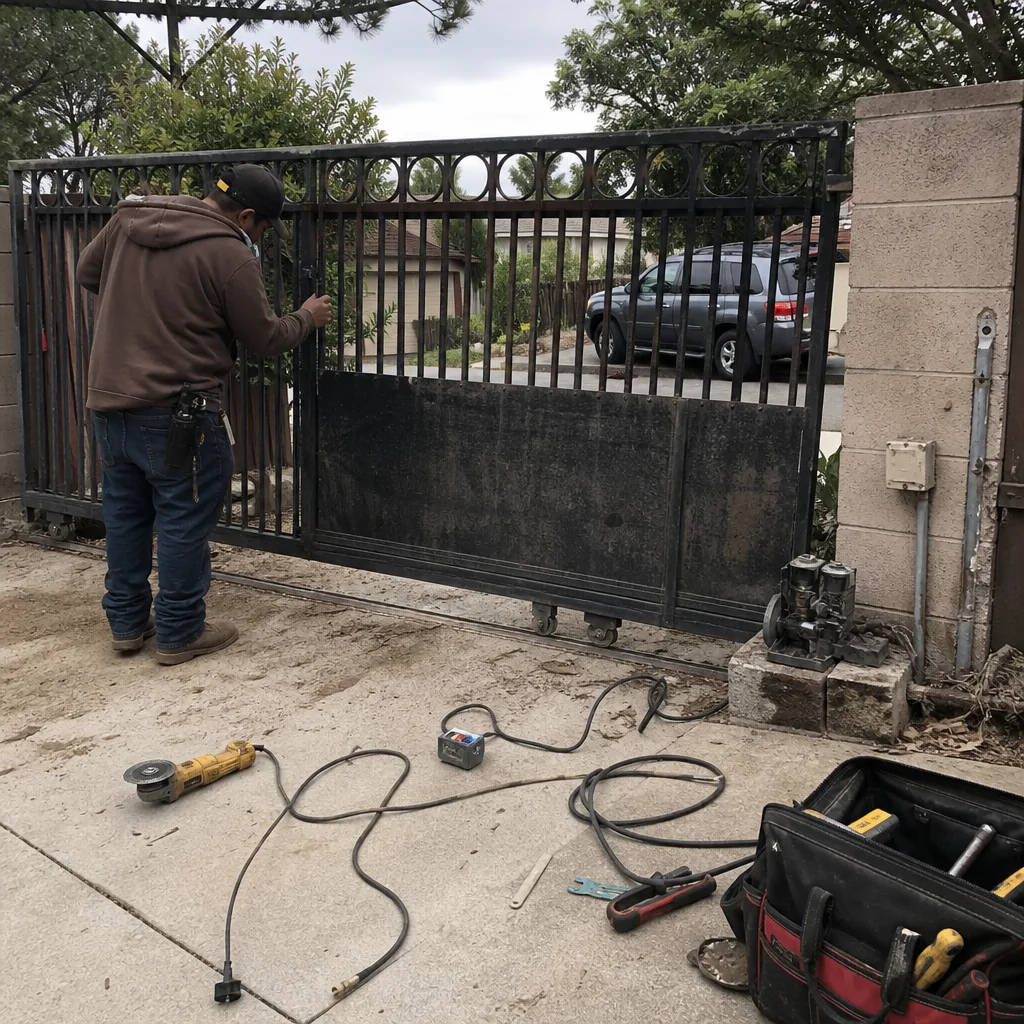 Before
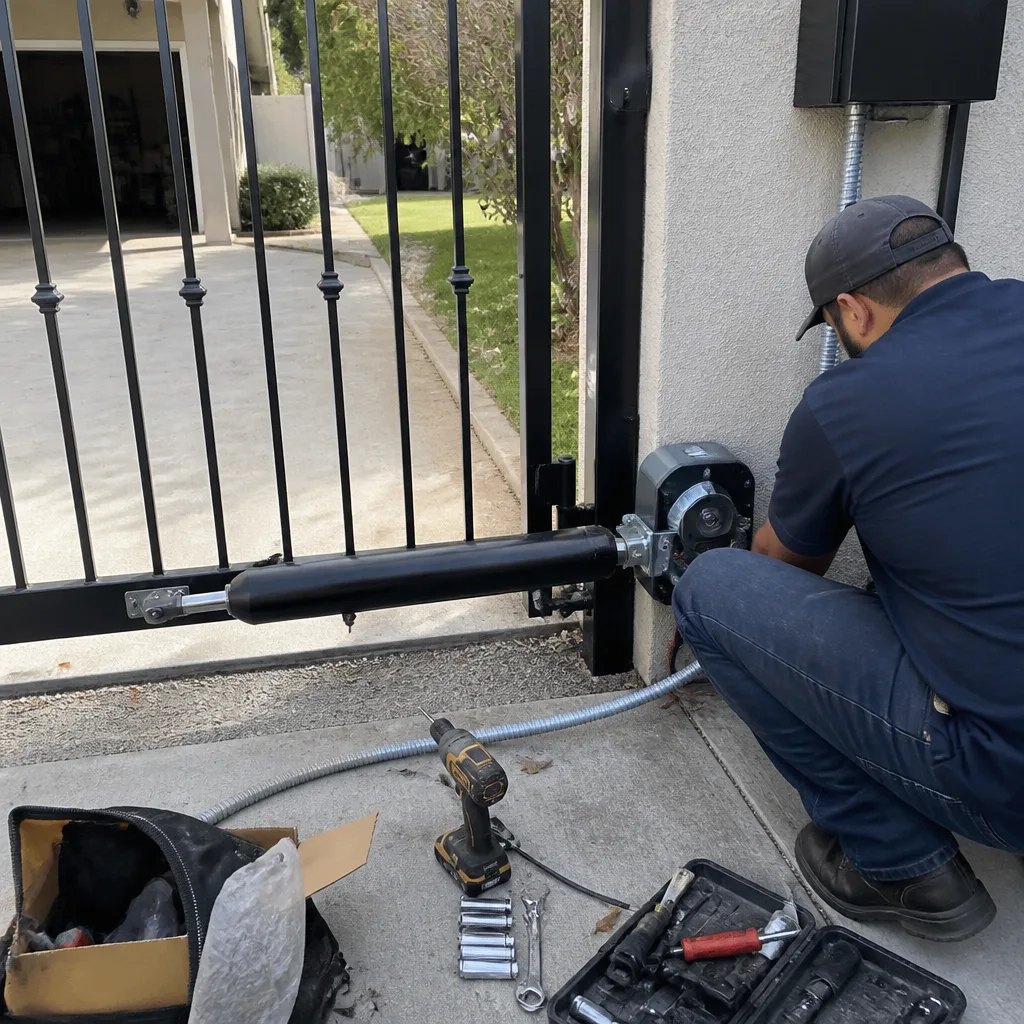 After
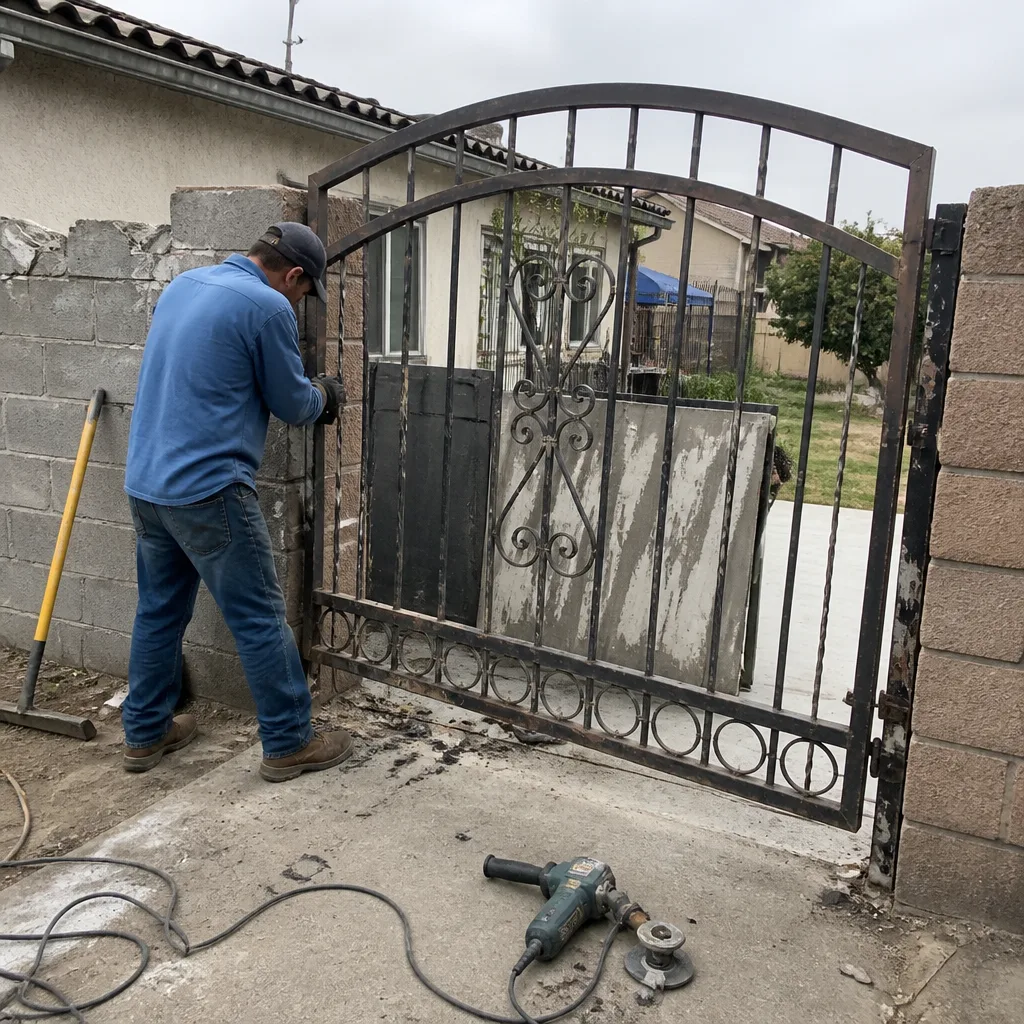 Before
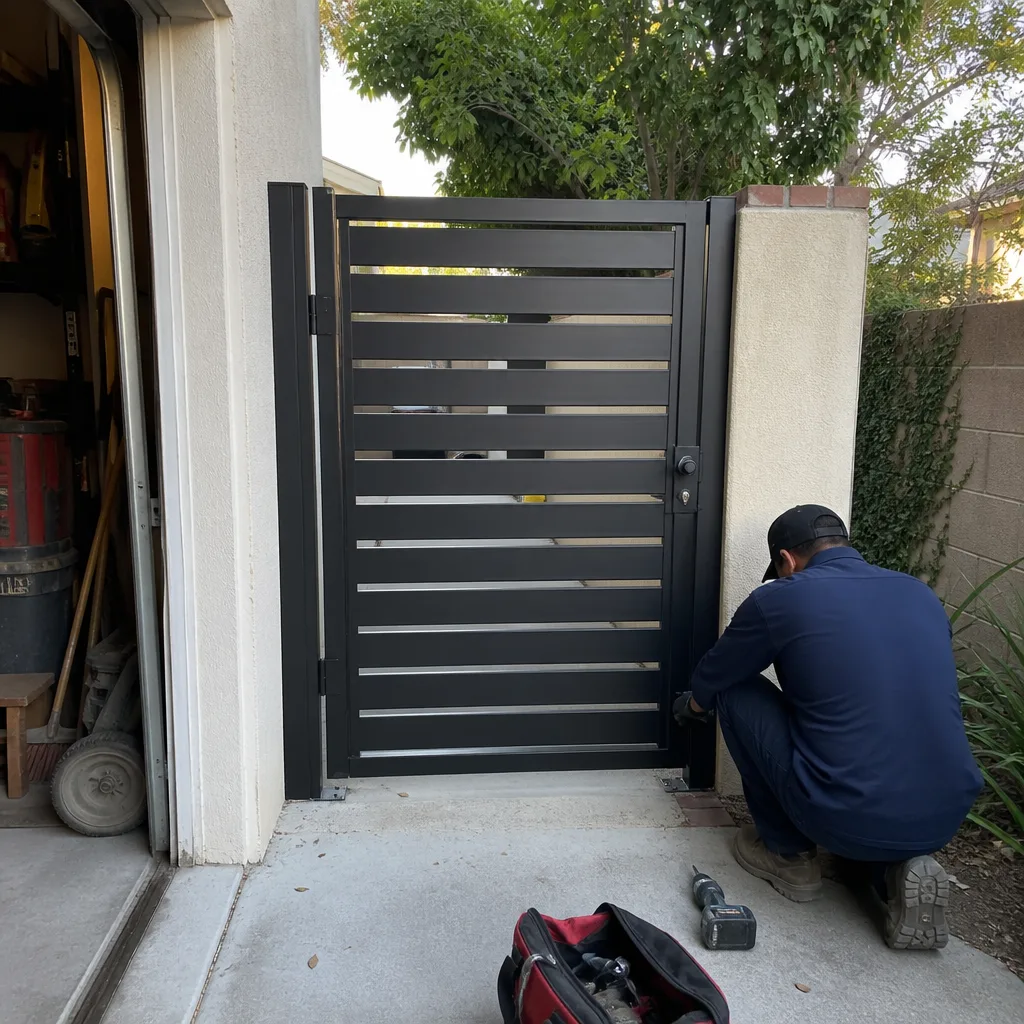 After
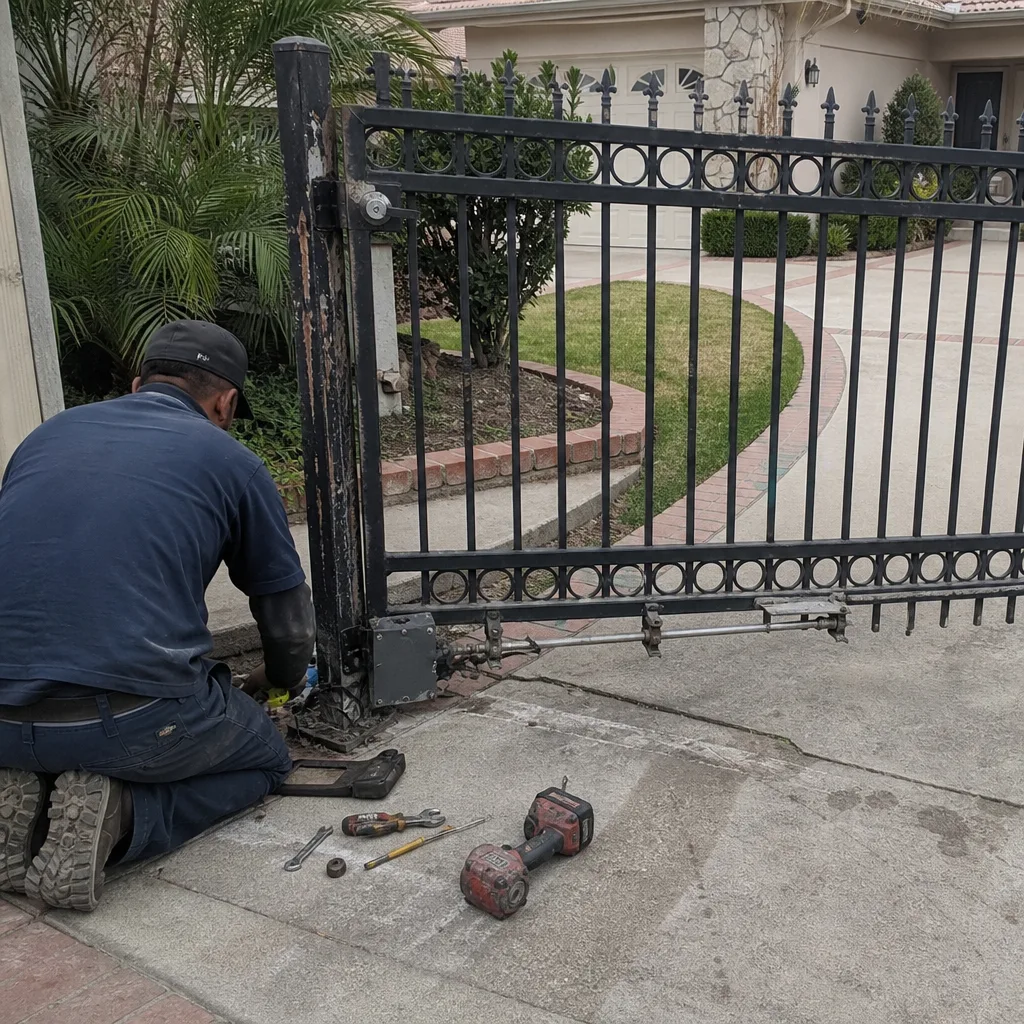 Before
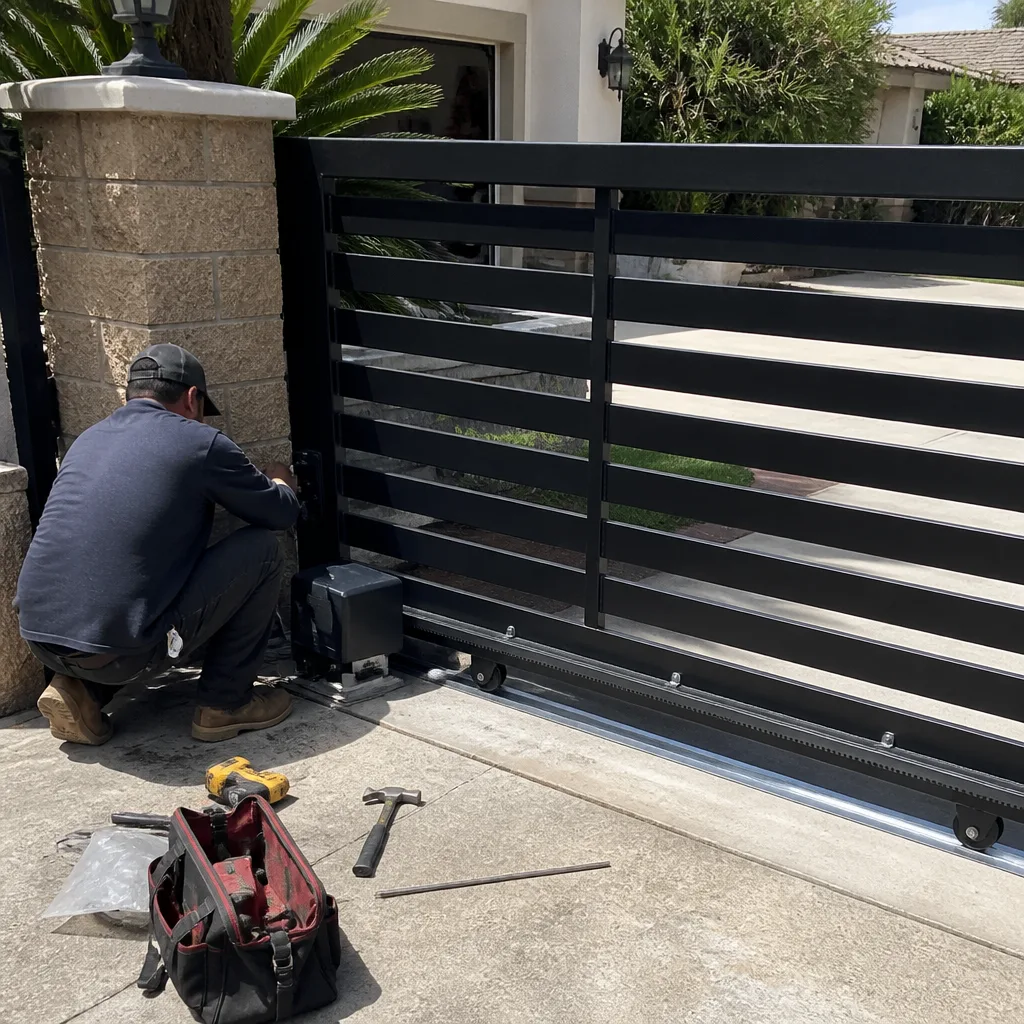 After