
Last updated November 2, 2026
 Wrought iron
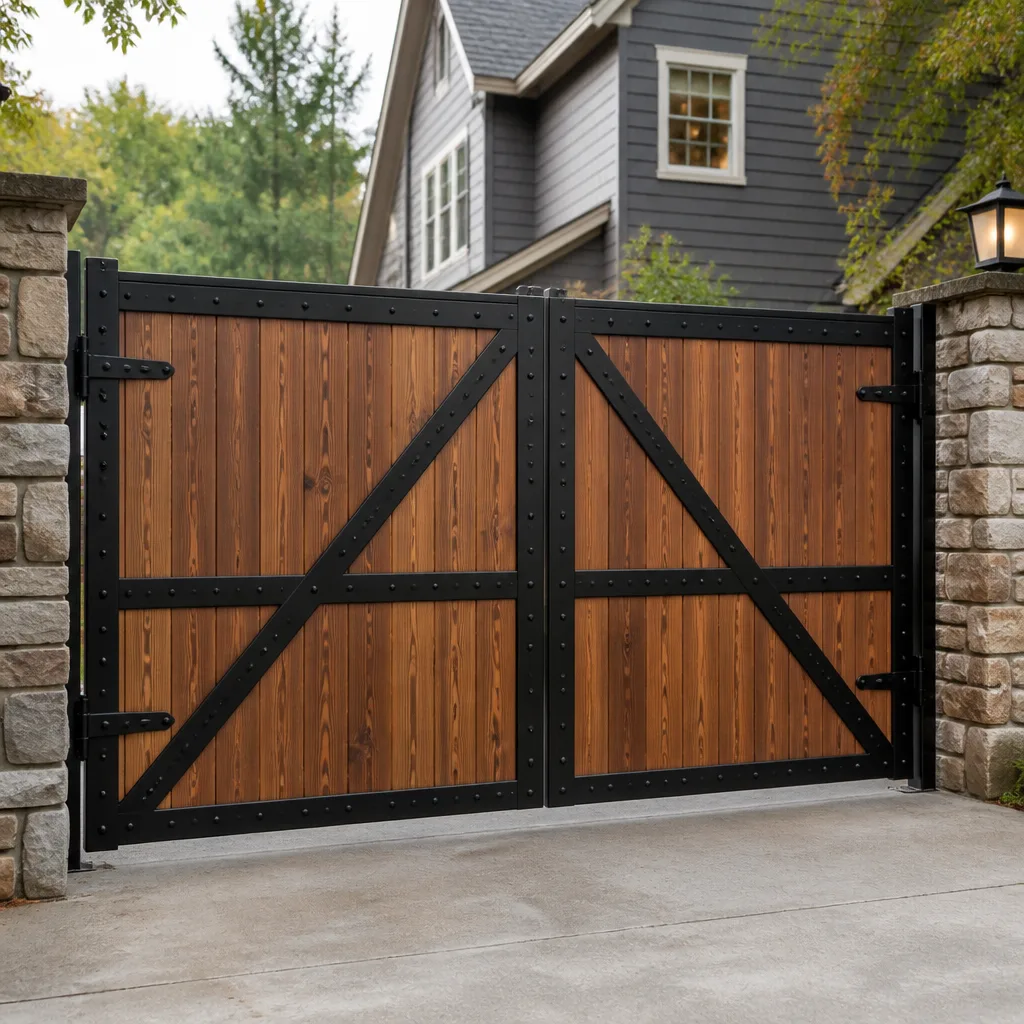 Wood & steel frame
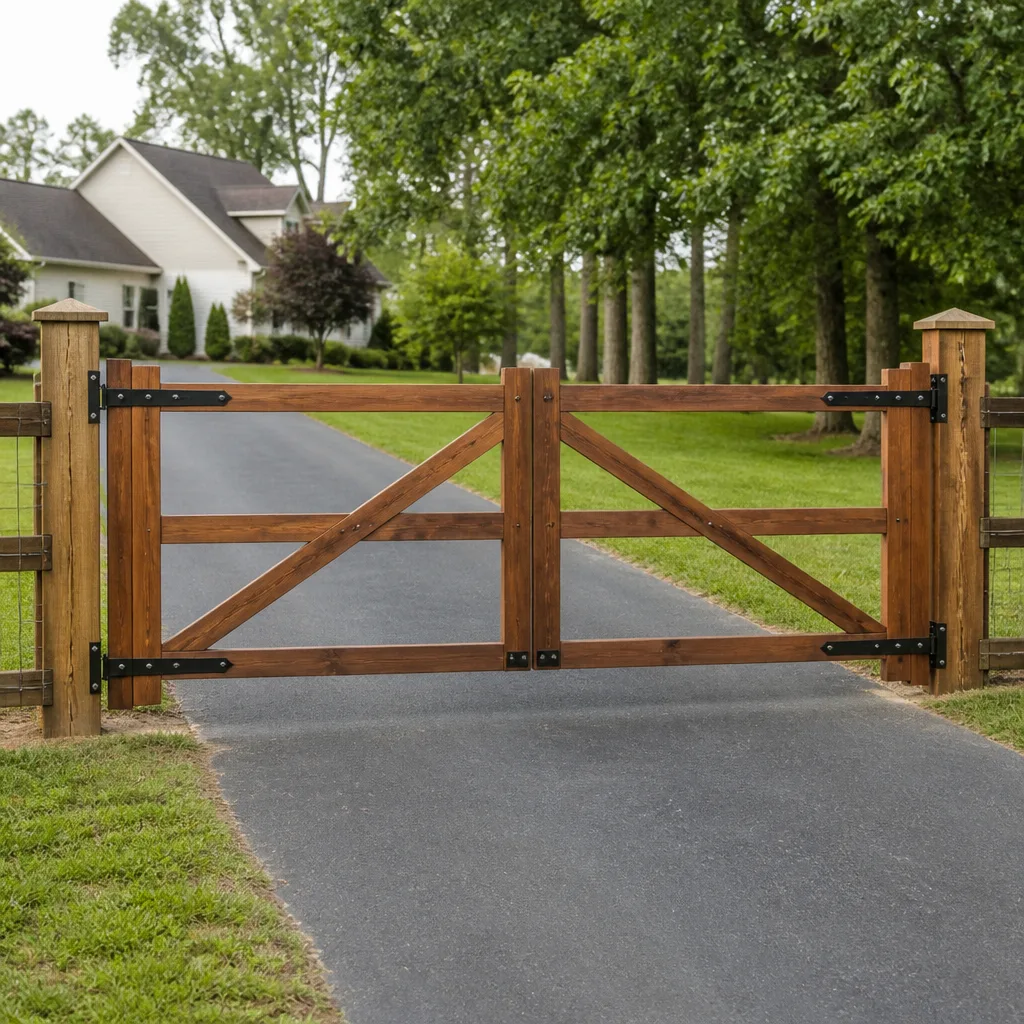 Farm & ranch
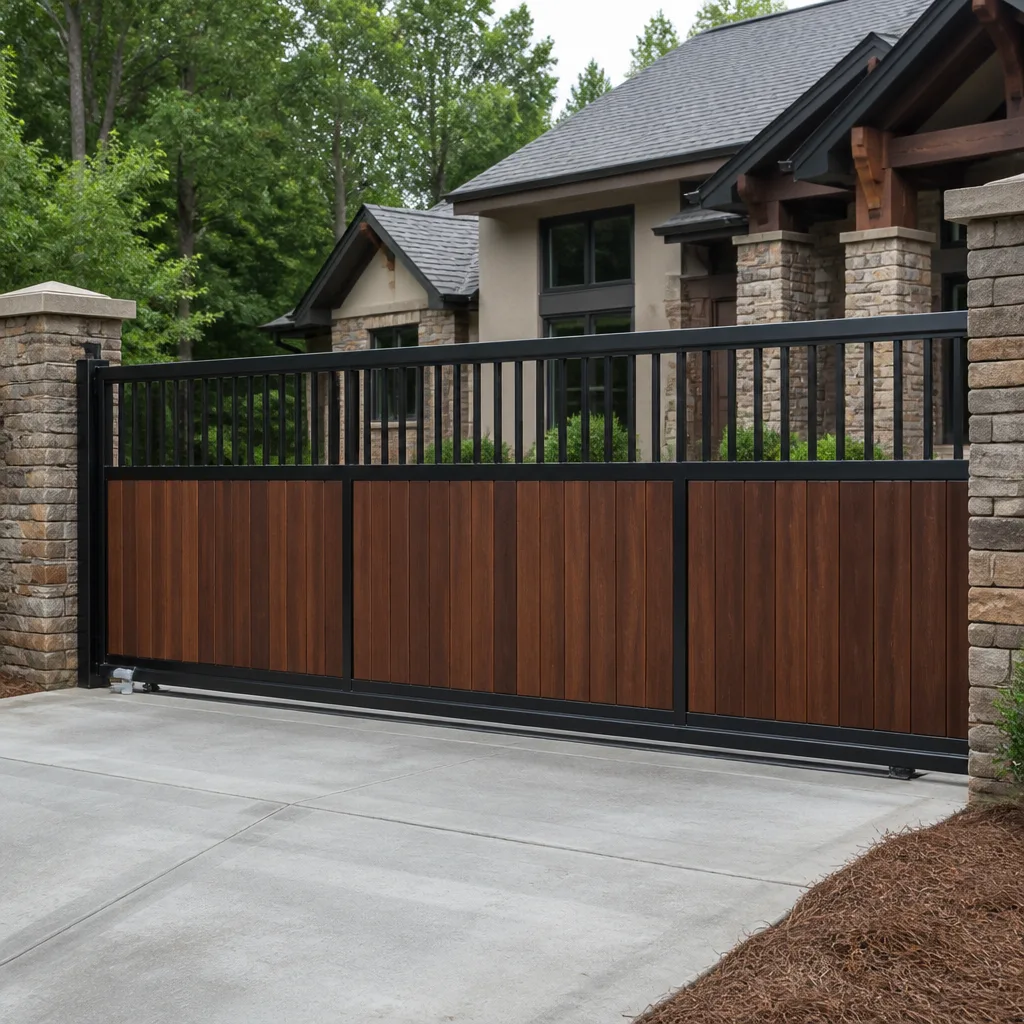 Sliding driveway gates
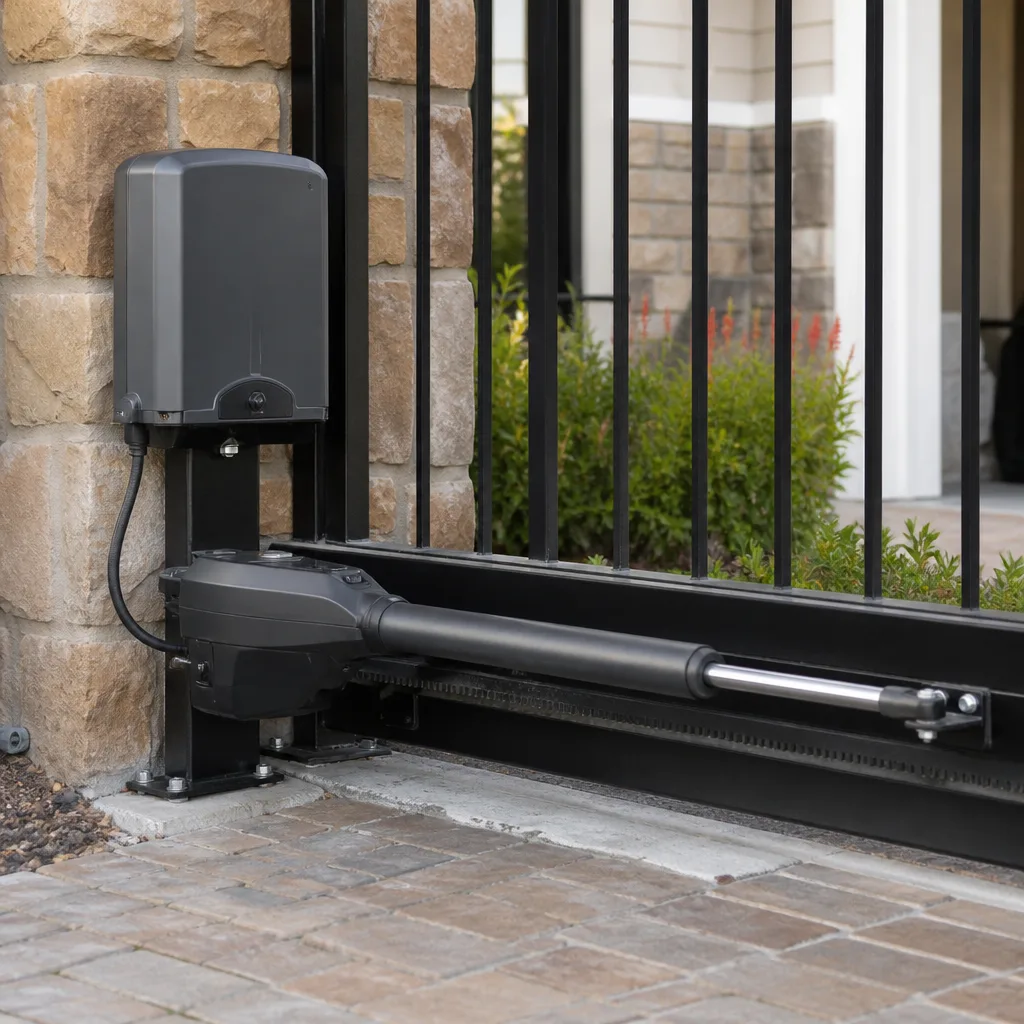 LiftMaster operators
Free on-site gate assessment - hinges, posts, and your LiftMaster or Nice gate operator checked before anything is quoted
The assessment is free and the quote is the invoice.
Get your free estimateGate Repair Emergency Preparedness Guide for Whittier Homes
Here’s a scenario most Whittier homeowners never rehearse: it’s 2 a.m., the driveway gate motor grinds once and dies, and the gate is stuck half-open. You need to leave for a flight. Or worse – a family member needs medical attention and the gate won’t budge. A gate failure isn’t just an inconvenience. A gate stuck open is a standing invitation to your property. A gate stuck closed is a barrier between first responders and your front door. This guide walks you through exactly what to do in both situations, the differences between mechanical failures and electrical failures, and how to prepare now so a gate emergency in Whittier doesn’t become a security emergency or a medical one.
Quick Answer
In a gate emergency, your first job is stabilizing the situation: secure the gate if it’s stuck open, or learn the manual release procedure if it’s stuck closed. Your second job is calling a gate specialist who can diagnose the actual failure – not a general handyman who’ll guess. For Whittier homeowners, that means having the operator’s brand and model number ready, knowing where the manual release is, and having our Gate Repair services number saved in your phone before anything breaks.
Styles & brands we work with
- Wrought iron
- Wood & steel frame
- Farm & ranch
- Sliding driveway gates
- LiftMaster operators
Table of Contents
- Your Gate Is Stuck Open: The Security Emergency
- Your Gate Is Stuck Closed: The Access Emergency
- Manual Release: Swing Gates vs. Slide Gates Are Different Procedures
- What to Have Ready Before You Call an Emergency Gate Service
- Securing a Gate That’s Stuck Open Overnight
- Giving Emergency Services Access to Your Gate: The Conversation You Need to Have
- Whittier-Specific Gate Failure Patterns We See Regularly
- The Whittier Gate Preparedness Checklist
Your Gate Is Stuck Open: The Security Emergency
When a gate fails open, most people’s first thought is the inconvenience of it. They’ll close it tomorrow. Overnight, a stuck-open gate in Whittier means your driveway is a public entry point. Anyone can walk onto your property, inspect your vehicles, test your door locks, or simply make off with whatever isn’t bolted down. For properties in the hills east of Painter Avenue or in neighborhoods like Michigan Park, where homes sit back from the street and visibility is limited, a stuck-open gate is a genuine security breach that can’t wait until morning.
The most common causes of a gate failing open are a dead motor capacitor, a stripped gear in the operator, or a mounting bolt that’s sheared off. Less often, it’s a control board that’s lost its programming and doesn’t know where “closed” is anymore. None of these are DIY fixes, but you can stabilize the situation immediately.
- Check the power. Go to the operator box and confirm the breaker hasn’t tripped. Reset it once if it has. If the gate tries to move and trips again, that’s a short – stop resetting it.
- Disconnect the operator. Every automatic gate has a manual release mechanism. On most swing gate operators, it’s a pull-handle or keyed release on the operator arm itself. On slide gates, it’s typically a chain-release or clutch mechanism. Disconnecting prevents the motor from trying to move the gate while it’s jammed.
- Attempt manual closure. Swing gates usually push closed by hand. Slide gates can be rolled along their track – though heavy commercial-style slide gates may take two people.
- Secure the gate in the closed position. If the gate will close but won’t latch, chain and padlock it to the gate post, or use a heavy-duty bungee or ratchet strap as a temporary hold. Never rely on the operator to hold a gate closed when it’s already failed once.
We’ve had Whittier residents call us the next morning after doing exactly this – and it’s the right sequence. The gate is secure, the operator isn’t cycling against a jam, and a technician can make an accurate diagnosis without a second failure muddying the picture.
Your Gate Is Stuck Closed: The Access Emergency
This is the scenario that should concern every homeowner with an automatic gate. If a fire starts in your kitchen, or someone in the house has a stroke, or a child has a fall – and the gate won’t open – the seconds you spend fumbling for a manual release are seconds first responders aren’t spending saving your family. Whittier Fire Department response times are measured in minutes. A gate that can’t be opened is an obstacle those responders may feel they need to breach – and a breached gate is a destroyed gate, on top of whatever emergency prompted the call.
This isn’t theoretical. Fire departments across Los Angeles County regularly report gates as a barrier to access in residential emergencies. The time to figure out your gate’s manual release is not at 3 a.m. with sirens approaching. It’s this weekend, in daylight, while your gate works perfectly.
- Swing gate operators (the kind most common on single-family Whittier driveways) typically have a manual release lever or knob on the operator housing or on the arm connection. Some require a key – often a triangular or square socket that you may have lost or never received from the installer. Find out now.
- Slide gate operators (more common on larger properties and some complexes in the eastern Whittier hills) usually have a release on the gearbox or a way to disengage the drive chain. The gate then rolls manually, though it may be heavy.
- Gate openers with battery backup – models from brands like Ghost Controls and some Linear systems – will keep functioning during a power outage, but they may fail closed during a motor failure. Don’t assume the gate is stuck because of power. Confirm before you act.
The most important preparation here is knowledge. Know where the manual release is. Practice using it once. If you can’t figure it out, call a gate professional and ask them to show you – that five-minute conversation is worth more than any checklist.
Manual Release: Swing Gates vs. Slide Gates Are Different Procedures
This is where we see homeowners get hurt or break expensive parts. The manual release on a swing gate operator is not interchangeable with the release on a slide gate operator, and using the wrong procedure can damage the operator, pinch fingers, or set a heavy gate in motion unexpectedly.
Swing Gates. A swing gate opens like a door, pivoting on hinges at the gate post. The operator is usually an arm or a linear piston that pushes and pulls the gate leaf. Releasing it means disconnecting the operator from the gate leaf. On most residential operators – including models from Viking, DoorKing, and Elite that we service regularly in Whittier – the release is either a pull-lever on the top of the operator or a keyed release on the arm itself. Once released, the gate swings freely. Be ready for the weight. A 12-foot steel swing gate can weigh 300 pounds or more. If the gate is on a slope – and plenty of Whittier driveways have a slope – it can swing fast and hit you or a car. Stand behind the hinge side, not in the path of the leaf, when you release it.
Slide Gates. A slide gate rolls horizontally along a track or runs on wheels, moving parallel to the fence line. The operator drives either a chain or a rack gear. Releasing it means disengaging the chain or the gear from the operator. On chain-driven systems, there’s usually a clutch or release lever that frees the chain so the gate can roll by hand. On rack-and-pinion systems, the release may be a gear disengagement on the motor itself. Never pull a slide gate sideways by gripping the pickets. Your fingers can be crushed between the gate and the track. Use the gate’s frame or a designated handle point.
The wrong procedure – like trying to force a swing gate closed that’s still connected to its operator – can bend the arm, strip the gear, or break a mounting weld. Those are expensive repairs that turn a $200 service call into a $1,200 replacement. If any part of the release feels forced, stop and call a professional.
What to Have Ready Before You Call an Emergency Gate Service
When you call any gate repair company in Whittier, the dispatcher is going to ask specific questions. The faster you answer them, the faster a technician gets dispatched – and the less likely you are to pay unnecessary trip-charge fees or wait a full cycle when you can’t.
We ask these same questions on every call. Writing down the answers before an emergency means you’re not hunting for them while your gate is hanging open or your car is trapped in the driveway.
- Operator brand and model number. The brand is printed on the operator housing or motor. The model is usually on a sticker on the same housing. “It’s a LiftMaster with a swing arm” helps. “It’s a LiftMaster LA400” saves fifteen minutes. We service nine specific brands – LiftMaster, FAAC, BFT, Linear, Viking, Ghost Controls, DoorKing, Elite, and Mighty Mule – so the brand tells us a lot about what parts we’re likely to need.
- What the gate is doing. Is it completely dead? Does the motor hum but nothing moves? Does it move a few inches and stop? Does it beep and reverse? Each symptom points to a different likely failure – a dead capacitor, a stripped gear, a misaligned safety sensor, a worn limit switch. The more specific you are, the more accurate the initial diagnosis.
- When it started and whether anything preceded it. Did it fail after a rainstorm? After a power outage? After being hit by a delivery truck? Whittier gets occasional heavy rain and the accompanying electrical surges, and a recent power event is a strong clue for a fried control board.
- Gate type. Swing or slide, single or dual leaf, approximate length. A dual-leaf driveway gate with two operators has different failure patterns than a single-leaf with one.
- Your name, address, and best call-back number. Sounds obvious, but in an emergency, people forget. Have a neighbor’s number available too, especially if you won’t be home when the tech arrives.
- Access instructions. If the gate is stuck closed and the tech can’t get in, is there a pedestrian gate? A side door? A call box code? Give the dispatcher the entry route, not just the street address.
Having this list taped to the inside of the operator cover is the single most effective emergency-preparedness step a Whittier homeowner can take. It costs nothing and saves critical time.
Securing a Gate That’s Stuck Open Overnight
You call for emergency gate repair, and the earliest available tech is coming at 8 a.m. – not tonight. Now you have to get through seven or eight hours of darkness with no functioning gate. This is a common situation for Whittier homeowners during busy periods, and the answer isn’t “hope for the best.”
What you can do right now:
- Force-close the gate manually. Use the manual release as described above. Most gates, once released from the operator, will close manually. If it won’t stay closed, go to the next step.
- Chain and padlock. Wrap a chain around the leading edge of the gate and the gate post, then padlock it. For slide gates, run the chain through the frame and around a fixed fence post. A hardened steel chain and a quality padlock are available at any hardware store in Whittier for under thirty dollars.
- Ratchet strap backup. If the gate is a few inches from the post and won’t fully close, a heavy-duty ratchet strap (rated for at least 1,000 pounds) can pull it into position and hold it overnight. This is also a good temporary hold for a gate that’s binding on its hinges.
- Block vehicle access from the street. Park a car across the driveway, inside the gate if possible. It’s a visible deterrent and a physical barrier that says “this driveway is not open for business.”
- Bring in anything that’s kept outside and is of value. Bikes, tools, packages, lawn equipment. If you can’t secure the perimeter, shrink the target.
- Tell a neighbor. Whittier is a city of tight-knit neighborhoods – Uptown, the Hills, Mar Vista, the Quad. A quick text to the neighbor across the street is a legitimate security measure. They’ll notice someone in your driveway where they wouldn’t otherwise.
One more thing: don’t disarm your operator’s electrical supply while the gate is chained. You want the control board to remain inert but powered enough to respond when a tech arrives. Actually, simply leave the breaker on and the operator in “off” or “manual” mode if it has one. The tech will handle the rest.
Giving Emergency Services Access to Your Gate: The Conversation You Need to Have
This is the section everyone skips and the one that matters most in a true emergency. Fire departments don’t have time to argue with your gate. If they can’t get access, they’ll go around it, through it, or over it – and they won’t stop to ask about your property values.
The most effective solution for Whittier homeowners is a Knox Box or similar rapid-entry lockbox. The Whittier Fire Department and most Los Angeles County fire agencies use the Knox system. A Knox Box is a small, hardened steel box mounted near your gate or front door that contains your gate key, door key, or access code. Only the fire department has the master key. When they respond to an emergency, they open the Knox Box, get your key, and open the gate without breaching it. A Knox Box costs a few hundred dollars and, depending on where you live in Whittier, may be required for certain gated properties. Even where it’s not required, it’s the difference between a gate that opens for first responders and a gate that gets cut open.
Here’s what to do:
- Call the Whittier Fire Department or your local fire district and ask about rapid entry systems. They’ll tell you which system they use and whether your property is in a coverage area that requires it.
- Have it installed by a professional who knows gate hardware. The box needs to be mounted at the right height and orientation, and the keys inside need to be current – including the manual release key for your specific operator.
- Coordinate with your gate repair company. When we service a gate system in Whittier, we’ll always recommend a rapid entry solution if the property doesn’t have one. We want your gate to be as effective for first responders as it is against intruders.
- Test everything once a year. Keys get lost, locks corrode, operators get replaced. A January re-test of your Knox Box and manual release is a fifteen-minute task that belongs on your annual home maintenance calendar.
If a Knox Box isn’t in your budget, the fallback is a document given to your alarm company, your local police and fire non-emergency lines, and a trusted neighbor: a single page that says “gate brand and model, manual release location, pedestrian gate code, and the name of the gate company that services it.” It’s not as good as a physical key, but it’s meaningfully better than nothing.
Whittier-Specific Gate Failure Patterns We See Regularly
Every city has its own gate problems based on climate, geography, housing stock, and how people use their properties. Whittier is no different. Here’s what we encounter repeatedly across the city, from the historic homes near Uptown to the larger hillside properties east of Colima Road.
- Temperature swings and capacitor failure. Whittier’s summer heat – those stretches of 90-plus degree days from July through October – puts real stress on motor capacitors. Capacitors are the component most likely to fail on a hot afternoon when the gate is cycling repeatedly. If your gate fails during a heat wave, a capacitor is the first thing we check.
- Rain and control board shorts. Whittier’s rainy season, while brief, comes with occasional downpours that find their way into operator housings. A gate that works fine all summer and then dies after the first rain often has moisture in the control board or a corroded connection. Ghost Controls and Mighty Mule operators, with their plastic housings, are especially vulnerable if they’re not sealed against the elements.
- Hillside slope drift and gate binding. Many Whittier homes sit on sloping lots. Over time, a heavy gate on a slope drifts out of alignment, and the operator has to work harder to move it – eventually burning out the motor or stripping a gear. Gates on slopes need more frequent hinge and alignment checks than gates on flat ground.
- Water intrusion in underground junction boxes. Gate sensor wires run through underground conduit. After a wet winter or a sprinkler reconfiguration, we find junction boxes full of water and corroded wire nuts. That’s a silent failure waiting to happen.
- Vehicle strikes on narrow driveways. Whittier’s older neighborhoods have narrow driveways, and a backing SUV or a delivery van clips the gate leaf more often than anyone wants to admit. A bent gate frame or a broken hinge is rarely the first thing reported – usually it’s “the gate suddenly won’t close right.” The clues are the fresh scuff marks on the gate edge.
- Ants in outdoor control boards. This one surprises people but it’s a reality across Southern California. Argentine ants colonize the warm, dry space inside an operator housing, and their activity can short-circuit a control board. If you open your operator and see an ant trail, that’s a problem to address before it becomes an emergency.
These patterns mean that a Whittier gate technician who knows the city well can diagnose faster. We arrive already familiar with the failure types that are common in your neighborhood’s construction era and elevation, and that’s a real advantage when every hour of gate downtime matters. Our Gate Repair in Whittier service covers all of these failure modes and more, and we bring the same brand-specific knowledge whether the operator is a Viking, DoorKing, Elite, or any of the other systems we service.
The Whittier Gate Preparedness Checklist
Here’s the complete preparation plan, condensed to one page. Print it. Tape it inside your operator cover or keep it on your phone. Run through it this weekend while nothing is broken, and check our Gate Repair Maintenance Checklist for Whittier Homeowners for additional steps.
- Locate your manual release. Find it. Operate it once. Time yourself. If it takes more than 60 seconds to release and move the gate, practice again. If you can’t find it or it’s seized, call for service – this is a safety issue, not a convenience one.
- Write down your operator’s brand and model number. Photograph the sticker with your phone. Store the photo in a folder called “Gate.” This single piece of information has the biggest impact on dispatch speed and parts sourcing.
- Check your key override. If your operator has a keyed release, find the key. Does it work? If not, order a replacement from the operator manufacturer or from your gate service provider.
- Test your pedestrian gate. Most gated properties have a separate walk-through gate. Does it open smoothly? Is the latch functional? This is your fallback access route for both you and first responders.
- Save your emergency gate service number. Put it in your phone contacts under “Gate Repair.” Share it with your spouse, your house sitter, and your adult children. (Capitol Gate Repair’s number is (866) 321-3968, and yes – we answer 24/7.)
- Confirm first responder access. Call your local fire station’s non-emergency line and ask about rapid entry requirements for your property. Arrange a Knox Box installation if recommended.
- Inspect your gate monthly. Look for rust at hinges, debris in the slide track, worn wheels, loose mounting bolts, and ant activity in the operator. Fifteen minutes a month catches most emergencies before they happen.
- Keep a chain and padlock on hand. If the gate fails open and you can’t get same-day service, a chain and padlock are your overnight security solution. Store them near the gate, not in the garage where the gate might block your access to them.
If you need help with any step on this list – finding a manual release, diagnosing an intermittent failure, or replacing a worn operator before it dies – Capitol Gate Repair home has the full overview of our services, or you can reach us directly at (866) 321-3968. We specialize exclusively in gates, which means the person who answers your call knows what a gate emergency actually looks like and what to do about it.
Common Mistakes to Avoid
- Resetting a tripping breaker repeatedly. A breaker that trips once is sometimes just a surge. A breaker that trips every time the gate cycles is a short circuit, and every reset is wearing down the motor and the breaker itself. Reset once, then call a professional.
- Forcing the gate manually while it’s still connected to the operator. This bends arms, breaks gears, and sometimes snaps mounting welds. The manual release exists for a reason. Use it every time.
- Lubricating the gate with WD-40. WD-40 is a solvent, not a lubricant. It strips away whatever lubricant was there and leaves metal surfaces dry and prone to corrosion. Use a proper gate lubricant, a lithium or silicone-based product for hinges and bearings.
- Ignoring a gate that’s “a little slower than usual.” Gates don’t slow down for no reason. A slower cycle means more resistance somewhere – worn hinge bushings, a failing capacitor, a dying motor. By the time the gate stops entirely, the repair bill is larger.
- Disconnecting the battery backup without thinking through the consequences. Some operators with battery backup will fail in whatever position they’re in when power dies. Don’t remove a battery to “fix” an electrical problem without knowing whether the gate will fail open or closed.
- Assuming any gate repair person knows your brand. Gate operators from DoorKing and Elite are not the same machines as those from Ghost Controls. A generalist who’s “handy” may not recognize your operator’s specific failure patterns, and misdiagnosis wastes your time and money. Ask if the company services your specific operator brand before booking.
- Waiting until the gate dies completely to look for the manual release. This is the biggest one. The manual release is not a feature you discover during an emergency. It’s a feature you practice with in advance, so your hands know what to do when the pressure is on.
See the difference
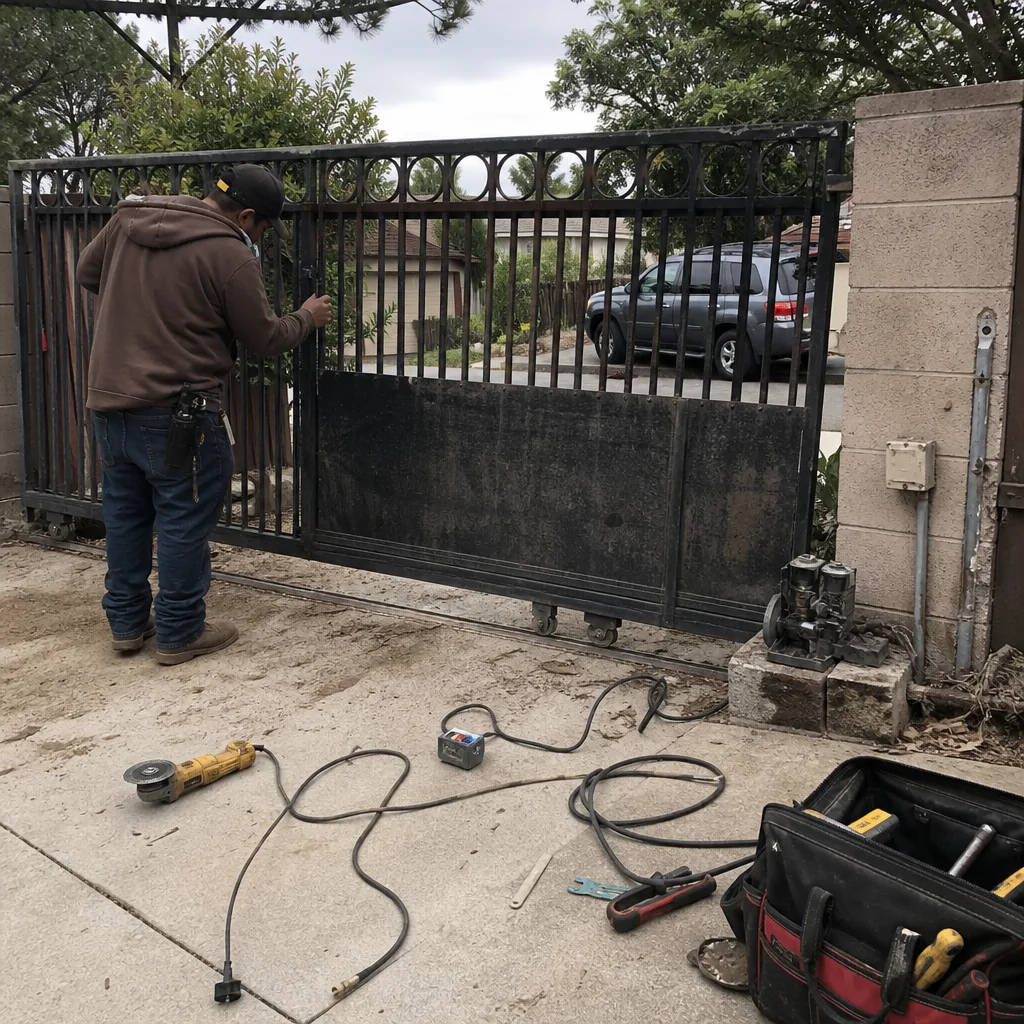 Before
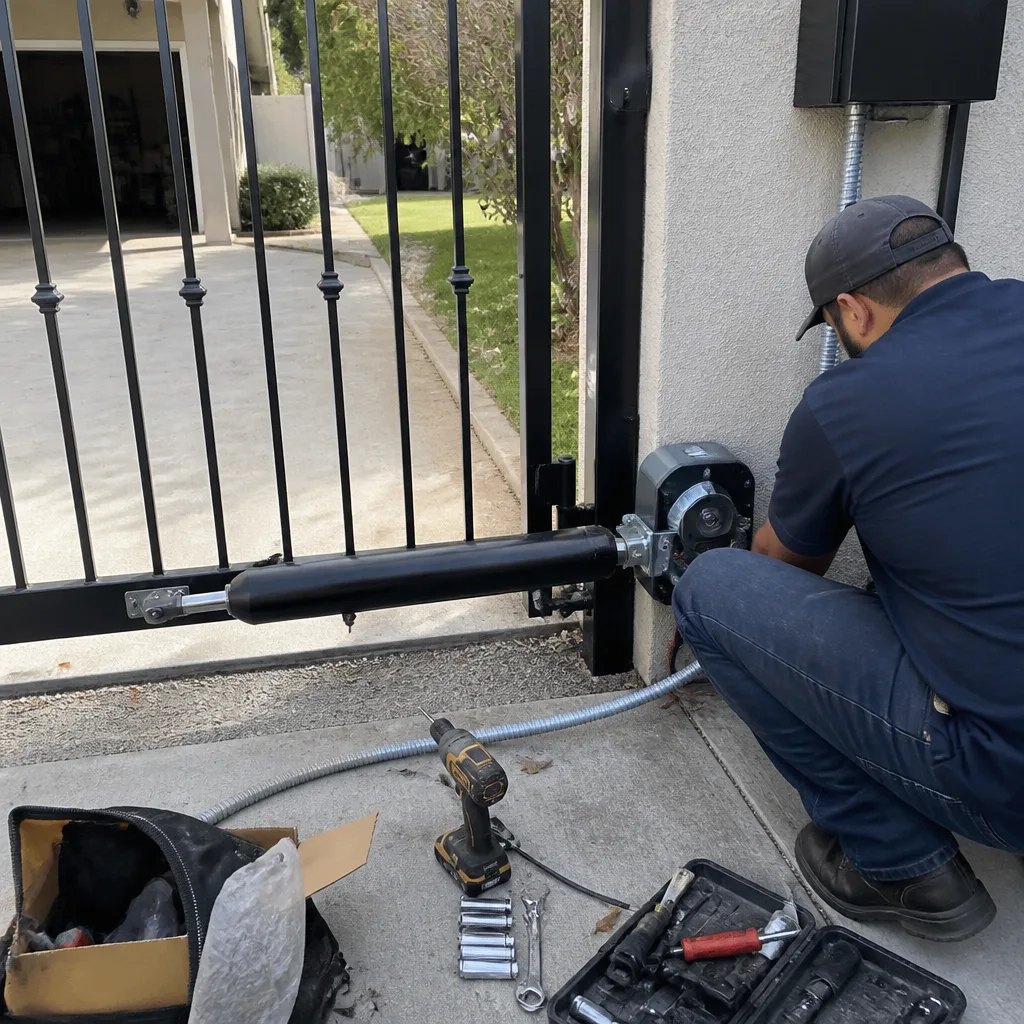 After
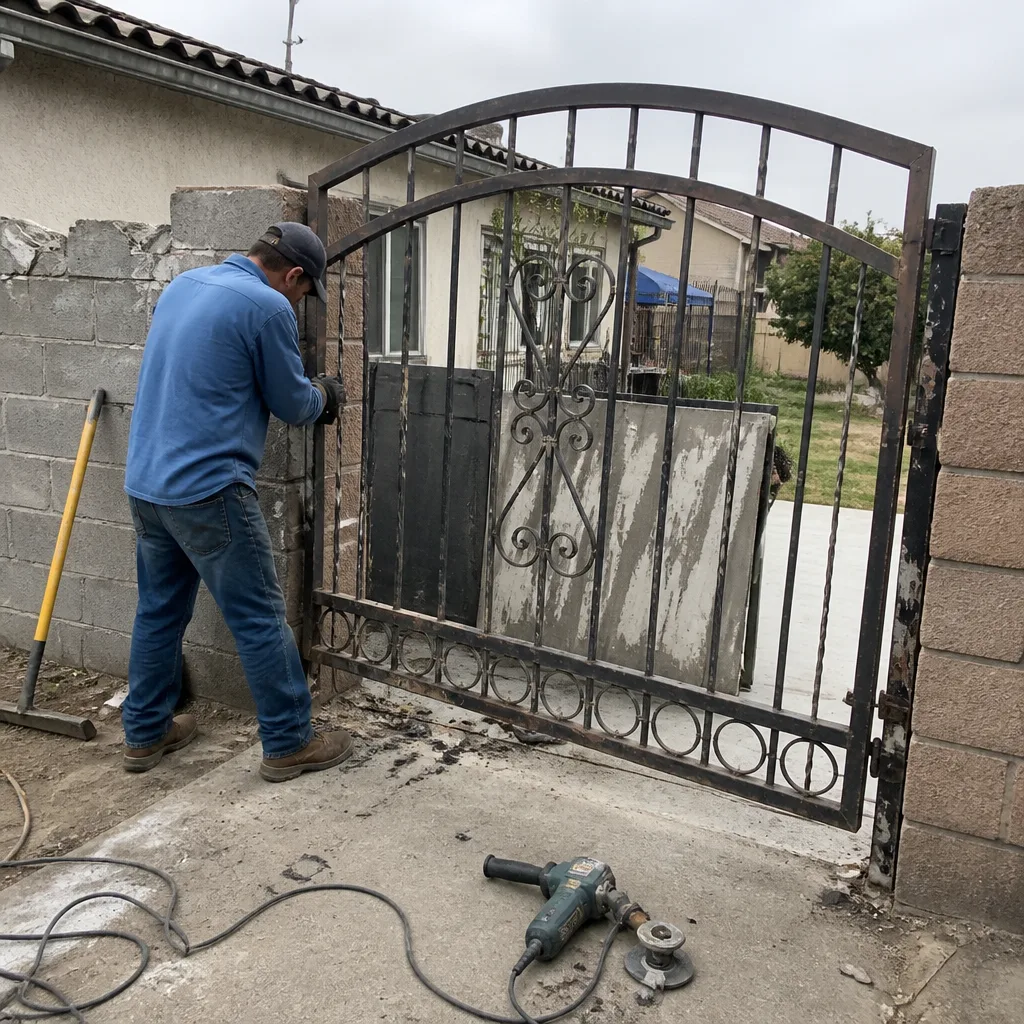 Before
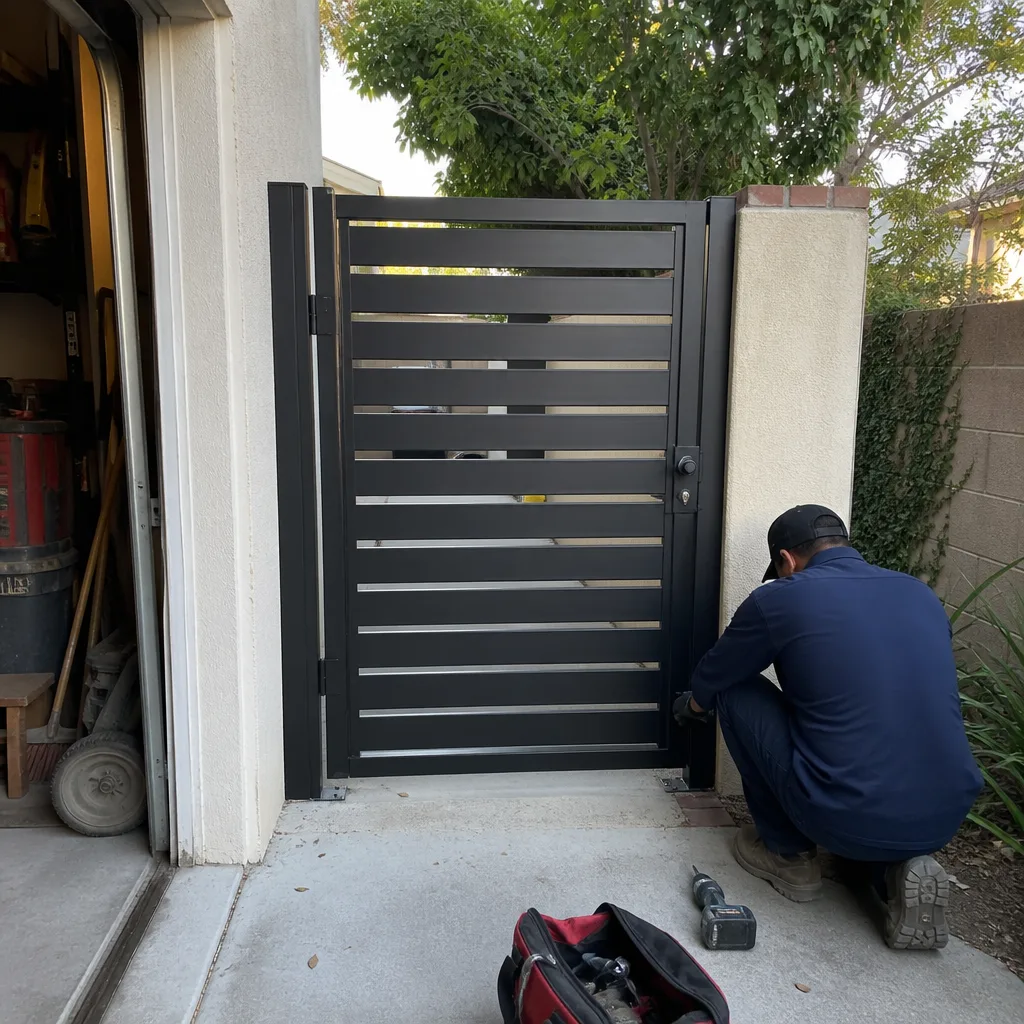 After
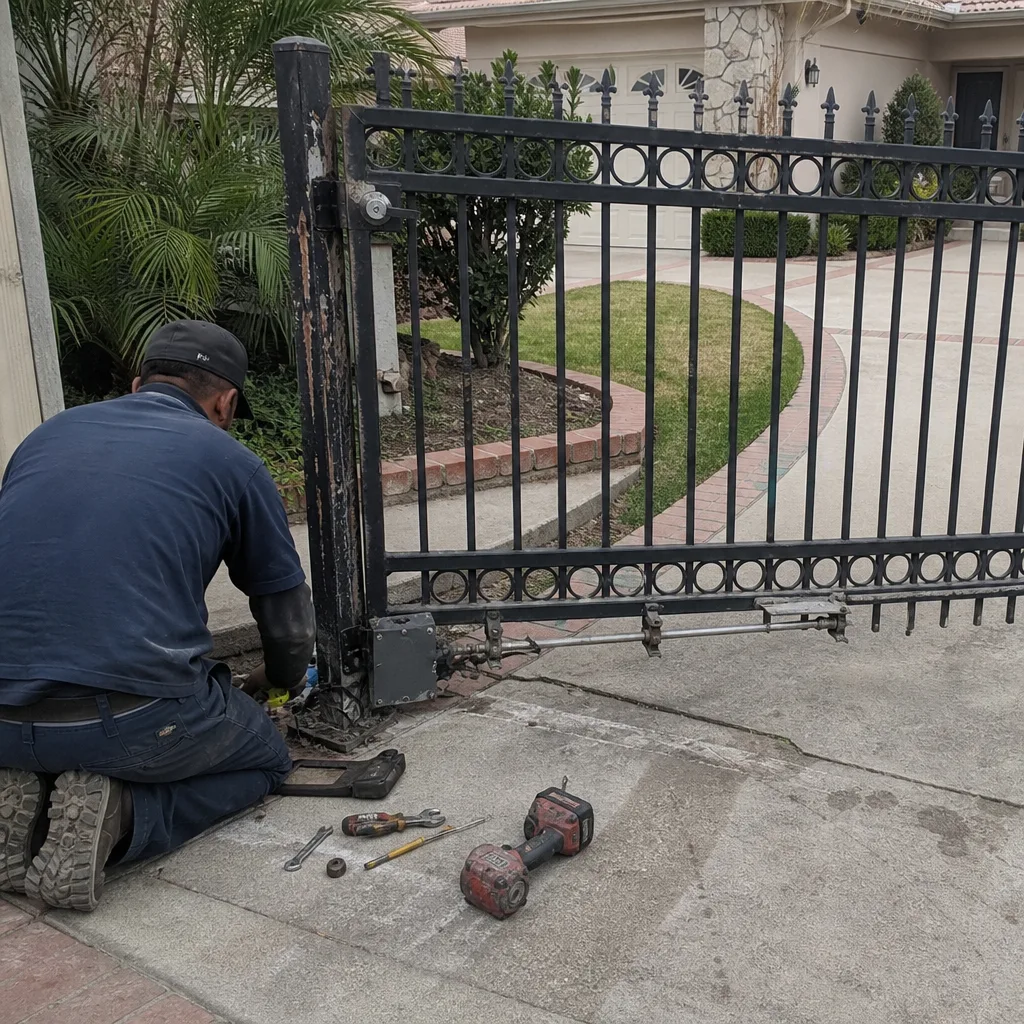 Before
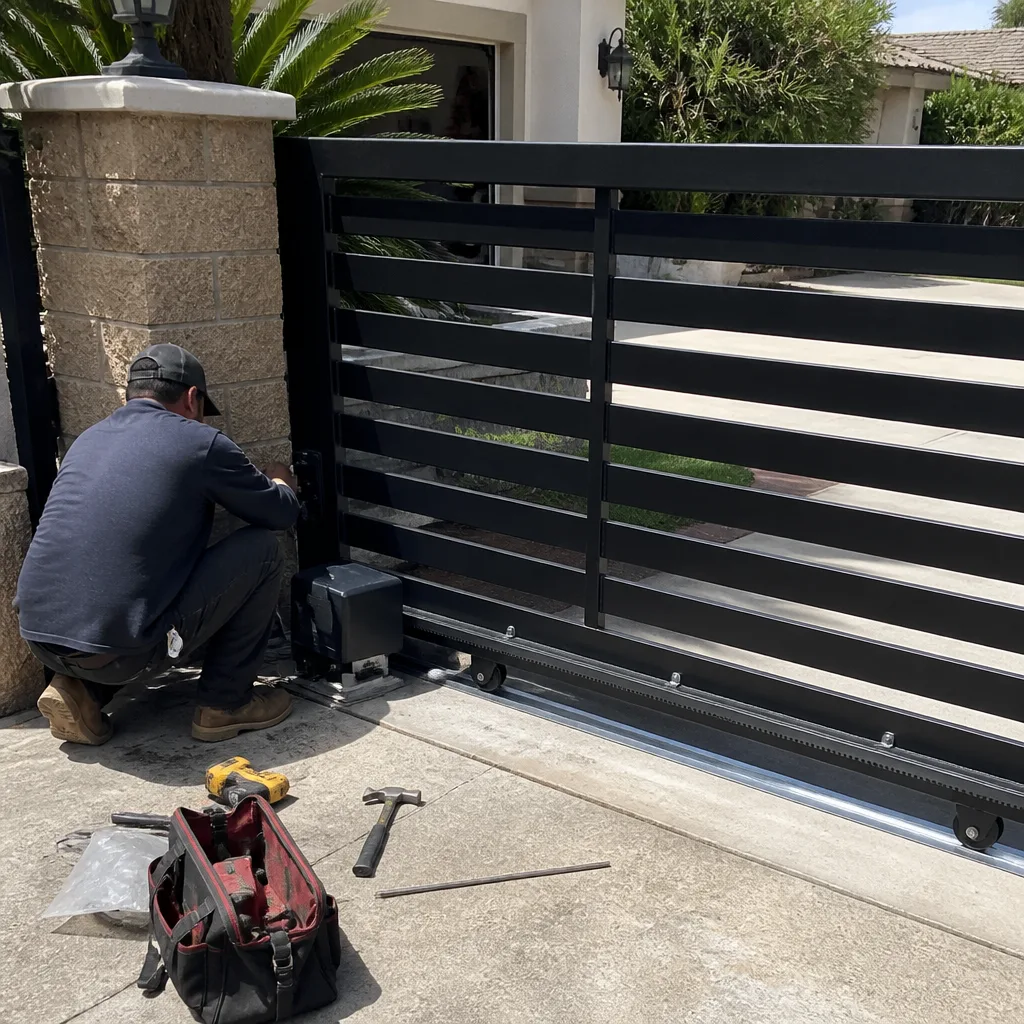 After
When to Call a Professional
Some gate issues are worth troubleshooting on your own: a tripped breaker, debris in the slide track, or an operator that needs a simple limit adjustment. Others are not. If your gate’s motor hums without moving, the gate is off its track, a swing gate is hanging unevenly, or you smell burning near the operator, stop and call a gate specialist. These are high-voltage, high-torque systems, and a mistake can cause serious injury or expensive damage. We’ve seen homeowners in Whittier turn a simple gear replacement into a full operator replacement by trying to force a diagnosis they didn’t understand. Electric Gate Repair in Whittier is our core specialty – motors, control boards, sensors, and access-control hardware are what we do every day, exclusively. Capitol Gate Repair offers free estimates in Whittier – call (866) 321-3968.
Frequently Asked Questions
First, release the operator manually and try to close the gate by hand. If it closes, chain and padlock it to the gate post or use a heavy-duty ratchet strap. If it won’t close completely, park a car across the driveway inside the gate and bring in outdoor valuables. Then call an emergency gate repair service to schedule the earliest available dispatch. Call (866) 321-3968 for emergency gate service in Whittier – even if we can’t get a tech out until morning, we’ll walk you through securing the gate in the meantime.
Look for a release lever, pull-handle, or keyed release on the operator arm or motor housing. On most residential swing gate operators, pulling the release lever disengages the operator from the gate leaf, allowing the gate to swing freely by hand. Stand behind the hinge side – not in the gate’s path – when you release it, especially on sloped Whittier driveways where gravity can move a heavy gate faster than you expect. If you can’t find or operate the release, call for professional help rather than forcing the gate.
Only if you’ve planned for it. Without a rapid entry system like a Knox Box, first responders have no key to your gate and will be forced to breach it or find another route. Contact the Whittier Fire Department about installing a rapid entry lockbox. It holds your gate key and manual release key in a secure container that only firefighters can open with a master key. This is the single most important emergency-access upgrade a gated home in Whittier can make.
Emergency gate repair in Whittier typically costs more than scheduled service due to after-hours dispatch and same-day or next-day scheduling, but it’s rarely as expensive as the cost of a breached gate or the security exposure of a stuck-open one. For details on permits and legal requirements, see our guide on Gate Repair Permits, Codes & Inspections in CA: What You Need to Know. Trip charges, labor, and parts vary depending on the operator brand and the nature of the failure, and you should always get the full price quoted and agreed before work begins. Call (866) 321-3968 for an exact quote – estimates are free, and we’ll tell you the cost before we touch anything.
Most residential gate operators last 7 to 12 years in Whittier’s climate, but hillside locations, direct sun exposure, and frequent use can shorten that. Capacitors fail earlier in the heat, and operators mounted on west-facing walls take more direct afternoon sun, which ages control boards faster. Regular maintenance and prompt attention to slow movement or unusual noises will extend the life of any operator, whether it’s a Viking, Ghost Controls, DoorKing, or Elite. Browse our more guides & resources for additional maintenance tips.
We service nine specific brands: LiftMaster, FAAC, BFT, Linear, Viking, Ghost Controls, DoorKing, Elite, and Mighty Mule. If your operator is one of these, we arrive with brand-specific knowledge and can usually diagnose the problem quickly and source the right parts without guesswork. Gate Installation in Whittier is also available if your existing operator is beyond economical repair and it makes more sense to replace the entire system with something new.
The Bottom Line
A gate emergency is manageable if you prepare for it and expensive if you don’t. The preparation is simple: know where your manual release is, practice using it once, write down your operator’s brand and model number, store a chain and padlock near the gate, and put a rapid entry system in place for first responders. The response is equally simple: stabilize the gate, secure it if it’s open, and call a gate specialist who knows your operator brand. Do that, and a broken gate in Whittier is an inconvenience, not a crisis. Electric Gate Repair in Whittier is our everyday work – motors, control boards, sensors, and access control are what we handle, across every brand we service. For help now or preparation for later, call Capitol Gate Repair at (866) 321-3968. The estimate is free, and the peace of mind comes from knowing your gate will work when it matters most.
Written by the team at Capitol Gate Repair, serving Whittier since 2013.